Stand with Chinese workers making Apple iPhones
Dear Toby Miller,
As Apple releases the new iPhone 4G, Chinese activists are mourning the deaths of 11 workers who made Apple iPhones and iPods, and are taking to the streets to demand Apple stop the conditions at its supplier factory that led to the deaths: the extreme long hours, poverty wages, humiliation by managers and denial of independent union representation. Apple CEO Steve Jobs refuses to take responsibility, saying last week, "for a factory, it's pretty nice". Take action and forward this message!
Send a letter to the following decision maker(s):
Apple CEO Steve Jobs
Below is the sample letter:
Subject: Apple must stop Foxconn's worker abuses
Dear [decision maker name automatically inserted here],
I am deeply troubled with Apple's lack of concern for the Foxconn workers who have contributed to the growth and success of your company.
According to independent labor rights organizations, 13 Foxconn workers have now attempted suicide and 1 has died from exhaustion. We are especially concerned that you have dismissed these workers' suicides as "normal" in China, as all those who attempted suicide were young migrant workers between 18 and 24 years old, manufacturing your company's products while working up to 36 hours at a time without overtime pay, being paid poverty wages, and denied democratic union representation.
As students who purchase Apple products, we demand that you, CEO of one of the most innovative and successful companies in the world, forge the path for responsible corporate development by calling for an exhaustive independent investigation into Apple's purchasing practices, the payment of living wages, legal working hours, and democratic union elections in Foxconn supplier factories to ensure that workers voices are heard and that they manufacture your products with dignity and respect.
Sincerely,
Toby Miller
cc:
Apple Director of Supplier Social Responsibility Robert Bainbridge
Apple Executives
Foxconn Executives
Take Action!
Instructions:
Click here to take action on this issue
Tell-A-Friend:
Visit the web address below to tell your friends about this, or simply forward this message.
Tell-a-Friend!
What's At Stake:
At Foxconn, a major manufacturer of Apple's iPhone, iMac, iPad and iPod touch, a disturbing wave of suicides recently caught the media's attention. But Apple has been on notice for 5 years as the target of a campaign by USAS' Hong Kong partner Students and Scholars Against Corporate Misbehavior (SACOM). Despite persistent attempts by SACOM to get Apple to stop the abuses at Foxconn, Apple CEO Steve Jobs outrightly denied the problem until just days ago. As recently as June 2, Jobs denied the factory was a sweatshop and dismissed the suicides as insignificant. Since January, 13 young workers at Apple's supplier factory in Shenzhen, China have committed suicide, and just a few days ago, a young worker died from exhaustion. The cause? Working as long as 36 hours nonstop without overtime pay, earning poverty wages, facing humiliation by company managers and being denied independent union representation. While the economic crisis has pushed hundreds of electronics suppliers out of business, Apple has enjoyed record profits on the backs of its young Chinese workers. Under the direct pressure of Apple and other buyers, its supplier Foxconn has not been paying production line workers at its Shenzhen plant enough to even meet basic needs, compelling workers to labor up to 100 hours of overtime a month, close to three times the maximum 36 hours permitted by Chinese labor law. Furthermore, Foxconn, responding to heavy public scrutiny, recently manipulated consumers to believe that it raised the wages of its workers out of its own benevolence, although it was actually in light of an anticipated raise in the government's minimum wage. This week, Apple released its newest edition of the iPhone, selling for $200 a piece, but this price doesn't include the short lives of those lost who were being paid pennies per phone. We call on Apple to mandate that Foxconn to raise the unit price of their orders to reflect the true cost of labor, to hold democratic union elections, and to halt production for the month of June so that Apple and Foxconn review the company's management method that has resulted in such tragedies. In order to demonstrate to Apple and Foxconn that students, one of its target markets, will not stand for sweatshop abuse, United Students Against Sweatshops is asking all its supporters to send a message to Apple CEO Steve Jobs.
Campaign Expiration Date:
July 15, 2011
If you received this message from a friend, you can sign up for United Students Against Sweatshops.
This message was sent to toby.miller@ucr.edu. Visit your subscription management page to modify your email communication preferences or update your personal profile. To stop ALL email from United Students Against Sweatshops, click to remove yourself from our lists (or reply via email with "remove or unsubscribe" in the subject line).
Monday, June 14, 2010


Tuesday, June 8, 2010
NEW YORK TIMES ENTERS 21ST CENTURY--UNSTEADILY
JUNE 7, 2010, 12:14 PM
New York State Cracks Down on E-Waste
By SINDYA N. BHANOO
Stuart Isett for The New York Times Aluminum scrap from old computers, television sets and other electronics.
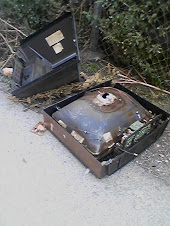
There’s a far better place than the trash bin for your old computer monitor. Like plenty of other electronics items, it may contain toxic substances like lead, mercury and cadmium that are hazardous to the environment and human health if mismanaged.
Starting next spring, consumers in New York State should find the disposal process a bit easier. Under a new law governing electronic waste, manufacturers across the state must offer free programs enabling people to drop off their items for proper recycling or reuse.
The collection programs will be required starting April 11; after that, manufacturers will not be allowed to dispose of electronic waste at landfills. Starting Jan. 15, 2015, consumers will also be prohibited from throwing out e-waste in their garbage or dumping it at a landfill.
Based on each manufacturer’s market share of electronic sales in New York, the state will mandate that each company recycle or reuse a certain amount of electronic waste each year.
Those who collect more waste than required can bank, trade or sell “recycling credits” for the excess waste they collect. Those who do not collect their share will face fines that will go toward state-run recycling programs.
The state law is more stringent than an electronic waste law approved in New York City in 2008; while the city’s version requires manufacturers to offer collection programs, it does not require them to recycle a certain percentage of what they sell.
The City Council voted to include such a requirement, but Mayor Michael R. Bloomberg refused to sign it, saying it could penalize manufacturers for the failure of consumers to recycle.
The new state law covers electronics like television sets, computers, printers, keyboards and DVD and MP3 players, but excludes items like refrigerators, washing machines, clothes dryers and microwaves.
New York is the 23rd state to pass an e-waste law. Maine was the first, in 2006. Until New York acted, South Carolina was the most recent to approve one, in a vote in early May.
New York State Cracks Down on E-Waste
By SINDYA N. BHANOO
Stuart Isett for The New York Times Aluminum scrap from old computers, television sets and other electronics.
There’s a far better place than the trash bin for your old computer monitor. Like plenty of other electronics items, it may contain toxic substances like lead, mercury and cadmium that are hazardous to the environment and human health if mismanaged.
Starting next spring, consumers in New York State should find the disposal process a bit easier. Under a new law governing electronic waste, manufacturers across the state must offer free programs enabling people to drop off their items for proper recycling or reuse.
The collection programs will be required starting April 11; after that, manufacturers will not be allowed to dispose of electronic waste at landfills. Starting Jan. 15, 2015, consumers will also be prohibited from throwing out e-waste in their garbage or dumping it at a landfill.
Based on each manufacturer’s market share of electronic sales in New York, the state will mandate that each company recycle or reuse a certain amount of electronic waste each year.
Those who collect more waste than required can bank, trade or sell “recycling credits” for the excess waste they collect. Those who do not collect their share will face fines that will go toward state-run recycling programs.
The state law is more stringent than an electronic waste law approved in New York City in 2008; while the city’s version requires manufacturers to offer collection programs, it does not require them to recycle a certain percentage of what they sell.
The City Council voted to include such a requirement, but Mayor Michael R. Bloomberg refused to sign it, saying it could penalize manufacturers for the failure of consumers to recycle.
The new state law covers electronics like television sets, computers, printers, keyboards and DVD and MP3 players, but excludes items like refrigerators, washing machines, clothes dryers and microwaves.
New York is the 23rd state to pass an e-waste law. Maine was the first, in 2006. Until New York acted, South Carolina was the most recent to approve one, in a vote in early May.
Sunday, June 6, 2010
E-SCHOLARS OUT THERE--SIGN ON IF YOU FEEL YOU CAN
Appeal by concerned international scholars:
Create humane labor standards at Foxconn
and end “stealth manufacturing” in Information Technology!--sign on via wlchan@sacom.hk
June 8, 2010
The tragic series of suicides among young workers of the “Foxconn City” factory compound in Shenzhen, China, has alarmed the world. Until now, only few people knew that this is the largest electronics factory in the world, employing more than 300,000 workers. The factory is run by a large multinational company from Taiwan, Foxconn (a subsidiary of Hon Hai group), which is one of the largest electronics manufacturing companies in the world. It produces for the most famous brand names in the global IT industry such as Apple, Hewlett-Packard, Dell, Nokia or Sony. Since contract manufacturers like Foxconn and their global customers try to keep their manufacturing operations hidden, this system has correctly been labelled “stealth manufacturing”.
Most of the workers in electronics contract manufacturing and its preferred “low-cost locations” in China, Malaysia, Thailand, Indonesia, Mexico, Hungary and other countries in Eastern Europe earn wages below the prevailing national standards. They work in clean and modern factories, but their work is reminiscent of the assembly lines of the early ages of mass production. The workforce of the new factories is made up of rural migrants, most of them women. As global contract manufacturing has grown, labor standards have collapsed and trade unions have been marginalized.
In reaction to the tragic events at Foxconn, a group of nine Chinese sociologists from leading universities in the country have taken the unusual step of issuing a collective appeal. According to their opinion, the crisis at Foxconn reveals deep-ranging problems in China’s current model of economic development, based on low wages, long working hours, and discrimination against rural migrant workers. They challenge the factory regime at Foxconn and call on the Chinese national and local government and the concerned enterprises to allow migrant workers to become “true citizens of the enterprise”.
From an international point of view, we have to call for rigorous action from multiple parties to establish labor standards, occupational and environmental health, and workers’ dignity in manufacturing world-wide, particularly in supplier manufacturing factories. The noted British business journal The Economist is aptly stating that “a firm and an industry that has become accustomed to obscurity will have to get used to the limelight” (May 29, 2010).
Changes in the labor policies of the contract manufacturing sector must be based on a comprehensive effort to restore transparency and public scrutiny over the contract relations between brand name and contract manufacturing companies. Meticulous attention needs to be devoted to labor, health and environmental standards, as well as to democratic participation of workers at the workplace. The so-called “Electronics Industry Citizenship Coalition (EICC)” – a code of conduct and mechanism of consultation established by major IT companies – has failed completely to secure basic standards of work, environmental justice and social responsibility throughout the electronics industry and its “supply chains”.
Workers must have a right to:
Representation and collective bargaining by trade unions to defend their interests and rights.
Information about, and protection from, hazardous materials used in manufacturing.
Guarantees of working hours and work intensity that will not threaten physical or mental health.
Communities, government agencies, and the public have a right to know:
What are the working conditions in contract factories and whether the basic rights of workers are respected?
What hazardous materials are used in manufacturing and whether the manufacturing process complies with internationally accepted standards of occupational safety and health?
Where, by whom, and under which conditions brand name products are manufactured?
What are the financial and economic conditions of manufacturing contracts between brand names and their suppliers, and whether suppliers and manufacturers are squeezed?
What impact corporate decisions on the allocation of manufacturing contracts, downsizing and closings of factories, and the establishment of new manufacturing facilities have on communities?
In the light of these urgent questions, we call on the relevant companies and government agencies in China and internationally to support an independent international investigation of the economic, financial and social backgrounds of the tragic events at Foxconn. Such an investigation should be led by the International Labour Organization with participation from independent academic experts, trade unions, labor and environmental NGOs, and other organizations with relevant expertise in the field, excluding those who are linked to corporate interests or have received substantial funding from the affected corporations in recent years.
SIGNATORS: (list in formation; A – Z; as of 6 JUNE 2010, UK Time)
Amanda Bell, Columbia University
Anita Chan, University of Technology, Sydney
Boy Luethje, University of Frankfurt
Eileen Boris, University of California, Santa Barbara
Ellen David Friedman, Sun Yat-sen University
John Trumpbour, Harvard University
Kate Bronfenbrenner, Cornell University
Katie Quan, University of California, Berkeley
Meei-shia Chen, National Cheng Kung University, Taiwan
Peter Evans, University of California, Berkeley
Robert Ross, Clark University
Stephen Philion, St. Cloud State University
Create humane labor standards at Foxconn
and end “stealth manufacturing” in Information Technology!--sign on via wlchan@sacom.hk
June 8, 2010
The tragic series of suicides among young workers of the “Foxconn City” factory compound in Shenzhen, China, has alarmed the world. Until now, only few people knew that this is the largest electronics factory in the world, employing more than 300,000 workers. The factory is run by a large multinational company from Taiwan, Foxconn (a subsidiary of Hon Hai group), which is one of the largest electronics manufacturing companies in the world. It produces for the most famous brand names in the global IT industry such as Apple, Hewlett-Packard, Dell, Nokia or Sony. Since contract manufacturers like Foxconn and their global customers try to keep their manufacturing operations hidden, this system has correctly been labelled “stealth manufacturing”.
Most of the workers in electronics contract manufacturing and its preferred “low-cost locations” in China, Malaysia, Thailand, Indonesia, Mexico, Hungary and other countries in Eastern Europe earn wages below the prevailing national standards. They work in clean and modern factories, but their work is reminiscent of the assembly lines of the early ages of mass production. The workforce of the new factories is made up of rural migrants, most of them women. As global contract manufacturing has grown, labor standards have collapsed and trade unions have been marginalized.
In reaction to the tragic events at Foxconn, a group of nine Chinese sociologists from leading universities in the country have taken the unusual step of issuing a collective appeal. According to their opinion, the crisis at Foxconn reveals deep-ranging problems in China’s current model of economic development, based on low wages, long working hours, and discrimination against rural migrant workers. They challenge the factory regime at Foxconn and call on the Chinese national and local government and the concerned enterprises to allow migrant workers to become “true citizens of the enterprise”.
From an international point of view, we have to call for rigorous action from multiple parties to establish labor standards, occupational and environmental health, and workers’ dignity in manufacturing world-wide, particularly in supplier manufacturing factories. The noted British business journal The Economist is aptly stating that “a firm and an industry that has become accustomed to obscurity will have to get used to the limelight” (May 29, 2010).
Changes in the labor policies of the contract manufacturing sector must be based on a comprehensive effort to restore transparency and public scrutiny over the contract relations between brand name and contract manufacturing companies. Meticulous attention needs to be devoted to labor, health and environmental standards, as well as to democratic participation of workers at the workplace. The so-called “Electronics Industry Citizenship Coalition (EICC)” – a code of conduct and mechanism of consultation established by major IT companies – has failed completely to secure basic standards of work, environmental justice and social responsibility throughout the electronics industry and its “supply chains”.
Workers must have a right to:
Representation and collective bargaining by trade unions to defend their interests and rights.
Information about, and protection from, hazardous materials used in manufacturing.
Guarantees of working hours and work intensity that will not threaten physical or mental health.
Communities, government agencies, and the public have a right to know:
What are the working conditions in contract factories and whether the basic rights of workers are respected?
What hazardous materials are used in manufacturing and whether the manufacturing process complies with internationally accepted standards of occupational safety and health?
Where, by whom, and under which conditions brand name products are manufactured?
What are the financial and economic conditions of manufacturing contracts between brand names and their suppliers, and whether suppliers and manufacturers are squeezed?
What impact corporate decisions on the allocation of manufacturing contracts, downsizing and closings of factories, and the establishment of new manufacturing facilities have on communities?
In the light of these urgent questions, we call on the relevant companies and government agencies in China and internationally to support an independent international investigation of the economic, financial and social backgrounds of the tragic events at Foxconn. Such an investigation should be led by the International Labour Organization with participation from independent academic experts, trade unions, labor and environmental NGOs, and other organizations with relevant expertise in the field, excluding those who are linked to corporate interests or have received substantial funding from the affected corporations in recent years.
SIGNATORS: (list in formation; A – Z; as of 6 JUNE 2010, UK Time)
Amanda Bell, Columbia University
Anita Chan, University of Technology, Sydney
Boy Luethje, University of Frankfurt
Eileen Boris, University of California, Santa Barbara
Ellen David Friedman, Sun Yat-sen University
John Trumpbour, Harvard University
Kate Bronfenbrenner, Cornell University
Katie Quan, University of California, Berkeley
Meei-shia Chen, National Cheng Kung University, Taiwan
Peter Evans, University of California, Berkeley
Robert Ross, Clark University
Stephen Philion, St. Cloud State University
GLOBAL CRIME & E-WASTE
INTERPOL produces report on the links between organized crime and electronic waste disposal
07 July 2009
INTERPOL has published a new report entitled Electronic Waste and Organized Crime: Assessing the Links, aimed at all persons concerned with environmental crime.
Electronic waste (e-waste) is the collective term for all the pre-owned products such as computers and televisions discarded by our modern consumer society. As these products often contain hazardous chemicals and metals, the management and appropriate disposal of e-waste is regulated by national and international laws and agreements in order to minimize the risk of damage to human health and the environment. However, due to the stringent regulations in the European Union and Americas these products are often shipped to other countries in order to avoid expensive recycling and disposal costs. If handled inappropriately, e-waste can release poisonous or hazardous materials into the environment or water supplies, posing a serious health threat to communities.
Prepared by the INTERPOL Environmental Crime Programme and its Pollution Crime Working Group, this report represents a milestone in their efforts to develop global and multi-sector responses to the many issues surrounding the illegal e-waste trade and the levels of criminal organization behind them.
"This report is an important resource for environmental enforcement agencies and national police agencies worldwide. It will help raise awareness of the scale of the e-waste problem, and provide a springboard for global action in the fight against pollution crime", said the Manager of the INTERPOL Environmental Crime Programme, David Higgins.
07 July 2009
INTERPOL has published a new report entitled Electronic Waste and Organized Crime: Assessing the Links, aimed at all persons concerned with environmental crime.
Electronic waste (e-waste) is the collective term for all the pre-owned products such as computers and televisions discarded by our modern consumer society. As these products often contain hazardous chemicals and metals, the management and appropriate disposal of e-waste is regulated by national and international laws and agreements in order to minimize the risk of damage to human health and the environment. However, due to the stringent regulations in the European Union and Americas these products are often shipped to other countries in order to avoid expensive recycling and disposal costs. If handled inappropriately, e-waste can release poisonous or hazardous materials into the environment or water supplies, posing a serious health threat to communities.
Prepared by the INTERPOL Environmental Crime Programme and its Pollution Crime Working Group, this report represents a milestone in their efforts to develop global and multi-sector responses to the many issues surrounding the illegal e-waste trade and the levels of criminal organization behind them.
"This report is an important resource for environmental enforcement agencies and national police agencies worldwide. It will help raise awareness of the scale of the e-waste problem, and provide a springboard for global action in the fight against pollution crime", said the Manager of the INTERPOL Environmental Crime Programme, David Higgins.
Saturday, June 5, 2010
NATURAL RESOURCES DEFENSE COUNCIL ON NY LEGISLATION
Kate Sinding’s Blog
NYS Passes Cutting Edge E-Waste Law
Print this page
Posted May 29, 2010 in Curbing Pollution, Health and the Environment
Tags: assemblymansweeney, computers, e-waste, electronics, electronicwaste, environmentalprotectionfund, EPF, EPR, erecycling, ewaste, extendedproducerresponsibility, governorpaterson, newyork, newyorkcity, newyorkers, NRDC, nysassembly, nyssenate, paterson, producerresponsibility, productstewardship, recycling, senatorthompson, televisions, TVs, waste
NY's Legislature passed, and the governor signed, what is arguably the most progressive electronics recycling law in the country last week, finally ensuring that all of the state's residents will have access to free and convenient recycling for their old and unwanted TVs, computers and other electronics.
Passage of the e-waste measure caps three years of hard work and intense lobbying by proponents. Special kudos go to the leadership of both legislative houses (especially Assemblymember Bob Sweeney and Senator Antoine Thompson, respective chairs of the Environmental Conservation Committees in each house), as well as Governor Paterson, all of whom worked extremely diligently to make the legislation a reality.
New York now joins 22 other states in mandating that manufacturers bear the responsibility for taking back their toxin-containing used electronics from consumers for responsible recycling. This approach not only gets these dangerous products out of our landfills and incinerators where they can contaminate water and air, it also removes the burden of handling this fastest-growing part of the waste stream from municipalities and taxpayers. Equally importantly, by shifting the costs of end-of-life waste management to the manufacturers, it encourages them to design products in the first instance that are easier - and hence cheaper - to recycle in the first place. Ultimately, this should result in products that have fewer toxic components, and more reusable and recyclable components, requiring less use of virgin materials.
The New York measure takes advantage of what we have learned about how these programs are best structured, building off the successful e-waste laws that already exist in 22 states, including Washington, Oregon and Minnesota.
Key features of this landmark law include:
Requiring product manufacturers to take financial responsibility for the collection and safe disposal and recycling of used electronic equipment.
Covering a broad scope of products, including televisions, computer monitors, computers, keyboards, mice, printers and cables.
Imposing strong collection standards that give manufacturers latitude to create collection programs that fit their specific business model so long as they collect the statutory minimum amount of waste each year. The standard starts at three pounds per capita in year one, rising to four in year two and five and year three. Thereafter, the mandatory minimum standard is allowed to "float" (within a prescribed range) based on what was collected in the prior year.
Allowing for free e-waste recycling for a wide range of consumers, including individuals, schools, municipalities, small businesses, and small non-profits.
Passage of the measure also effectively negates a nearly year old industry lawsuit challenging New York City's 2008 e-waste recycling law. The state bill would preempt the city law, the proposed implementation of which spurred litigation because of objections to a regulatory requirement that manufacturers provide direct collection from residents for items weighing over fifteen pounds. The state measure is not expected to lead to any similar regulatory requirement and is therefore not expected to face industry challenge.
Unfortunately, passage of the long-awaited e-waste law did not come without a cost, as the program was passed as part of larger deal that resulted in major cuts to the state's Environmental Protection Fund (EPF).
The EPF pays for a broad range of environmental programs that includes open space protections, land purchases, clean water safety investments, ocean conservation research, zoos, parks and much else. Last year, the Paterson administration cut the Fund from a high water mark of $255 million to an appropriated $212 million. This year, as Paterson threatened the state legislature (and the public) with the closings of numerous parks and park facilities across the state, he demanded that the EPF line be reduced to $133 million, nearly $90 million less than last fiscal year. This at a time when the main revenue-generating instrument for the EPF, the Real Estate Transfer Tax (RETT) has grown in the past three months over last year. Legislative leadership, at the end of an arduous week of negotiations, accepted Paterson's deal in return for keeping the Parks open and passing the landmark e-waste law.
Nonetheless, the e-waste law represents a major victory in another challenging legislative session in Albany and should be a cause for serious celebration by all New Yorkers who have been waiting too long for a free, convenient and responsible way to get rid of those unwanted TVs and computers taking up space in their closets, garages and attics.
NYS Passes Cutting Edge E-Waste Law
Print this page
Posted May 29, 2010 in Curbing Pollution, Health and the Environment
Tags: assemblymansweeney, computers, e-waste, electronics, electronicwaste, environmentalprotectionfund, EPF, EPR, erecycling, ewaste, extendedproducerresponsibility, governorpaterson, newyork, newyorkcity, newyorkers, NRDC, nysassembly, nyssenate, paterson, producerresponsibility, productstewardship, recycling, senatorthompson, televisions, TVs, waste
NY's Legislature passed, and the governor signed, what is arguably the most progressive electronics recycling law in the country last week, finally ensuring that all of the state's residents will have access to free and convenient recycling for their old and unwanted TVs, computers and other electronics.
Passage of the e-waste measure caps three years of hard work and intense lobbying by proponents. Special kudos go to the leadership of both legislative houses (especially Assemblymember Bob Sweeney and Senator Antoine Thompson, respective chairs of the Environmental Conservation Committees in each house), as well as Governor Paterson, all of whom worked extremely diligently to make the legislation a reality.
New York now joins 22 other states in mandating that manufacturers bear the responsibility for taking back their toxin-containing used electronics from consumers for responsible recycling. This approach not only gets these dangerous products out of our landfills and incinerators where they can contaminate water and air, it also removes the burden of handling this fastest-growing part of the waste stream from municipalities and taxpayers. Equally importantly, by shifting the costs of end-of-life waste management to the manufacturers, it encourages them to design products in the first instance that are easier - and hence cheaper - to recycle in the first place. Ultimately, this should result in products that have fewer toxic components, and more reusable and recyclable components, requiring less use of virgin materials.
The New York measure takes advantage of what we have learned about how these programs are best structured, building off the successful e-waste laws that already exist in 22 states, including Washington, Oregon and Minnesota.
Key features of this landmark law include:
Requiring product manufacturers to take financial responsibility for the collection and safe disposal and recycling of used electronic equipment.
Covering a broad scope of products, including televisions, computer monitors, computers, keyboards, mice, printers and cables.
Imposing strong collection standards that give manufacturers latitude to create collection programs that fit their specific business model so long as they collect the statutory minimum amount of waste each year. The standard starts at three pounds per capita in year one, rising to four in year two and five and year three. Thereafter, the mandatory minimum standard is allowed to "float" (within a prescribed range) based on what was collected in the prior year.
Allowing for free e-waste recycling for a wide range of consumers, including individuals, schools, municipalities, small businesses, and small non-profits.
Passage of the measure also effectively negates a nearly year old industry lawsuit challenging New York City's 2008 e-waste recycling law. The state bill would preempt the city law, the proposed implementation of which spurred litigation because of objections to a regulatory requirement that manufacturers provide direct collection from residents for items weighing over fifteen pounds. The state measure is not expected to lead to any similar regulatory requirement and is therefore not expected to face industry challenge.
Unfortunately, passage of the long-awaited e-waste law did not come without a cost, as the program was passed as part of larger deal that resulted in major cuts to the state's Environmental Protection Fund (EPF).
The EPF pays for a broad range of environmental programs that includes open space protections, land purchases, clean water safety investments, ocean conservation research, zoos, parks and much else. Last year, the Paterson administration cut the Fund from a high water mark of $255 million to an appropriated $212 million. This year, as Paterson threatened the state legislature (and the public) with the closings of numerous parks and park facilities across the state, he demanded that the EPF line be reduced to $133 million, nearly $90 million less than last fiscal year. This at a time when the main revenue-generating instrument for the EPF, the Real Estate Transfer Tax (RETT) has grown in the past three months over last year. Legislative leadership, at the end of an arduous week of negotiations, accepted Paterson's deal in return for keeping the Parks open and passing the landmark e-waste law.
Nonetheless, the e-waste law represents a major victory in another challenging legislative session in Albany and should be a cause for serious celebration by all New Yorkers who have been waiting too long for a free, convenient and responsible way to get rid of those unwanted TVs and computers taking up space in their closets, garages and attics.
Sunday, May 16, 2010
IT NEWS REPORTS
Computer Aid International's CEO Speaks Out Against E-waste In Ghana After BBC Exposé
RealWire
2010-5-14
The image of thousands of electronics products dumped in a remote village in Ghana (BBC Three programme Blood, Sweat and Luxuries: Gold and E-waste, 11th May) highlights the continuing issue of e-waste being illegally exported to the developing world.
Tony Roberts, founder and CEO of Computer Aid International, has voiced his concern about the situation and called on governments and companies to end the toxic trade:
"The limitations of the current legislative framework for e-waste are highlighted by Blood, Sweat and Luxuries. Computer Aid International launched a campaign in September 2008, against e-waste dumping in the developing world, however two years on this issue remains unresolved.
"Fraudulent traders are continuing to operate in the UK and Europe, posing as legitimate reuse and recycling organisations and enticing unwitting businesses to use them for disposal of electrical equipment. These traders do not declare the contents of their shipments as hazardous e-waste, but falsely claim consignments consist entirely of electrical equipment destined for productive reuse.
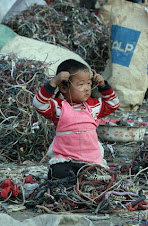
"Because of these traders, hazardous materials reach the developing world, where many children and marginalised communities face serious health risks while disassembling the equipment.
"Computer Aid International has called upon on the UK government to remove the loop holes in the UK WEEE Directive that allows sham reuse, and is emphasising the importance of taking action, to prevent the UK's hazardous waste being exported to the developing world. As a charity we actively support the Environment Agency in arresting and prosecuting these e-waste cowboys.
"Computer Aid also calls on computer manufacturers that shirk responsibility for their equipment dumped in developing countries, to fund end-of-life recycling in Africa, in exactly the same way that they already do within the EU.
"UK companies can easily ensure that their own PCs do not fall into the hands of unscrupulous traders by taking seven steps. They need to make sure they use a reputable organisation that will guarantee the legal disposal of unwanted goods. It's easy to check companies on the Environment Agency website to make sure they are registered as an Approved Authorised Treatment Facility (AATF) to handle e-waste legally and responsibly.
"Companies should also consider the implications of their decisions on the environment, and ask themselves do we want our data to end up in a dump in Ghana?"
Computer Aid International is a leading non-profit provider of ICT for development, having professionally refurbished over 160,000 PCs for use in schools, hospitals and community projects in more than 100 countries such as Rwanda, Chile and Zambia. The charity focuses its efforts on socially responsible reuse schemes instead of mass recycling or disposal.
Computer Aid International also offers corporate peace of mind through its PC decommissioning service, which guarantees complete data destruction using the Kroll Ontrack data wiping software. Corporate benefactors are also provided with the assurance of compliance with all UK legislation, including the WEEE Directive, Data Protection Act and Environment Act.
To find out more about donating to Computer Aid International, contact the charity directly on 020 8361 5540, email enquiries@computeraid.org, or visit: www.computeraid.org.
Follow Computer Aid on Twitter: www.twitter.com/Computer_Aid for regular updates on their work.
RealWire
2010-5-14
The image of thousands of electronics products dumped in a remote village in Ghana (BBC Three programme Blood, Sweat and Luxuries: Gold and E-waste, 11th May) highlights the continuing issue of e-waste being illegally exported to the developing world.
Tony Roberts, founder and CEO of Computer Aid International, has voiced his concern about the situation and called on governments and companies to end the toxic trade:
"The limitations of the current legislative framework for e-waste are highlighted by Blood, Sweat and Luxuries. Computer Aid International launched a campaign in September 2008, against e-waste dumping in the developing world, however two years on this issue remains unresolved.
"Fraudulent traders are continuing to operate in the UK and Europe, posing as legitimate reuse and recycling organisations and enticing unwitting businesses to use them for disposal of electrical equipment. These traders do not declare the contents of their shipments as hazardous e-waste, but falsely claim consignments consist entirely of electrical equipment destined for productive reuse.
"Because of these traders, hazardous materials reach the developing world, where many children and marginalised communities face serious health risks while disassembling the equipment.
"Computer Aid International has called upon on the UK government to remove the loop holes in the UK WEEE Directive that allows sham reuse, and is emphasising the importance of taking action, to prevent the UK's hazardous waste being exported to the developing world. As a charity we actively support the Environment Agency in arresting and prosecuting these e-waste cowboys.
"Computer Aid also calls on computer manufacturers that shirk responsibility for their equipment dumped in developing countries, to fund end-of-life recycling in Africa, in exactly the same way that they already do within the EU.
"UK companies can easily ensure that their own PCs do not fall into the hands of unscrupulous traders by taking seven steps. They need to make sure they use a reputable organisation that will guarantee the legal disposal of unwanted goods. It's easy to check companies on the Environment Agency website to make sure they are registered as an Approved Authorised Treatment Facility (AATF) to handle e-waste legally and responsibly.
"Companies should also consider the implications of their decisions on the environment, and ask themselves do we want our data to end up in a dump in Ghana?"
Computer Aid International is a leading non-profit provider of ICT for development, having professionally refurbished over 160,000 PCs for use in schools, hospitals and community projects in more than 100 countries such as Rwanda, Chile and Zambia. The charity focuses its efforts on socially responsible reuse schemes instead of mass recycling or disposal.
Computer Aid International also offers corporate peace of mind through its PC decommissioning service, which guarantees complete data destruction using the Kroll Ontrack data wiping software. Corporate benefactors are also provided with the assurance of compliance with all UK legislation, including the WEEE Directive, Data Protection Act and Environment Act.
To find out more about donating to Computer Aid International, contact the charity directly on 020 8361 5540, email enquiries@computeraid.org, or visit: www.computeraid.org.
Follow Computer Aid on Twitter: www.twitter.com/Computer_Aid for regular updates on their work.
Sunday, May 9, 2010
FROM 2003, ALTERNET, BUT STILL GERMANE--BY MICHAEL NIMAN
Kodak's Toxic Moments
Community activists are taking a campaign against the film maker's foul New York facility to the world stage.
May 29, 2003 | Maureen Reynolds, a former neighbor of Eastman Kodak's sprawling Kodak Park facility in Rochester, New York, suffers from more than her share of Kodak moments -- believing that Kodak poisoned her and her neighbors. She wasn't suspicious when her three-year-old son developed asthma. Rushing him to the hospital for adrenaline shots was traumatic, but these things happen. She also wasn't suspicious about the thin layer of ash on her car's windshield. She even noticed ash sometimes on her young son's glasses. Cities have dirty air, however, and a little ash isn't uncommon.
Things started getting strange, however, when Reynolds' herself developed asthma at age forty. During the next ten years she developed cancer, neuropathy, fibromyalgia, arthritis and the autoimmune disease, Primary Biliary Cirrhosis (PBC) -- a rare disorder that only affects one person in a million.
Reynolds moved out of her Kodak Park neighborhood four years earlier, after living there for 23 years. As Reynolds began to confront the downturn in her health, she noticed that many of her old friends from the neighborhood were suffering similar fates -- plagued by fibromyalgia and a host of other diseases. Curious, Reynolds starting focusing on the rarest disease that she suffered from -- PBC. PBC, which primarily attacks women, is related to Primary Sclerosing Cholangitis (PSC), which primarily affects men. What she learned was startling. PSC is one of a host of ailments from which Vietnam veterans exposed to Agent Orange suffer. After a little more research she discovered that, like her Kodak Park neighbors, these same veterans also suffer from neuropathy, diabetes, asthma and cancers of the thyroid and pancreas.
#1 in Dioxin
The most potent ingredient in Agent Orange is dioxin -- which is often blamed for health problems suffered by those exposed to the herbicide. Reynolds' former neighbor, Kodak, has been releasing massive amounts of the same toxic substance into the Kodak Park environment. A 1992 trial burn at Kodak's incinerator released more dioxin into the environment than all of New York's other tested hazardous waste incinerators combined. Dioxin is a sore subject in Western New York since it was also found to be responsible for much of the sickness in Niagara Falls' Love Canal neighborhood.
According to the EPA, Kodak released more dioxin into New York's environment in 2000 than any other source. Kodak isn't just number one in dioxin emissions, however. As of 1999, they've also ranked as New York State's leading producer of recognized airborne carcinogens and waterborne developmental toxicants. They've also gained notoriety as New York's number one source for releases of suspected endocrine, gastrointestinal, liver, cardiovascular, kidney, respiratory and reproductive toxicants as well as neurotoxins. Kodak alone released more toxic chemical emissions listed in the federal Toxics Release Inventory (TRI) than all of the 144 major polluters in Erie (Buffalo), Niagara (Niagara Falls) and Monroe (Rochester) counties combined.
During the 13-year period from 1987 to 2000, thanks primarily to Kodak's toxic stew of emissions, Rochester ranked number one in the U.S. for overall releases of carcinogenic chemicals, according to the U.S. Public Interest Research Group (USPIRG). Kodak alone was responsible for over 90 percent of the 64.4 million pounds of carcinogens released during that period into Rochester's air and water.
Cancer in Kodak Park
The end result of this dumping is a toxic-laden environment poisonous to human life. Hence, it should come as no surprise that according to the National Institute of Health and the National Cancer Institute, the Rochester area is in the top ten percentile for death rates from 13 different types of cancers. The New York State Department of Health found that "women living near Kodak Park had approximately an 80 percent greater [than average] risk of developing pancreatic cancer," which is often fatal. That rate increased to 96 percent among women who lived in the Kodak Park area for at least 20 years, leading the Department of Health to suggest that the longer people live near the Kodak facility, the greater their risk of getting pancreatic cancer becomes.
Children seem especially susceptible to toxins in the Kodak Park area environment. One concerned area mother conducted a door to door survey in the Kodak Park neighborhood, eventually documenting 33 cases of brain cancer in children living within five miles of the Kodak facility. Currently the parents of five of these children are suing Kodak for $75 million, holding the corporation responsible for poisoning their children. The concern about children's health is further exacerbated by the realization that there are 21 schools located within three miles of the sprawling Kodak facility.
Kodak's Public Relations division has been active for generations working to keep community protest at bay. Charlie Roemer, who lives two blocks from the Kodak facility, remembers a time 40 years ago when the company used to placate the community by offering to repaint cars whose finishes were damaged by ash from their smokestacks. Roemer says the "persistent bad smells" that have continuously come from the plant since his family moved into the community 51 years ago are just something people in the Kodak Park community learned to tolerate. He recalls how his neighbors, during particularly bad air days in the 1960s, would chalk the stink up to "Kodak cleaning their stacks." On other days, especially during wind shifts, the stench of Kodak's effluent emissions into the Genesee River would overwhelm the neighborhood. In an effort to demonstrate how safe the stinky water was, the company at one time maintained a small aquarium near its discharge pipes, with fish allegedly swimming in waste water.
Let Them Drink Methylene Chloride
Groundwater studies conducted in and around Kodak Park in the late 1990s show, however, that fluid wastes from the Kodak plant are anything but benign. A 1996 study, for example, found methylene chloride concentrations as high as 3,600,000 parts per billion. The permissible legal level is five parts per billion. In a self-congratulatory Earth Day 2003 press release, Kodak claims to have reduced methylene chloride emissions by 50 percent. They don't mention, however, that the New York State Comptroller's office points out that Kodak "only undertook serious remediation efforts after numerous fines from New York State and the EPA." It's also no accident that the press release doesn't contain data about current emissions. Given Kodak's previous astronomical emissions levels, a 50 percent or even a 99 percent cut still leaves an unacceptable amount of methylene chloride entering the environment. The federal Occupational Safety and Health Administration classifies methylene chloride as a workplace carcinogen. The Environmental Protection Agency labels it a "probable human carcinogen." For Charlie Roemer, it's the probable cause of the advanced prostate cancer he was diagnosed with three months ago.
Many of Kodak's workers, like the residents in the Kodak Park area, have similar health horror stories. Ramona Miller worked at Kodak for 21 years, including working in a lab during a period when she was breast feeding her newborn baby girl in 1988. Miller blames her work at Kodak, which involved moving toxic samples in and out of drying ovens in what she describes as a "poorly vented environment," with the chronic health problems afflicting both her and her daughter. Her daughter suffers from bi-lateral spasticity, a form of cerebral palsy which Miller believes was induced by toxins accumulating in her breast milk. Miller herself suffers from various nervous system disorders. She continued, however, to work at Kodak while conducting research about the various chemicals she was exposed to while breastfeeding. Eventually she started getting panic attacks when she approached Kodak Park, much as a crime victim would when revisiting the scene where she was victimized. Miller finally left her job a Kodak last year. Kodak hasn't acknowledged any responsibility for Miller's health problems nor those of her daughter.
The hazards of working at Kodak are widely known. A 1987 article in the Journal of Occupational Medicine cites one of Kodak's own studies showing "an elevated number of deaths due to pancreatic cancer in workers exposed at Kodak Park to methylene chloride.
For workers and neighbors who believe they were injured by Kodak's legal and illegal dumping of toxics into the environment, finding lawyers willing to sue the politically powerful Kodak in what is essentially a company town is a difficult proposition.
Crime and Politics
Politics is a game Kodak has learned to play well, contributing funds generously to both Democratic and Republican war chests. In 1994 the EPA fined Kodak approximately $8 million for environmental violations at Kodak Park. The EPA's laundry list of environmental crimes Kodak was guilty of included illegal disposal of hazardous wastes, illegal use of incinerators and waste piles, failure to notify the EPA of groundwater contamination, making undocumented shipments of hazardous wastes, and having a 20 year history of leaky underground pipes, among other violations. In 1995, however, Governor George Pataki's Economic Development Commissioner, Charles Gargano, in a letter to Kodak's former CEO, George Fisher, wrote, "Your leadership at Kodak is an inspiration to those of us trying to reengineer state government and make it more responsive to the needs of our business customers."
Such indifference to the criminal activities of, and tacit support for, the state's largest industrial polluter is shocking. But the letter to Fisher also had another purpose -- that being to announce a $20+ million state aid package composed primarily of tax credits. As the state money and tax abatements poured in during 1996, Fisher's compensation package as CEO soared to over $9 million.
Recidivism in Kodak Park
Despite the generosity of the Pataki administration, Kodak remained the state's number one industrial polluter. Showing no remorse for his company's past criminal activity, in May of 1996 Senior Vice President Richard T. Bourns told the New York State Assembly Subcommittee on Manufacturing, "In 1994 we believed that unjustified environmental regulations were the greatest competitive disadvantage associated with manufacturing in New York. Simply put, regulations that did nothing to help the environment were costing jobs." The upside for Kodak, according to Bourns, was that, "Under Governor Pataki, that is beginning to change." Still, for Kodak, this change wasn't coming fast enough. While complaining about the same state income tax that partially financed the Pataki administration's handouts to Kodak, Bourne warned that "Unless New York makes significant changes to be more competitive, Kodak investment will increasingly go elsewhere."
For environmental and community activists, this is exactly what the problem is at Kodak: Their investment is going elsewhere. Michael Schade, Western New York Director of New York's Citizens' Environmental Coalition (CEC) argues that pollution control efforts at Kodak are not up to date. His organization is demanding that Kodak phase out emissions of extremely toxic chemicals. Kodak, despite modest investments in environmental safeguards made in lieu of fines, has still shown itself to be a serial environmental offender, being found guilty by the New York Department of Environmental Conservation of violations dating from 1993 to 1999, which included dumping wastes into the Genesee River. Thanks in large part to Kodak, that river has the dubious distinction of receiving more toxic wastes than the Hudson River.
While continuing to poison the environment at Kodak Park, the company has attempted to make rhetorical gains in the fight against the perception that it is a polluter. One of Kodak's many Earth Day 2003 pronouncements boasted how the EPA, recently under the command of Bush appointee Christie Whitman, announced that "Eastman Kodak Company is a remarkable example of how organizations can combine environmental concerns with smart business strategy." Both the Whitman EPA and Kodak point to the company's new motion picture film cleaning technology which reduces the use of ozone depleting chemicals. Critics argue that Kodak is making small highly publicized improvements while maintaining a toxic status quo in Kodak Park. In an image-driven world, such a frontal assault against reality can be quite effective, hence environmentalists and public health advocates must be more vigilant than ever in working to expose Kodak's toxic legacy.
Just Say No! to Kodak
Things may be changing soon, however. CEC and a host of other groups located around the world have been turning the heat up on Kodak. On May 7th, Kodak shareholders voted on a resolution that would have forced the company, literally, to clean up its act. Using neighboring Xerox, which saved $300 million over three years by adopting a more environmentally friendly closed-loop production system, shareholder proponents of the resolution argued that in the long run, a clean company exercising respect for the environment would be a more profitable company as well. The resolution won the support of the New York State Comptroller Alan Hevesi's office, which manages the state's retirement fund. Hevesi, whose office pointed to Kodak's "long history" of releasing "bioaccumulative pollutants" at Kodak Park, argued that "Adopting and practicing sound environmental policies not only preserves our natural resources, but makes good business sense." Though it was voted down, supporters see the six percent of the vote that it garnered as a success, arguing that such numbers are promising for a first-time shareholder resolution.
Activist organizations also organized the first-ever National Day of Action for Clean Air at Kodak. Protestors from Washington State to Texas, Illinois and New York, picketed drugstores selling Kodak film and related products. In this new Kodak moment, CEC's Schade argued that, "For the health and safety of our communities, we need to raise our voices and expose the true picture of Kodak's pollution. It is critical that we stand up and demand the right to a clean and safe environment for our children." Suddenly, after decades of suffering alone, this is no longer just the Kodak Park community's issue. Activists from diverse nations around the globe such as India, Norway and Malaysia are banding together bring the message to Kodak that the global market will not tolerate what they are doing in Rochester. Given Kodak's international presence and their need to protect their brand image around the world, continued community activism will mean it's only a matter of time before Kodak listens and cleans up its act.
Community activists are taking a campaign against the film maker's foul New York facility to the world stage.
May 29, 2003 | Maureen Reynolds, a former neighbor of Eastman Kodak's sprawling Kodak Park facility in Rochester, New York, suffers from more than her share of Kodak moments -- believing that Kodak poisoned her and her neighbors. She wasn't suspicious when her three-year-old son developed asthma. Rushing him to the hospital for adrenaline shots was traumatic, but these things happen. She also wasn't suspicious about the thin layer of ash on her car's windshield. She even noticed ash sometimes on her young son's glasses. Cities have dirty air, however, and a little ash isn't uncommon.
Things started getting strange, however, when Reynolds' herself developed asthma at age forty. During the next ten years she developed cancer, neuropathy, fibromyalgia, arthritis and the autoimmune disease, Primary Biliary Cirrhosis (PBC) -- a rare disorder that only affects one person in a million.
Reynolds moved out of her Kodak Park neighborhood four years earlier, after living there for 23 years. As Reynolds began to confront the downturn in her health, she noticed that many of her old friends from the neighborhood were suffering similar fates -- plagued by fibromyalgia and a host of other diseases. Curious, Reynolds starting focusing on the rarest disease that she suffered from -- PBC. PBC, which primarily attacks women, is related to Primary Sclerosing Cholangitis (PSC), which primarily affects men. What she learned was startling. PSC is one of a host of ailments from which Vietnam veterans exposed to Agent Orange suffer. After a little more research she discovered that, like her Kodak Park neighbors, these same veterans also suffer from neuropathy, diabetes, asthma and cancers of the thyroid and pancreas.
#1 in Dioxin
The most potent ingredient in Agent Orange is dioxin -- which is often blamed for health problems suffered by those exposed to the herbicide. Reynolds' former neighbor, Kodak, has been releasing massive amounts of the same toxic substance into the Kodak Park environment. A 1992 trial burn at Kodak's incinerator released more dioxin into the environment than all of New York's other tested hazardous waste incinerators combined. Dioxin is a sore subject in Western New York since it was also found to be responsible for much of the sickness in Niagara Falls' Love Canal neighborhood.
According to the EPA, Kodak released more dioxin into New York's environment in 2000 than any other source. Kodak isn't just number one in dioxin emissions, however. As of 1999, they've also ranked as New York State's leading producer of recognized airborne carcinogens and waterborne developmental toxicants. They've also gained notoriety as New York's number one source for releases of suspected endocrine, gastrointestinal, liver, cardiovascular, kidney, respiratory and reproductive toxicants as well as neurotoxins. Kodak alone released more toxic chemical emissions listed in the federal Toxics Release Inventory (TRI) than all of the 144 major polluters in Erie (Buffalo), Niagara (Niagara Falls) and Monroe (Rochester) counties combined.
During the 13-year period from 1987 to 2000, thanks primarily to Kodak's toxic stew of emissions, Rochester ranked number one in the U.S. for overall releases of carcinogenic chemicals, according to the U.S. Public Interest Research Group (USPIRG). Kodak alone was responsible for over 90 percent of the 64.4 million pounds of carcinogens released during that period into Rochester's air and water.
Cancer in Kodak Park
The end result of this dumping is a toxic-laden environment poisonous to human life. Hence, it should come as no surprise that according to the National Institute of Health and the National Cancer Institute, the Rochester area is in the top ten percentile for death rates from 13 different types of cancers. The New York State Department of Health found that "women living near Kodak Park had approximately an 80 percent greater [than average] risk of developing pancreatic cancer," which is often fatal. That rate increased to 96 percent among women who lived in the Kodak Park area for at least 20 years, leading the Department of Health to suggest that the longer people live near the Kodak facility, the greater their risk of getting pancreatic cancer becomes.
Children seem especially susceptible to toxins in the Kodak Park area environment. One concerned area mother conducted a door to door survey in the Kodak Park neighborhood, eventually documenting 33 cases of brain cancer in children living within five miles of the Kodak facility. Currently the parents of five of these children are suing Kodak for $75 million, holding the corporation responsible for poisoning their children. The concern about children's health is further exacerbated by the realization that there are 21 schools located within three miles of the sprawling Kodak facility.
Kodak's Public Relations division has been active for generations working to keep community protest at bay. Charlie Roemer, who lives two blocks from the Kodak facility, remembers a time 40 years ago when the company used to placate the community by offering to repaint cars whose finishes were damaged by ash from their smokestacks. Roemer says the "persistent bad smells" that have continuously come from the plant since his family moved into the community 51 years ago are just something people in the Kodak Park community learned to tolerate. He recalls how his neighbors, during particularly bad air days in the 1960s, would chalk the stink up to "Kodak cleaning their stacks." On other days, especially during wind shifts, the stench of Kodak's effluent emissions into the Genesee River would overwhelm the neighborhood. In an effort to demonstrate how safe the stinky water was, the company at one time maintained a small aquarium near its discharge pipes, with fish allegedly swimming in waste water.
Let Them Drink Methylene Chloride
Groundwater studies conducted in and around Kodak Park in the late 1990s show, however, that fluid wastes from the Kodak plant are anything but benign. A 1996 study, for example, found methylene chloride concentrations as high as 3,600,000 parts per billion. The permissible legal level is five parts per billion. In a self-congratulatory Earth Day 2003 press release, Kodak claims to have reduced methylene chloride emissions by 50 percent. They don't mention, however, that the New York State Comptroller's office points out that Kodak "only undertook serious remediation efforts after numerous fines from New York State and the EPA." It's also no accident that the press release doesn't contain data about current emissions. Given Kodak's previous astronomical emissions levels, a 50 percent or even a 99 percent cut still leaves an unacceptable amount of methylene chloride entering the environment. The federal Occupational Safety and Health Administration classifies methylene chloride as a workplace carcinogen. The Environmental Protection Agency labels it a "probable human carcinogen." For Charlie Roemer, it's the probable cause of the advanced prostate cancer he was diagnosed with three months ago.
Many of Kodak's workers, like the residents in the Kodak Park area, have similar health horror stories. Ramona Miller worked at Kodak for 21 years, including working in a lab during a period when she was breast feeding her newborn baby girl in 1988. Miller blames her work at Kodak, which involved moving toxic samples in and out of drying ovens in what she describes as a "poorly vented environment," with the chronic health problems afflicting both her and her daughter. Her daughter suffers from bi-lateral spasticity, a form of cerebral palsy which Miller believes was induced by toxins accumulating in her breast milk. Miller herself suffers from various nervous system disorders. She continued, however, to work at Kodak while conducting research about the various chemicals she was exposed to while breastfeeding. Eventually she started getting panic attacks when she approached Kodak Park, much as a crime victim would when revisiting the scene where she was victimized. Miller finally left her job a Kodak last year. Kodak hasn't acknowledged any responsibility for Miller's health problems nor those of her daughter.
The hazards of working at Kodak are widely known. A 1987 article in the Journal of Occupational Medicine cites one of Kodak's own studies showing "an elevated number of deaths due to pancreatic cancer in workers exposed at Kodak Park to methylene chloride.
For workers and neighbors who believe they were injured by Kodak's legal and illegal dumping of toxics into the environment, finding lawyers willing to sue the politically powerful Kodak in what is essentially a company town is a difficult proposition.
Crime and Politics
Politics is a game Kodak has learned to play well, contributing funds generously to both Democratic and Republican war chests. In 1994 the EPA fined Kodak approximately $8 million for environmental violations at Kodak Park. The EPA's laundry list of environmental crimes Kodak was guilty of included illegal disposal of hazardous wastes, illegal use of incinerators and waste piles, failure to notify the EPA of groundwater contamination, making undocumented shipments of hazardous wastes, and having a 20 year history of leaky underground pipes, among other violations. In 1995, however, Governor George Pataki's Economic Development Commissioner, Charles Gargano, in a letter to Kodak's former CEO, George Fisher, wrote, "Your leadership at Kodak is an inspiration to those of us trying to reengineer state government and make it more responsive to the needs of our business customers."
Such indifference to the criminal activities of, and tacit support for, the state's largest industrial polluter is shocking. But the letter to Fisher also had another purpose -- that being to announce a $20+ million state aid package composed primarily of tax credits. As the state money and tax abatements poured in during 1996, Fisher's compensation package as CEO soared to over $9 million.
Recidivism in Kodak Park
Despite the generosity of the Pataki administration, Kodak remained the state's number one industrial polluter. Showing no remorse for his company's past criminal activity, in May of 1996 Senior Vice President Richard T. Bourns told the New York State Assembly Subcommittee on Manufacturing, "In 1994 we believed that unjustified environmental regulations were the greatest competitive disadvantage associated with manufacturing in New York. Simply put, regulations that did nothing to help the environment were costing jobs." The upside for Kodak, according to Bourns, was that, "Under Governor Pataki, that is beginning to change." Still, for Kodak, this change wasn't coming fast enough. While complaining about the same state income tax that partially financed the Pataki administration's handouts to Kodak, Bourne warned that "Unless New York makes significant changes to be more competitive, Kodak investment will increasingly go elsewhere."
For environmental and community activists, this is exactly what the problem is at Kodak: Their investment is going elsewhere. Michael Schade, Western New York Director of New York's Citizens' Environmental Coalition (CEC) argues that pollution control efforts at Kodak are not up to date. His organization is demanding that Kodak phase out emissions of extremely toxic chemicals. Kodak, despite modest investments in environmental safeguards made in lieu of fines, has still shown itself to be a serial environmental offender, being found guilty by the New York Department of Environmental Conservation of violations dating from 1993 to 1999, which included dumping wastes into the Genesee River. Thanks in large part to Kodak, that river has the dubious distinction of receiving more toxic wastes than the Hudson River.
While continuing to poison the environment at Kodak Park, the company has attempted to make rhetorical gains in the fight against the perception that it is a polluter. One of Kodak's many Earth Day 2003 pronouncements boasted how the EPA, recently under the command of Bush appointee Christie Whitman, announced that "Eastman Kodak Company is a remarkable example of how organizations can combine environmental concerns with smart business strategy." Both the Whitman EPA and Kodak point to the company's new motion picture film cleaning technology which reduces the use of ozone depleting chemicals. Critics argue that Kodak is making small highly publicized improvements while maintaining a toxic status quo in Kodak Park. In an image-driven world, such a frontal assault against reality can be quite effective, hence environmentalists and public health advocates must be more vigilant than ever in working to expose Kodak's toxic legacy.
Just Say No! to Kodak
Things may be changing soon, however. CEC and a host of other groups located around the world have been turning the heat up on Kodak. On May 7th, Kodak shareholders voted on a resolution that would have forced the company, literally, to clean up its act. Using neighboring Xerox, which saved $300 million over three years by adopting a more environmentally friendly closed-loop production system, shareholder proponents of the resolution argued that in the long run, a clean company exercising respect for the environment would be a more profitable company as well. The resolution won the support of the New York State Comptroller Alan Hevesi's office, which manages the state's retirement fund. Hevesi, whose office pointed to Kodak's "long history" of releasing "bioaccumulative pollutants" at Kodak Park, argued that "Adopting and practicing sound environmental policies not only preserves our natural resources, but makes good business sense." Though it was voted down, supporters see the six percent of the vote that it garnered as a success, arguing that such numbers are promising for a first-time shareholder resolution.
Activist organizations also organized the first-ever National Day of Action for Clean Air at Kodak. Protestors from Washington State to Texas, Illinois and New York, picketed drugstores selling Kodak film and related products. In this new Kodak moment, CEC's Schade argued that, "For the health and safety of our communities, we need to raise our voices and expose the true picture of Kodak's pollution. It is critical that we stand up and demand the right to a clean and safe environment for our children." Suddenly, after decades of suffering alone, this is no longer just the Kodak Park community's issue. Activists from diverse nations around the globe such as India, Norway and Malaysia are banding together bring the message to Kodak that the global market will not tolerate what they are doing in Rochester. Given Kodak's international presence and their need to protect their brand image around the world, continued community activism will mean it's only a matter of time before Kodak listens and cleans up its act.
Subscribe to:
Posts (Atom)






 Posts
Posts


