Sony Recycles Ads To Make Point About E-Waste
by Laurie Sullivan, Friday, Aug 29, 2008 5:00 AM ET
Sony Ad Sony Electronics and Waste Management Recycle America are teaming up to raise awareness of the importance of recycling electronics.
To that end, the companies will stage an event in Boston on Sept. 13 wherein the first 2,000 consumers to drop off their old electronics at Gillette Stadium receive a free "environmentally friendly" cloth tote.
And Sony is recycling an old television ad promoting what looks like one of its first Beta video recorders and players. Superimposed near the end are these words: "We're recycling our old 1970s commercials to remind you to recycle your old electronics." TV and newspaper print ads will run over the next couple of weeks prior to the Boston event and then roll out to other markets such as Phoenix, Austin, Texas, and Atlanta.
"We realize e-waste has become a big barrier to recycling because many of the items you want to recycle are large," says Stuart Redsun, senior VP corporate marketing at Sony Electronics. "Some U.S. states don't have programs to take back old VCRs and televisions."
Doug Smith, director of corporate environmental affairs at Sony Electronics, says that with help from Waste Management, Sony has opened about 155 recycling drop-off locations since September. The objective is to have a free and convenient network for electronics waste.
The electronics company says the promotion fits nicely into its ongoing Take Back Recycling program, which provides free recycling for Sony products. At the Boston event, Sony will open free recycling to other brands, Smith says.
With plans to bring several other electronic manufacturers into the program, Waste Management introduced the electronics recycling program with Sony Electronics a year ago, and recently added LG Electronics to the mix, says Wes Muir, director of corporate communications for Waste Management.
Along with Waste Management, Sony has collected about 9.2 million pounds of electronic waste.
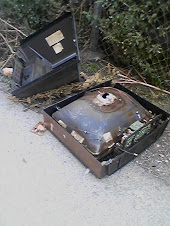
Citing statistics from the U.S. Environmental Protection Agency, Muir says about 2 million tons of cellular phones, televisions, printers, and computers are collected annually, but there are 5 million tons in basements, garages and attics being stored that can be recycled, Muir says. Not surprisingly, electronic waste is the fastest-growing commodity in the waste management system considering the number of gadgets being introduced monthly. Design and delivery cycles on smaller electronics are sometimes fewer than six months.
For example, on Thursday Sony unveiled three new Walkman players and a 10-megapixel Cyber-shot DSC-T500 camera with an HD movie recording feature. The Walkman series S, E and B players provide easy content transfer software with drag-and-drop features for non-DRM music, videos and podcasts, while the Sony Cyber-shot offers wide and full- screen 720p movie recording at 30 frames per second in fine and standard and VGA recording modes.
Friday, August 29, 2008


Monday, August 25, 2008
BRANDON WOOLF SHARES THIS INFORMATION
ACN Mini Think Tank Fellowships: Eco-Performance and Arts-Based Methods.
Part of the Earth Matters Symposium, University of Oregon, Eugene, May 21st to 31st 2009
Art Culture Nature invites you to share your practice, and research process together! We offer ten fellowships.
This sub-section of the Earth Matters on Stage Symposium ((http://www.uoregon.edu/~ecodrama/welcome/)
is less interested in research conducted prior to the conference on dramatic works about ecology and environmental instability. The aim is rather to investigate arts-based methodologies and analyses of process in relation to eco-arts. We hope to reach artists and scholars who are interested in sharing inventive methods in the field of performance and eco arts. We invite dancers, dramatists, poets, musicians, visual/performance artists, sculptors, community artists, theorists and multimedia artists to apply to our mini-think tank.
We will meet over the span of a few days early in the symposium, and the selected fellows will run mini-workshops for their peers (and we will provide details of exact dates, potential sites and meeting places for this after the selection, as much depends on the mix of people). This is a place to do, play and be, not (only) to tell, although we will also set up structures that allow us to share textual material and reflect on our experiences together.
Each fellowship will be $300. You are expected to register for the larger symposium (about $75), and can use the rest of the fellowship to offset travel and accommodation costs.
To apply, please send a short statement of interest, a CV, and documentation of your previous work (DVDs, CDs, articles (PDF preferred), URLs, etc) to both petra@umich.edu and mollyhat@umich.edu, and the material via snail mail to: Petra Kuppers, 2550 Dana Street, Apt. 8FG, Berkeley, CA 94704. All material will become part of an arts and ecology archive, so try not to send material that needs returning! Deadline: December 10th. We will inform fellows by the end of December.
Think Tank Organizers,
Molly Hacker and Petra Kuppers
Part of the Earth Matters Symposium, University of Oregon, Eugene, May 21st to 31st 2009
Art Culture Nature invites you to share your practice, and research process together! We offer ten fellowships.
This sub-section of the Earth Matters on Stage Symposium ((http://www.uoregon.edu/~ecodrama/welcome/)
is less interested in research conducted prior to the conference on dramatic works about ecology and environmental instability. The aim is rather to investigate arts-based methodologies and analyses of process in relation to eco-arts. We hope to reach artists and scholars who are interested in sharing inventive methods in the field of performance and eco arts. We invite dancers, dramatists, poets, musicians, visual/performance artists, sculptors, community artists, theorists and multimedia artists to apply to our mini-think tank.
We will meet over the span of a few days early in the symposium, and the selected fellows will run mini-workshops for their peers (and we will provide details of exact dates, potential sites and meeting places for this after the selection, as much depends on the mix of people). This is a place to do, play and be, not (only) to tell, although we will also set up structures that allow us to share textual material and reflect on our experiences together.
Each fellowship will be $300. You are expected to register for the larger symposium (about $75), and can use the rest of the fellowship to offset travel and accommodation costs.
To apply, please send a short statement of interest, a CV, and documentation of your previous work (DVDs, CDs, articles (PDF preferred), URLs, etc) to both petra@umich.edu and mollyhat@umich.edu, and the material via snail mail to: Petra Kuppers, 2550 Dana Street, Apt. 8FG, Berkeley, CA 94704. All material will become part of an arts and ecology archive, so try not to send material that needs returning! Deadline: December 10th. We will inform fellows by the end of December.
Think Tank Organizers,
Molly Hacker and Petra Kuppers
Saturday, August 23, 2008
CANADIAN CRIME AND E-WASTE
The Globe and Mail
TECHNOLOGY
Criminals expected to profit from e-trash
TU THANH HA
With reports from The Canadian Press
August 23, 2008
The growing amount of laptops, portable phones and other electronics being tossed away in Canada is creating new trafficking opportunities for organized crime, the country's law-enforcement officials are predicting.
The warning is contained in the 2008 annual report of the Criminal Intelligence Service Canada, under a section devoted to emerging and future threats.
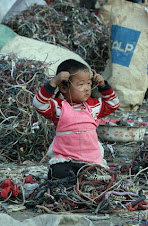
"The illicit trafficking and disposal of 'e-waste' - computers, televisions, cell phones - is driving a burgeoning environmental and human health crisis in several developing nations in Asia and, increasingly, in Africa," the report says.
"Criminal networks can profit by collecting e-waste in developed countries such as Canada and selling it to 'recyclers' in developing nations."
Things will get worse between next year and 2011, the report says, because millions of North American television sets will be made obsolete by digital broadcasting.
"One of the reasons organized crime has been as successful as it is, is that they're very adaptable and it's not like they've given up any of their traditional markets," RCMP Commissioner William Elliott said at the unveiling of the report in Montreal.
"If it wasn't lucrative, organized crime groups wouldn't be involved in it."
Environmental groups have long complained that Canada allows the shipping of electronic waste to Asia, despite its obligations under the Basel Convention, the international treaty that restricts the exports of hazardous materials.
Canadians throw away an estimated 140,000 tonnes of electronic junk in a year, said Josh Lepawsky, a geography professor at Memorial University of Newfoundland who is doing research on the international trade of e-waste.
Statistics Canada figures also show that the personal computers and televisions thrown away each year in Canada contain massive amounts of toxic metals, including 4,750 tonnes of lead, 4½ tonnes of cadmium and 1.1 tonnes of mercury.
Prof. Lepawsky estimates that half to three-quarters of Canadian e-waste earmarked for recycling actually ends up in Asia or Africa.
Estimating the size of the illicit trafficking is trickier. "You have to rely on customs documents. So if they're altered, assuming they even exist, as an investigator, it'd be very hard to trace that," he said. "We know it exists, but how big it really is, it's hard to say."
While China has banned the import of electronic waste, members of the Basel Action Network, a Seattle-based watchdog, spotted a shipment of used computer equipment from Vancouver in Guangdong province in 2002. The printers still carried tags from Air Canada and the Department of National Defence.
In 2004, customs officers in Hong Kong, inspecting what was supposed to be a container full of metal scraps from Vancouver, found instead 625 used computer monitors and television sets, along with other undeclared computer accessories and compact discs.
In the Port of Vancouver late in 2006, Environment Canada and the Canada Border Services Agency seized 50 containers bound for China and Hong Kong that carried thousands of used computer monitors.
The CISC report also warns that careless disposal of computer drives also create an opportunity for organized crime to cull government, corporate and personal information.
TECHNOLOGY
Criminals expected to profit from e-trash
TU THANH HA
With reports from The Canadian Press
August 23, 2008
The growing amount of laptops, portable phones and other electronics being tossed away in Canada is creating new trafficking opportunities for organized crime, the country's law-enforcement officials are predicting.
The warning is contained in the 2008 annual report of the Criminal Intelligence Service Canada, under a section devoted to emerging and future threats.
"The illicit trafficking and disposal of 'e-waste' - computers, televisions, cell phones - is driving a burgeoning environmental and human health crisis in several developing nations in Asia and, increasingly, in Africa," the report says.
"Criminal networks can profit by collecting e-waste in developed countries such as Canada and selling it to 'recyclers' in developing nations."
Things will get worse between next year and 2011, the report says, because millions of North American television sets will be made obsolete by digital broadcasting.
"One of the reasons organized crime has been as successful as it is, is that they're very adaptable and it's not like they've given up any of their traditional markets," RCMP Commissioner William Elliott said at the unveiling of the report in Montreal.
"If it wasn't lucrative, organized crime groups wouldn't be involved in it."
Environmental groups have long complained that Canada allows the shipping of electronic waste to Asia, despite its obligations under the Basel Convention, the international treaty that restricts the exports of hazardous materials.
Canadians throw away an estimated 140,000 tonnes of electronic junk in a year, said Josh Lepawsky, a geography professor at Memorial University of Newfoundland who is doing research on the international trade of e-waste.
Statistics Canada figures also show that the personal computers and televisions thrown away each year in Canada contain massive amounts of toxic metals, including 4,750 tonnes of lead, 4½ tonnes of cadmium and 1.1 tonnes of mercury.
Prof. Lepawsky estimates that half to three-quarters of Canadian e-waste earmarked for recycling actually ends up in Asia or Africa.
Estimating the size of the illicit trafficking is trickier. "You have to rely on customs documents. So if they're altered, assuming they even exist, as an investigator, it'd be very hard to trace that," he said. "We know it exists, but how big it really is, it's hard to say."
While China has banned the import of electronic waste, members of the Basel Action Network, a Seattle-based watchdog, spotted a shipment of used computer equipment from Vancouver in Guangdong province in 2002. The printers still carried tags from Air Canada and the Department of National Defence.
In 2004, customs officers in Hong Kong, inspecting what was supposed to be a container full of metal scraps from Vancouver, found instead 625 used computer monitors and television sets, along with other undeclared computer accessories and compact discs.
In the Port of Vancouver late in 2006, Environment Canada and the Canada Border Services Agency seized 50 containers bound for China and Hong Kong that carried thousands of used computer monitors.
The CISC report also warns that careless disposal of computer drives also create an opportunity for organized crime to cull government, corporate and personal information.
THE HINDU LIFTS THE LID ON BANGALORE E-WASTE
August 23 2008
HEALTH HAZARD: IT companies are under no obligation to manage their waste because there is no legislation.
Bangalore: Bangalore’s innumerable IT (information technology) and related companies produce 11,000 tonnes of e-waste every year. But most of this finds its way to backyard recyclers in the by-lanes of Bangalore — and very little goes to the authorised e-waste managers who are competent to neutralise the waste.
Bangalore has three recyclers recognised by the Karnataka State Pollution Control Board. But, “sadly, IT companies are under no obligation to manage their waste because India does not have legislation for e-waste,” said P. Parthasarathy, Director, E-Parisara Pvt. Ltd., one of the three authorised recyclers.
Of the 1,350 IT, BPO (business process outsourcing) and KPO (knowledge process outsourcing) companies in Bangalore, only around 50 have come forward to manage their waste through E-Parisara.
Many of the others prefer to sell their e-waste to the “highest bidder” from unauthorised e-waste traders as they offer a better deal, said Mr. Parthasarathy who was speaking here on Friday at a meeting on “Alternate energy and environment” organised by the Indo-American Chamber of Commerce.
The Central Pollution Control Board’s (CPCB) “Guidelines for environmentally sound management of e-waste” was approved by the Ministry of Environment and Forests in March 2008, but as they are only guidelines, they do not bind companies to manage their waste, he said.
Ranks third
According to the CPCB guidelines, Bangalore ranks third among the top 10 cities that generate e-waste in the country.
Mumbai ranks first, followed by Delhi. These guidelines were prepared as no specific environmental laws exist for e-waste and “none of the existing environmental laws have any direct reference to electronic waste or refer to its handling as hazardous in nature.”
As a result, E-Parisara’s 1.5 acre unit in Dobbspet, which has the capacity to recycle three tonnes of e-waste every day and hopes to achieve a 10-tonne capacity in five years, is “struggling to break even”, said Mr. Parthasarathy. “We are not receiving an adequate amount of e-waste. We need more companies to cooperate,” he said.
Bangalore’s e-waste comprises computer monitors, keyboards, CDs, mobile phones, fluorescent tubes and medical devices. “Electronic equipment are being discarded at a greater rate than ever before because of advances in technology, changes in fashion and machinery reaching the end of their lifespan,” he said.
Lead, mercury and arsenic are only some of the deadly compounds that e-waste can release, each of which can result in serious health hazards. They are carcinogenic and can affect immunity and the reproductive system.
Institutions
As for the public sector, while institutions such as BHEL, Bharat Electronics Ltd., the Indian Institute of Science and the Bangalore Institute of Technology give their e-waste to E-Parisara on a regular basis, several other government institutions do not do so.
“For instance, no one has any idea what government departments of Telecom, Railways, Civil Aviation, and Defence — all of which rely on electronic equipment — are doing with their e-waste. They are most likely going to backyard recyclers or informal sector traders,” Mr. Parthasarathy said.
There is pressure on Ministry of Environment and Forests from non-government organisations, recyclers and the industry to come up with legislation to make e-waste management mandatory for all companies that produce it, he said.
HEALTH HAZARD: IT companies are under no obligation to manage their waste because there is no legislation.
Bangalore: Bangalore’s innumerable IT (information technology) and related companies produce 11,000 tonnes of e-waste every year. But most of this finds its way to backyard recyclers in the by-lanes of Bangalore — and very little goes to the authorised e-waste managers who are competent to neutralise the waste.
Bangalore has three recyclers recognised by the Karnataka State Pollution Control Board. But, “sadly, IT companies are under no obligation to manage their waste because India does not have legislation for e-waste,” said P. Parthasarathy, Director, E-Parisara Pvt. Ltd., one of the three authorised recyclers.
Of the 1,350 IT, BPO (business process outsourcing) and KPO (knowledge process outsourcing) companies in Bangalore, only around 50 have come forward to manage their waste through E-Parisara.
Many of the others prefer to sell their e-waste to the “highest bidder” from unauthorised e-waste traders as they offer a better deal, said Mr. Parthasarathy who was speaking here on Friday at a meeting on “Alternate energy and environment” organised by the Indo-American Chamber of Commerce.
The Central Pollution Control Board’s (CPCB) “Guidelines for environmentally sound management of e-waste” was approved by the Ministry of Environment and Forests in March 2008, but as they are only guidelines, they do not bind companies to manage their waste, he said.
Ranks third
According to the CPCB guidelines, Bangalore ranks third among the top 10 cities that generate e-waste in the country.
Mumbai ranks first, followed by Delhi. These guidelines were prepared as no specific environmental laws exist for e-waste and “none of the existing environmental laws have any direct reference to electronic waste or refer to its handling as hazardous in nature.”
As a result, E-Parisara’s 1.5 acre unit in Dobbspet, which has the capacity to recycle three tonnes of e-waste every day and hopes to achieve a 10-tonne capacity in five years, is “struggling to break even”, said Mr. Parthasarathy. “We are not receiving an adequate amount of e-waste. We need more companies to cooperate,” he said.
Bangalore’s e-waste comprises computer monitors, keyboards, CDs, mobile phones, fluorescent tubes and medical devices. “Electronic equipment are being discarded at a greater rate than ever before because of advances in technology, changes in fashion and machinery reaching the end of their lifespan,” he said.
Lead, mercury and arsenic are only some of the deadly compounds that e-waste can release, each of which can result in serious health hazards. They are carcinogenic and can affect immunity and the reproductive system.
Institutions
As for the public sector, while institutions such as BHEL, Bharat Electronics Ltd., the Indian Institute of Science and the Bangalore Institute of Technology give their e-waste to E-Parisara on a regular basis, several other government institutions do not do so.
“For instance, no one has any idea what government departments of Telecom, Railways, Civil Aviation, and Defence — all of which rely on electronic equipment — are doing with their e-waste. They are most likely going to backyard recyclers or informal sector traders,” Mr. Parthasarathy said.
There is pressure on Ministry of Environment and Forests from non-government organisations, recyclers and the industry to come up with legislation to make e-waste management mandatory for all companies that produce it, he said.
Thursday, August 21, 2008
PRESS RELEASE FROM FIRM THAT WANTS TO BE OUR FRIEND
Attero Recycling Raises Series A Funding of US$6.3 Million
Last update: 12:55 a.m. EDT Aug. 21, 2008
NOIDA, India, August 21, 2008 /PRNewswire via COMTEX/ -- Attero, a Noida based start-up in the business of E-Waste Management, today announced that it has attracted US$6.3 million (approx Rs. 25 crore) in funding from venture capital firms NEA-IndoUS Ventures and Draper Fisher Jurvetson . The company will use the proceeds of the financing to establish a state of the art E-Waste Recycling facility in Roorkee and grow the business.
Attero is setting up an automated and integrated Electrical & Electronic Waste recycling plant in Roorkee spread over an area of more than 100,000 sq ft. The plant will process WEEE (Waste Electrical and Electronic Equipment) such as used computers, cell phones, network gear, TV etc. in an environmentally friendly manner with very high recycling efficiency. Attero was started with a mission of removing E Waste from our society.
"We at Attero believe that recycling is a simple step towards a better future. We look at E-Waste as an important resource that can be made useful instead of shunning it as a social and environmental burden." said Nitin Gupta, CEO, Attero Recycling Private Limited. "With this funding, we look forward to bringing a safe, efficient and hassle free solution to the E-Waste problem and open up this potentially huge market in India. We are delighted to have investors like NEA-IUV and DFJ partner with us in this venture."
"Close technical collaboration with a leading US company for mechanical separation, a first-of-its kind indigenous metallurgical process being developed in-house, a highly automated facility for integrated E-Waste recycling at Roorkee are just some steps taken to process E Waste efficiently." said Dr. Kumar Shiralagi, Managing Director, NEA-IndoUS Ventures. "E-Waste is a growing problem with the rapid rise in consumption of consumer electronics and the increase in their obsolesce rate. We are delighted to partner with Attero in their quest to recycle E-Waste in a highly efficient and environmentally safe manner."
"Attero is the first company in India setting up an end to end E-Waste recycling facility. Attero offers consumers a convenient way to ensure millions of obsolescent unwanted gadgets don't poison the nation's dumps." said Mohanjit Jolly, Executive Director, Draper Fisher Jurvetson, India. "With the ever increasing awareness of health and environment, there has never been a greater need for a company that can not only handle complete processing of E-Waste but also provide client friendly services like pickup of E-Waste from premises and complete data security, a company that cares as much about the customer needs as the environment. We are ecstatic about not only what Attero has accomplished but what the prospects are."
Electronic waste is the fastest growing waste stream in the country, with many consumer electronics ending up being disposed off in a harmful manner. This is an environmental concern and a waste of our natural resources. Efficient and environmentally friendly recycling of this waste is imperative. India generated 3.3 lakh tonnes of E-Waste in 2007 and is going to touch 4.7 lakh tonnes by 2011, as per a study released by MAIT-GTZ.
About Attero:
Attero is a Noida-based start-up in the E-Waste management space founded by Nitin Gupta and Rohan Gupta. Attero brings to the market a convenient, highly efficient and safe solution to counter the growing E-Waste problem. The company offers product pickup from anywhere in India thus reducing the customer's need for storage and the ensuing problems. Customers are constantly updated with regular reports of the status of the consignment from receipt to final disposal. Attero conducts regular audits to ensure compliance with the Health Environment and Safety standards. At Attero, we believe that every contribution can make a difference to reducing the e-burden on society and protecting nature from the growing E-Waste menace. The company is proud of the fact that it cares for the society and is working towards a cleaner and safer future for all. Attero's team comprises of some of the best brains in the business having studied in best in class colleges worldwide like IITs, RECs, London Business School etc. and has got the backing of two of the leading Venture Capital firms, namely, NEA-IUV and DFJ. For additional information, please visit http://www.attero.co.in
About NEA-IndoUS Ventures:
NEA-IndoUS Ventures is a venture capital firm based out of Bangalore, India and Silicon Valley US. The firm is dedicated to creating technology and technology enabled innovative companies out of India that serve both the Indian and the global markets. The firm invests in early and mid-stage companies. The firm's partners have the unique experience and expertise to nurture entrepreneurs and actively help the development and scaling of promising companies. In addition, a significant partner in this fund is New Enterprise Associates (NEA) who is a sponsor and active advisor. This network of collective relationships and experience is an invaluable asset to entrepreneurs and portfolio companies. For additional information, visit http://www.neaiuv.com
About Draper Fisher Jurvetson
Draper Fisher Jurvetson is the preeminent venture capital firm with global presence through a network of partner funds, with offices in more than 33 cities around the world and over US$5.5 billion in capital commitments. DFJ's mission is to identify, serve, and provide capital for extraordinary entrepreneurs anywhere who are determined to change the world. Over the past twenty years, DFJ has been proud to back more than 300 companies across many sectors including such industry-changing catalysts as Hotmail (acquired by MSFT), Baidu (BIDU), Skype (acquired by EBAY), United Online (UNTD), Overture (acquired by YHOO), Athenahealth (ATHN), EnerNOC (ENOC), Interwoven (IWOV), Four11 (acquired by YHOO), Parametric (PMTC), and Digidesign (acquired by AVID).
DFJ's India portfolio includes DVD rental company Seventymm.com, electric car maker Reva, mobile payment company mChek, internet ad network Komli, and out of home TV company LiveMedia.
Last update: 12:55 a.m. EDT Aug. 21, 2008
NOIDA, India, August 21, 2008 /PRNewswire via COMTEX/ -- Attero, a Noida based start-up in the business of E-Waste Management, today announced that it has attracted US$6.3 million (approx Rs. 25 crore) in funding from venture capital firms NEA-IndoUS Ventures and Draper Fisher Jurvetson . The company will use the proceeds of the financing to establish a state of the art E-Waste Recycling facility in Roorkee and grow the business.
Attero is setting up an automated and integrated Electrical & Electronic Waste recycling plant in Roorkee spread over an area of more than 100,000 sq ft. The plant will process WEEE (Waste Electrical and Electronic Equipment) such as used computers, cell phones, network gear, TV etc. in an environmentally friendly manner with very high recycling efficiency. Attero was started with a mission of removing E Waste from our society.
"We at Attero believe that recycling is a simple step towards a better future. We look at E-Waste as an important resource that can be made useful instead of shunning it as a social and environmental burden." said Nitin Gupta, CEO, Attero Recycling Private Limited. "With this funding, we look forward to bringing a safe, efficient and hassle free solution to the E-Waste problem and open up this potentially huge market in India. We are delighted to have investors like NEA-IUV and DFJ partner with us in this venture."
"Close technical collaboration with a leading US company for mechanical separation, a first-of-its kind indigenous metallurgical process being developed in-house, a highly automated facility for integrated E-Waste recycling at Roorkee are just some steps taken to process E Waste efficiently." said Dr. Kumar Shiralagi, Managing Director, NEA-IndoUS Ventures. "E-Waste is a growing problem with the rapid rise in consumption of consumer electronics and the increase in their obsolesce rate. We are delighted to partner with Attero in their quest to recycle E-Waste in a highly efficient and environmentally safe manner."
"Attero is the first company in India setting up an end to end E-Waste recycling facility. Attero offers consumers a convenient way to ensure millions of obsolescent unwanted gadgets don't poison the nation's dumps." said Mohanjit Jolly, Executive Director, Draper Fisher Jurvetson, India. "With the ever increasing awareness of health and environment, there has never been a greater need for a company that can not only handle complete processing of E-Waste but also provide client friendly services like pickup of E-Waste from premises and complete data security, a company that cares as much about the customer needs as the environment. We are ecstatic about not only what Attero has accomplished but what the prospects are."
Electronic waste is the fastest growing waste stream in the country, with many consumer electronics ending up being disposed off in a harmful manner. This is an environmental concern and a waste of our natural resources. Efficient and environmentally friendly recycling of this waste is imperative. India generated 3.3 lakh tonnes of E-Waste in 2007 and is going to touch 4.7 lakh tonnes by 2011, as per a study released by MAIT-GTZ.
About Attero:
Attero is a Noida-based start-up in the E-Waste management space founded by Nitin Gupta and Rohan Gupta. Attero brings to the market a convenient, highly efficient and safe solution to counter the growing E-Waste problem. The company offers product pickup from anywhere in India thus reducing the customer's need for storage and the ensuing problems. Customers are constantly updated with regular reports of the status of the consignment from receipt to final disposal. Attero conducts regular audits to ensure compliance with the Health Environment and Safety standards. At Attero, we believe that every contribution can make a difference to reducing the e-burden on society and protecting nature from the growing E-Waste menace. The company is proud of the fact that it cares for the society and is working towards a cleaner and safer future for all. Attero's team comprises of some of the best brains in the business having studied in best in class colleges worldwide like IITs, RECs, London Business School etc. and has got the backing of two of the leading Venture Capital firms, namely, NEA-IUV and DFJ. For additional information, please visit http://www.attero.co.in
About NEA-IndoUS Ventures:
NEA-IndoUS Ventures is a venture capital firm based out of Bangalore, India and Silicon Valley US. The firm is dedicated to creating technology and technology enabled innovative companies out of India that serve both the Indian and the global markets. The firm invests in early and mid-stage companies. The firm's partners have the unique experience and expertise to nurture entrepreneurs and actively help the development and scaling of promising companies. In addition, a significant partner in this fund is New Enterprise Associates (NEA) who is a sponsor and active advisor. This network of collective relationships and experience is an invaluable asset to entrepreneurs and portfolio companies. For additional information, visit http://www.neaiuv.com
About Draper Fisher Jurvetson
Draper Fisher Jurvetson is the preeminent venture capital firm with global presence through a network of partner funds, with offices in more than 33 cities around the world and over US$5.5 billion in capital commitments. DFJ's mission is to identify, serve, and provide capital for extraordinary entrepreneurs anywhere who are determined to change the world. Over the past twenty years, DFJ has been proud to back more than 300 companies across many sectors including such industry-changing catalysts as Hotmail (acquired by MSFT), Baidu (BIDU), Skype (acquired by EBAY), United Online (UNTD), Overture (acquired by YHOO), Athenahealth (ATHN), EnerNOC (ENOC), Interwoven (IWOV), Four11 (acquired by YHOO), Parametric (PMTC), and Digidesign (acquired by AVID).
DFJ's India portfolio includes DVD rental company Seventymm.com, electric car maker Reva, mobile payment company mChek, internet ad network Komli, and out of home TV company LiveMedia.
Wednesday, August 20, 2008
INSTITUTE FOR PUBLIC POLICY RESEARCH
More solid research--thanks to Kate Oakley for telling me about this
16 July 2008
New research by the Institute for Public Policy Research (ippr) reveals that the public favour Personal Carbon Trading (PCT) over other emission reduction policy options for individuals and households.
The survey by ippr to determine public response to PCT showed that respondents were less opposed to the idea of personal carbon credits than other alternatives, although it was still only supported by a minority of people. Respondents were also asked their opinions on carbon taxes, which would apply a levy to energy costs at the point of sale, or a similar cap-and-trade system to PCT but applied directly to energy providers.
In a survey of more than a thousand people, PCT won more support (31%) than the other policy alternatives presented. ippr says the research demonstrates that PCT is potentially more politically acceptable than previously thought.
Although less than a third of respondents said they supported or strongly supported PCT, this compared to 23% who supported a corporate cap-and-trade approach and 19% who supported a carbon tax.
ippr Senior Research Fellow, Matthew Lockwood, said:
“These results surprised us. In order to meet carbon emissions targets politicians face tough choices. Our research show that the public may be more receptive to PCT than other proposals and suggest politicians should give serious consideration to this option.
“The advantages of the scheme are that it gives people more personal responsibility and is transparent. Half our respondents thought that PCT would make people think more about their energy use and emissions. A third liked it because they thought the principle that everyone gets the same number of credits is fair.”
ippr says the survey has important implications for the development and delivery of any potential PCT scheme. It recommends that any potential PCT scheme should:
*
be presented as a benefit rather than a ration
*
ensure transparency and openness on how a scheme would operate, be funded and where any profits might be spent
*
be delivered by a trusted third partner, not a government department.
Although the PCT fared better in terms of potential support than carbon tax or upstream tax systems, widespread reservations on PCT were expressed including fears about personal data being collected, unequal outcomes and the impact on people less able to afford extra credits and concerns about difficulties in policing the scheme.
ippr interviewed 1,081 people for the survey in an online poll. ippr also hosted three workshops and held 17 stakeholder interviews.
Notes to editors
1.
Under PCT, each year every person in the country would be given the same number of ‘carbon credits’ which they would have to spend when they bought petrol, diesel, electricity, coal, gas, heating oil or a flight. People who used more than their allocation could sell any spare credits and those who exceed their allowance would need to buy extra credits. People could increase their spare credits by saving energy in their homes, installing insulation, choosing energy saving appliances, choosing cars that do not use a lot of fuel and by driving and flying less.
2.
ippr’s research was conducted as part of a larger project assessing the strengths and weaknesses of personal carbon trading. The survey was commissioned by ippr from e-feedback, who polled 1,081 people in February 2008. The design of the questionnaire was informed by a focus group held in London with 15 members of the public in mid-February.
3.
ippr also held three deliberative workshops on PCT and alternatives in Newcastle, Bristol and rural Suffolk in May 2008, and interviewed 17 experts from civil society, business and politics.
16 July 2008
New research by the Institute for Public Policy Research (ippr) reveals that the public favour Personal Carbon Trading (PCT) over other emission reduction policy options for individuals and households.
The survey by ippr to determine public response to PCT showed that respondents were less opposed to the idea of personal carbon credits than other alternatives, although it was still only supported by a minority of people. Respondents were also asked their opinions on carbon taxes, which would apply a levy to energy costs at the point of sale, or a similar cap-and-trade system to PCT but applied directly to energy providers.
In a survey of more than a thousand people, PCT won more support (31%) than the other policy alternatives presented. ippr says the research demonstrates that PCT is potentially more politically acceptable than previously thought.
Although less than a third of respondents said they supported or strongly supported PCT, this compared to 23% who supported a corporate cap-and-trade approach and 19% who supported a carbon tax.
ippr Senior Research Fellow, Matthew Lockwood, said:
“These results surprised us. In order to meet carbon emissions targets politicians face tough choices. Our research show that the public may be more receptive to PCT than other proposals and suggest politicians should give serious consideration to this option.
“The advantages of the scheme are that it gives people more personal responsibility and is transparent. Half our respondents thought that PCT would make people think more about their energy use and emissions. A third liked it because they thought the principle that everyone gets the same number of credits is fair.”
ippr says the survey has important implications for the development and delivery of any potential PCT scheme. It recommends that any potential PCT scheme should:
*
be presented as a benefit rather than a ration
*
ensure transparency and openness on how a scheme would operate, be funded and where any profits might be spent
*
be delivered by a trusted third partner, not a government department.
Although the PCT fared better in terms of potential support than carbon tax or upstream tax systems, widespread reservations on PCT were expressed including fears about personal data being collected, unequal outcomes and the impact on people less able to afford extra credits and concerns about difficulties in policing the scheme.
ippr interviewed 1,081 people for the survey in an online poll. ippr also hosted three workshops and held 17 stakeholder interviews.
Notes to editors
1.
Under PCT, each year every person in the country would be given the same number of ‘carbon credits’ which they would have to spend when they bought petrol, diesel, electricity, coal, gas, heating oil or a flight. People who used more than their allocation could sell any spare credits and those who exceed their allowance would need to buy extra credits. People could increase their spare credits by saving energy in their homes, installing insulation, choosing energy saving appliances, choosing cars that do not use a lot of fuel and by driving and flying less.
2.
ippr’s research was conducted as part of a larger project assessing the strengths and weaknesses of personal carbon trading. The survey was commissioned by ippr from e-feedback, who polled 1,081 people in February 2008. The design of the questionnaire was informed by a focus group held in London with 15 members of the public in mid-February.
3.
ippr also held three deliberative workshops on PCT and alternatives in Newcastle, Bristol and rural Suffolk in May 2008, and interviewed 17 experts from civil society, business and politics.
ACTION FROM BIG BLUE?
When Big Blue sees green
08/19/08
Posted under Alternative Fuels, Environment, Science (general), Videos
By Alexander Villafania
INQUIRER.net
The effect of the industrial revolution in the 18th and 19th centuries can be likened to the effect of the information technology revolution today. It created new industries and new skills that changed the way people lived. Yet, both periods in history also had their share of negative impact: pollution.
The industrial revolution saw an increase in use of petroleum products and chemical compounds that seeped into the ground, polluting water and soil. IT industries, with the constant replacement of old equipment for better ones, is also causing a new generation of garbage and it could get worse as the demand for IT products continues growing.
Some companies have already taken steps to alleviate the problem of electronic waste. At the recently held IBM Service Management Summit in Chiang Mai, Thailand, Big Blue showcased one aspect where the company could help reduce problems caused by the IT industry. Although it was not widely promoted, the company released its “green strategy” paper aimed at its clients that are building their IT infrastructure. The paper is about 15 pages long and suggested several implementation strategies that clients and partners can take to tackle potential environmental solutions. The paper, ostensibly entitled “IBM Software: A Green Strategy for Your Entire Organization,” was created in June 2008 as part of the company’s campaign for its Tivoli software.
Some of the solutions provided are simple, manpower-related environmental austerity measures, which includes reducing commuting through increased online collaboration (IBM once preached about the effectiveness of having mobile workers), turning off lights when not in use, and reduction of paper consumption by using electronic forms instead. Other practices on an infrastructure scale that IBM is suggesting include optimization of hardware power consumption, shifting workloads from over-utilized servers to underutilized ones, proper cooling systems depending on the machine (some equipment fail when they come to their overheating points), and even properly managing digital data to enable quick access and reducing heat.
IBM also stressed in the paper several reasons why it is important for companies, from the smallest mom-and-pop shop to the largest conglomerates, to have a steady and focused environmental strategy. One particular issue of note is increased power consumption by IT equipment, and with the realization that prices of oil will continue to go higher, IBM stressed that their customers must take measures to reduce power consumption while running at full operational capacity.
John Frech, director for IBM Tivoli Worldwide sales strategy, said that having an environmental strategy to follow will have a positive impact not just on the environment but also on the company’s operational capacity. He said their software products have been tested to allow for some energy-efficient operations, as well as maximizing the life of their equipment. He added that by giving office administrators all the tools they need to ensure full operational capacity, the company is saving on energy consumption and thus, the environment.
IBM also dedicated a website specifically for their IT strategy. Other companies also have similar projects, among which includes Microsoft’s Environmental Solutions, HP’s Eco Solutions and Intel. This already shows how IT companies are taking responsibility for the potential impact of the IT industry on the environment and how companies like them can become leaders in saving the environment.
08/19/08
Posted under Alternative Fuels, Environment, Science (general), Videos
By Alexander Villafania
INQUIRER.net
The effect of the industrial revolution in the 18th and 19th centuries can be likened to the effect of the information technology revolution today. It created new industries and new skills that changed the way people lived. Yet, both periods in history also had their share of negative impact: pollution.
The industrial revolution saw an increase in use of petroleum products and chemical compounds that seeped into the ground, polluting water and soil. IT industries, with the constant replacement of old equipment for better ones, is also causing a new generation of garbage and it could get worse as the demand for IT products continues growing.
Some companies have already taken steps to alleviate the problem of electronic waste. At the recently held IBM Service Management Summit in Chiang Mai, Thailand, Big Blue showcased one aspect where the company could help reduce problems caused by the IT industry. Although it was not widely promoted, the company released its “green strategy” paper aimed at its clients that are building their IT infrastructure. The paper is about 15 pages long and suggested several implementation strategies that clients and partners can take to tackle potential environmental solutions. The paper, ostensibly entitled “IBM Software: A Green Strategy for Your Entire Organization,” was created in June 2008 as part of the company’s campaign for its Tivoli software.
Some of the solutions provided are simple, manpower-related environmental austerity measures, which includes reducing commuting through increased online collaboration (IBM once preached about the effectiveness of having mobile workers), turning off lights when not in use, and reduction of paper consumption by using electronic forms instead. Other practices on an infrastructure scale that IBM is suggesting include optimization of hardware power consumption, shifting workloads from over-utilized servers to underutilized ones, proper cooling systems depending on the machine (some equipment fail when they come to their overheating points), and even properly managing digital data to enable quick access and reducing heat.
IBM also stressed in the paper several reasons why it is important for companies, from the smallest mom-and-pop shop to the largest conglomerates, to have a steady and focused environmental strategy. One particular issue of note is increased power consumption by IT equipment, and with the realization that prices of oil will continue to go higher, IBM stressed that their customers must take measures to reduce power consumption while running at full operational capacity.
John Frech, director for IBM Tivoli Worldwide sales strategy, said that having an environmental strategy to follow will have a positive impact not just on the environment but also on the company’s operational capacity. He said their software products have been tested to allow for some energy-efficient operations, as well as maximizing the life of their equipment. He added that by giving office administrators all the tools they need to ensure full operational capacity, the company is saving on energy consumption and thus, the environment.
IBM also dedicated a website specifically for their IT strategy. Other companies also have similar projects, among which includes Microsoft’s Environmental Solutions, HP’s Eco Solutions and Intel. This already shows how IT companies are taking responsibility for the potential impact of the IT industry on the environment and how companies like them can become leaders in saving the environment.
Subscribe to:
Posts (Atom)






 Posts
Posts


