Hewlett-Packard helps build Kenya e-waste plant
San Francisco Business Times - by Steven E.F. Brown
Date: Wednesday, November 10, 2010, 12:54pm PST
Related:
Technology
Computer and printer maker Hewlett-Packard Co. is helping build an electronic waste recycling plant in Kenya along with an Irish nonprofit, Camara Education Ltd.
Palo Alto-based HP (NYSE: HPQ) and Dublin’s Camara are putting this plant in Mombassa, on the coast, where there aren’t any such facilities right now (only the capital, Nairobi, has any significant e-waste recycling, and it’s expensive to truck discarded junk more than 300 miles by road, which takes up to six hours. Train trips take 13 hours between the cities.). They hope to open the plant by the end of the year.
Having a port facility also makes it easier to ship recycled material overseas for sale or further processing.
Computer use is growing in Kenya, but the use of mobile phones is growing even faster, and they generate a great deal of electronic device waste.
Kenya’s government said cell phone connections grew by 34 percent between 2008 and 2009, hitting 17.4 million.
Refrigerators, televisions, computers, printers and phones make up most of the e-waste generated in Kenya, according to the United Nations.
Camara is a charity that seeks to improve education in Africa through technology. It has two main businesses -- education and computer reuse. People and companies in Ireland donate used computers and Camara wipes them of data, loads up new software, and uses them in Africa.
Read more: Hewlett-Packard helps build Kenya e-waste plant | San Francisco Business Times
Wednesday, November 17, 2010


EXCITING NEWS
Dear Toby,
This morning, we released our newest Story of Stuff Project movie - The Story of Electronics - a look at the 'design for the dump' mentality so prevalent in the electronics industry.
This movie couldn't come at a better time: this November, Americans are expected to spend over $8.5 billion on consumer electronics, motivated by enticements to buy gizmos we don't really need or to replace gadgets that are still working with slightly newer versions.
The thing is, making all these devices takes an enormous environmental and public health toll: mining the metals trashes communities from Congo to Indonesia; assembling them uses huge amounts of water and energy and exposes workers to a host of toxic chemicals; and getting rid of them when we're on to the next, newer, better model creates mountains of e-waste.
The good news is that while the production, consumption and disposal of short-lived, toxics laden electronics are a really big problem, the solution is pretty simple: Make 'em Safe, Make 'em Last, and Take 'em Back.
We're releasing The Story of Electronics today to send a clear message to the electronics industry: it's time to send that design for the dump mentality to the dump where it belongs and start making less toxic, longer lasting and more easily recyclable products.
Our goal is to get a quarter of a million people to watch The Story of Electronics by Black Friday, just over two weeks from now.
You can help us reach this goal by:
Watching The Story of Electronics;
Sharing the movie with your friends, family, neighbors, co-workers, fellow students and anyone else you think might be interested;
Reading Annie's Huffington Post piece about the movie, and then commenting on it, liking it or sharing it; and
Working with our partners at the Electronics TakeBack Coalition to tell two of the largest electronics manufacturers-Acer and Lenovo-to "Make 'em Safe, Make 'em Last, and Take 'em Back!"
Every time we release one of our movies, we're floored by the way our community jumps in to spread the message. We know this time will be no different.
So, thank you, and we hope you enjoy The Story of Electronics!
Sincerely,
Annie, Michael, Allison, Christina and Renee
The Story of Stuff Project Team
P.S. It costs a pretty penny to produce and distribute our movies. You can help offset the distribution costs we're racking up this week with a secure, on-line donation to The Story of Stuff Project. Thank you!
C
Tuesday, November 9, 2010
THE RAGPICKER-CELL PHONE PARADOX
India: Land of many cell phones, fewer toilets
By RAVI NESSMAN The Associated Press
News Fuze
Posted:
MUMBAI, India—The Mumbai slum of Rafiq Nagar has no clean water for its shacks made of ripped tarp and bamboo. No garbage pickup along the rocky, pocked earth that serves as a road. No power except from haphazard cables strung overhead illegally.
And not a single toilet or latrine for its 10,000 people.
Yet nearly every destitute family in the slum has a cell phone. Some have three.
When U.S. President Barack Obama visits India Nov. 6, he will find a country of startlingly uneven development and perplexing disparities, where more people have cell phones than access to a toilet, according to the United Nations.
It is a country buoyed by a vibrant business world of call centers and software developers, but hamstrung by a bloated, corrupt government that has failed to deliver the barest of services.
Its estimated growth rate of 8.5 percent a year is among the highest in the world, but its roads are crumbling.
It offers cheap, world-class medical care to Western tourists at private hospitals, yet has some of the worst child mortality and maternal death rates outside sub-Saharan Africa.
And while tens of millions have benefited from India's rise, many more remain mired in some of the worst poverty in the world.
Businessman Mukesh Ambani, the world's fourth-richest person, is just finishing off a new $1 billion skyscraper-house in Mumbai with 27 floors and three helipads, touted as the most expensive home on earth. Yet farmers still live in shacks of mud and cow dung.
The cell phone frenzy bridges all worlds. Cell phones are sold amid the Calvin Klein and Clinique stores under the soaring atriums of India's new malls, and in the crowded markets of its working-class neighborhoods. Bare shops in the slums sell pre-paid cards for as little as 20 cents next to packets of chewing tobacco, while street hawkers peddle car chargers at traffic lights.
The spartan Beecham's in New Delhi's Connaught Place, one of the country's seemingly ubiquitous mobile phone dealers, is overrun with lunchtime customers of all classes looking for everything from a 35,000 rupee ($790) Blackberry Torch to a basic 1,150 rupee ($26) Nokia.
Store manager Sanjeev Malhotra adds to a decades-old—and still unfulfilled—Hindi campaign slogan promising food, clothing and shelter. "Roti, kapda, makaan" and "mobile," he riffs, laughing. "Basic needs."
There were more than 670 million cell phone connections in India by the end of August, a number that has been growing by close to 20 million a month, according to government figures.
Yet U.N. figures show that only 366 million Indians have access to a private toilet or latrine, leaving 665 million to defecate in the open.
"At least tap water and sewage disposal—how can we talk about any development without these two fundamental things? How can we talk about development without health and education?" says Anita Patil-Deshmukhl, executive director of PUKAR, an organization that conducts research and outreach in the slums of Mumbai.
India's leaders say they are sympathetic to the problem.
Prime Minister Manmohan Singh, an economist credited with unleashing India's private sector by loosening government regulation, talks about growth that benefits the masses of poor people as well as a burgeoning middle class of about 300 million. He describes a roaring Maoist insurgency in the east—which feeds in large part on the poor's discontent—as the country's biggest internal security threat.
Sonia Gandhi, chief of the ruling Congress Party, has pushed laws guaranteeing a right to food and education, as well as a gargantuan rural jobs program for nearly 100 million people. But as many as 800 million Indians still live on less than $2 a day, even as Mumbai's stock exchange sits near record highs.
Many fear the situation is unsustainable.
"Everybody understands the threat. Everybody recognizes that there is a gap, that this could be the thing that trips up this country," says Anand Mahindra, vice chairman and managing director of the Mahindra & Mahindra manufacturing company.
Private companies have tried to fill that gap, and Tata sells a 749 rupee ($16) water purifier for the poor. Mafias provide water and electricity to slumdwellers at a cost far higher than what wealthy Indians pay for basic services.
"For every little thing, we have to pay," says Nusrat Khan, a 35-year-old maid and single parent who raises her four children on less than 3,000 rupees ($67) a month and blames the government for her lack of access to water and a toilet.
The government is spending $350 million a year to build toilets in rural areas. Bindeshwar Pathak, the founder of the Sulabh Sanitation and Social Reform Movement, estimates the country needs about 120 million more latrines—likely the largest sanitation project in world history.
"Those in power, only they can change the situation," says Pathak, who claims to have helped build a million low-cost latrines across India over the past 40 years. "India can achieve this—if it desires."
In the slums of Mumbai, home to more than half the city's population of 14 million, the yearning for toilets is so great that enterprising residents have built makeshift outhouses on their own.
In Annabhau Sathe Nagar, a raised latrine of corrugated tin empties into a river of sewage that children splash in and adults wade across. The slum in east Mumbai has about 50,000 residents and a single toilet building, with 10 pay toilets for men and eight for women—two of which are broken.
With the wait for those toilets up to an hour even at 5 a.m., and the two-rupee (4-cent) fee too expensive for many, most people either use a field or wait to use the toilets at work, says Santosh Thorat, 32, a community organizer. Nearly 60 percent have developed piles from regularly waiting to defecate, he says.
Conditions are far worse in Rafiq Nagar, a crowded, 15-year-old slum on the lip of a 110-acre garbage dump.
Most of the slumdwellers are ragpickers who sort through heaps of trash for scraps of plastic, glass, metal, even bones, anything they can sell to recyclers for cash. A pungent brew of ripe garbage and sewage blows through the trash-strewn streets, as choking smoke from wood fires rolls out the doorways of windowless huts. Children, half clothed in rags, play hopscotch next to a mysterious gray liquid that has gathered in stagnant puddles weeks after the last rainfall.
Just beside the shacks, men and women defecate in separate areas behind rolling hills of green foliage that have sprung up over the garbage. Children run through those hills, flying kites.
Khatija Sheikh, 20, splurges to use a pay toilet in another neighborhood 10 minutes away, but is never sure what condition it will be in.
"Sometimes it's clean, sometimes it's dirty. It's totally dependent on the owner's mood," says Sheikh, whose two young children use the street. Her home is less than five feet from an elevated outhouse built by a neighbor that drops sewage next to her walls.
Since there are no water pipes or wells here, residents are forced to rely on the water mafia for water for cooking, washing clothes, bathing and drinking. The neighborhood is rife with skin infections, tuberculosis and other ailments.
A large blue barrel outside a home is filled with murky brown water, tiny white worms and an aluminum drinking cup. To fill up two jerry cans costs between 40 ($.90) and 50 ($1.10) rupees a day, about one-third of the average family's earnings here.
"If the government would give us water, we would pay that money to the government," said Suresh Pache, 41, a motorized rickshaw driver.
Instead, it has issued demolition notices throughout the slum, which sits illegally on government land. Pache, whose home was razed 10 times, jokes that the destruction is the only government service he can count on.
Yet the world of technology has embraced the slumdwellers with its cheap cell phones and cut-rate calling plans that charge a sliver of a penny a minute. Pache bought his first phone for 1,400 rupees ($31) four months ago. Since then, his wife, a ragpicker, found two other broken models as she scoured the garbage dump, and he paid to have them repaired.
He speaks with fluency about the different plans offered by Tata, Reliance and Idea that cost him a total of 300 rupees ($6.70) a month. Now, when his rickshaw breaks down, he can alert his wife with a call. She uses her phone to tell the recyclers where she is in the dump so they can drive out to her, saving her the time and effort of dragging her bag of scraps to them.
Mohan Singh, a 58-year-old bicycle repairman, says his son uses their 2,000 rupee ($45) Orpat phone to play music and talk to relatives. Thorat, the community organizer, shows photographs of his neighborhood and videos of a pre-school he started on his Nokia cameraphone, while his second phone rings in his pocket. Sushila Paten, who teaches at the pre-school, organizes a phone chain with her Samsung to instantly mobilize hundreds of people in the streets when violent thugs show up demanding "rent" from the squatters.
In fact, the spread of cell phones may end up bringing toilets.
R. Gopalakrishnan, executive director of Tata Sons, one of India's most revered companies, says the rising aspirations of the poor, buttressed by their growing access to communications and information, will put tremendous pressure on the government to start delivering.
People already are starting to challenge local officials who for generations answered to no one, he says.
"I think there are very, very dramatic changes happening," he says.
Saturday, October 16, 2010
CHINA AND E-WASTE OCTOBER 8, 2010
A new regulation to help reduce e-waste and curb environmental pollution is set to take effect in China in January 2011. The government will establish a licensing system for the disposal and recycling of e-wastes, under which only enterprises with a proper license are eligible for e-waste disposal.
The regulation also stipulates all imported electrical products should meet the requirements for pollution control and enterprises should adopt a design conducive to innocuous treatment and recycling.
The regulation will play a significant role in helping to prevent and reduce environmental pollution, promoting comprehensive utilization of resources, developing a circular economy, building a resource-saving and environmentally-friendly society and protecting people's health, said Zhang Lijun, vice minister of environmental protection.
The e-waste products contain valuable resources, such as copper, aluminum, iron and plastic. China is a big country in terms of production and consumption of electrical and electronic products.
China produced over 9 million TV sets, 46 million refrigerators, 39 million washing machines, 68.5 million air conditioners, 138 million computers, nearly 62 million printers and 600 million mobile phones in 2008. Nearly 25 million TV sets, 5.4 million refrigerators, 10 million washing machines, 1 million air conditioners, 12 million computers, 6 million printers and 40 million mobile phones were thrown out in 2009.
By Liang Jun, People's Daily Online
ILLEGAL E-WASTE TRADE
Two year investigation sees nine charged over international WEEE dumping
Source URL: http://www.edie.net/news/news_story.asp?id=18819
Nine people have been charged today (October 14) in what the Environment Agency is saying is biggest investigation ever into illegal electrical waste exports from the UK to West Africa.
All nine have been charged with offences under the Transfrontier Shipment of Waste Regulations 2007 and European Waste Shipment Regulations 2006 and bailed to attend Havering Magistrates Court on November 11.
It is illegal for UK businesses to send electronic waste abroad to be dumped and the action today, follows a two year investigation.
Officers from the Environment Agency's National Crime Team began their investigations in the middle of 2008.
They claim to have uncovered a network of individuals, waste companies and export businesses involved in the export of electrical waste.
In some instances, it is alleged by the agency that 'considerable sums' of money changed hands in deals to collect and recycle electrical waste while treatment costs were avoided.
There's also evidence of the waste ending up being illegally dumped in Africa, potentially avoiding huge fees for the companies allegedly involved.
The Environment Agency's national environmental crime team manager, Andy Higham, said: "Over the past two years painstaking intelligence work by Environment Agency officers has uncovered a web of individuals and companies that appear to be making considerable sums of money by exporting electrical waste overseas.
"Exporters of broken electricals put at risk the lives of those who work on waste sites in developing countries.
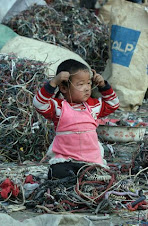
"These are often children who are paid a pittance to dismantle products containing hazardous waste.
"Illegal exporters also avoid the costs of recycling in the UK and undermine law-abiding business.
"It is always a crime to export broken electricals and hazardous waste from the UK to developing countries to be dumped.
"The last thing we want is our waste causing harm to people or the environment overseas."
Luke Walsh
Thursday, September 16, 2010
KENYAN BROADCASTING CORPORATION REPORT
Kenya promises to address e-waste challenges
Written By:Allvoices, Posted: Tue, Sep 07, 2010
The Kenyan government will address challenges and opportunities brought about by rising electronic waste (e-waste), Environment and Mineral Resources Minister John Michuki has said.
Speaking at a national Stakeholders Workshop on Waste of Electrical and Electronic Equipment (eWaste) Nairobi 2010 on Tuesday, Michuki urged delegates government officials, representatives from National Environment Management Authority, computer software giants Microsoft, UN Environment Programme (UNEP) and industry to assit the government in charting the way forward in terms of re-use, recycling and refurbishment of electronic goods.
This he said must be inline with Basel Convention Declaration and other International declarations.
The stakeholders called for urgent adoption of sound policies and clear guidelines on e-waste management in Kenya and the East African region. Microsoft's Regional Education Manager East and Southern Africa Mr. Mark Matunga called for concerted efforts in e waste management, which has proved to be a challenge to many African countries.
"There is an urgent need for the government and other stakeholders from the private sector to work towards streamlining the management of e waste, especially in the wake of increased turnover of electronic equipment on the continent. Kenya, like most Africa countries has no polices and strategies for dealing with e-waste and is therefore its population is greatly exposed to health hazards that are associated with e waste"," said Mr. Matunga.
Speaking at the workshop, UNEP Deputy Executive Director Angela Cropper spoke of the emerging global threats and opportunities provided by tackling growing e-waste challenge.
Acknowledging technology's potential for assisting with infrastructure and overcoming knowledge barriers, she noted innovation and technology can also play a role in achieving the Millennium Development Goals, green growth and assisting with climate change challenges.
Sher said UNEP is conducting extensive research on e-waste. UNEP launched a landmark report, Recycling - from E-Waste to Resources, in February 2010 that examined e-waste in 11 developing countries, including Kenya.
A recent baseline study done in 2008 that showed Kenya generates 3,000 tons of electronic waste per year.
The study predicts that the quantity is expected to increase as demand increases.
Internationally, China, India and Pakistan receive much of the world's e-waste. Worldwide, e-waste generation is growing by about 40 million tons a year.
"Raising recycling rates and re-using valuable metals and components, as well as increasing safe waste management and its regulation, is critical if countries and businesses are to transform mountains of e-waste into an asset", said Ms. Cropper
The meeting observed that increased pace of technological development and obsolescence, many appliances have a short life-expectancy and require sound re-use, recycling and disposal solutions.
Dumping or improper recycling of electronic waste causes serious environmental contamination, and while electronic goods are mostly used in the developed world, many end up in developing countries.
National Environmental Management Authority (NEMA) Managing Director Ayub Macharia observed that increased pace of technological development and obsolescence meant many appliances have a short life-expectancy and require sound re-use, recycling and disposal solutions.
He said dumping or improper recycling of electronic waste causes serious environmental contamination, and while electronic goods are mostly used in the developed world, many end up in developing countries.
The stakeholders also discussed among other key topics, the need to identify and map the environmental impact of e-waste on Kenya, capacity constraints hindering the disposal of e-waste in Kenya and the collection system and recycling infrastructure of e-waste.
The meeting finalized guidelines on management of e-waste en route to an amendment to Kenya's waste laws and regulations in order to minimize the impacts and maximize the benefits of growing numbers of electronic products manufactured in Kenya or imported into the country.
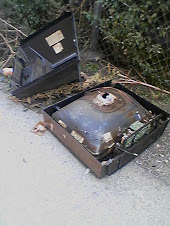
E-waste consists of old electronic items such as computers, printers, mobile phones, refrigerators and televisions.
Increasing demand for electronic goods in Kenya and in the developing world means that levels of e-waste are growing fast and the hazardous substances such as heavy metals contained in most of these products are posing a serious risk to the environment and to human health.
However, e-waste also presents an economic opportunity through the recycling and refurbishing of discarded electronic goods and the harvesting of the precious metals they contain.
The forum stressed the need by all stakeholders to adopt t recommendations and guidelines on e-waste management and a review of the Kenyan government's own electronic waste disposal procedures.
Wednesday, September 1, 2010
SONY PRESS RELEASE
Sony Pictures Entertainment Receives LEED Gold Certification For Culver City Lot Office Project
PR Newswire
08/30/10 - 01:09 PM EDT
CULVER CITY, Calif., Aug. 30 /PRNewswire/ -- Sony Pictures Entertainment today announced that it has been awarded Leadership in Energy and Environmental Design (LEED®) Gold certification for the studio's Lot and Office Transformation (LOT) Project by the U.S. Green Building Council (USGBC). The LOT Project included the construction of two new 100,000 square foot office buildings, named after Jack Cohn and Harry Cohn, and a parking structure located at the heart of the studio's historic lot based in Culver City, California.
(Logo: http://photos.prnewswire.com/prnh/20090128/SONYPICLOGO)
(Logo: http://www.newscom.com/cgi-bin/prnh/20090128/SONYPICLOGO)
"We are proud to receive this designation for our newest buildings on the lot," said Michael Lynton, Chairman and CEO of Sony Pictures. "It's our belief that we have a responsibility to help create a greener world for our community and future generations, and this project is an important part of our overall sustainability efforts."
"We're excited to be recognized by such a respected international body," said Amy Pascal, Co-Chairman of Sony Pictures. "We're also gratified that the buildings and the park area between them have become a new 'center of gravity' for our lot, a place where employees and visitors come to eat, exercise and meet with one another in an atmosphere that can be both relaxed and refreshing."
The LEED Green Building Rating System™ is the nationally accepted benchmark for evaluating water, energy and atmosphere efficiency; material and resource selection and indoor environmental quality of sites for sustainability.
The Jack Cohn and Harry Cohn buildings, which were designed for Sony Pictures by Gensler Architecture with developer Georgetown Company and general contractor CW Driver, were recognized by USGBC for a number of factors related to their design and construction. Elements rated positively by USGBC include: the use of local and recycled building materials as well as diverting over 93 percent (16,128 tons) of construction waste material from landfills; the incorporation of onsite filtration system for storm water runoff and low-flow toilets and urinals; the use of low-emitting carpeting, paint, sealants, adhesives and wall coverings; the installation of motion detector lights and energy efficient light bulbs; the implementation of "Green Housekeeping" building maintenance standards; and the availability of preferred parking for low emitting and fuel efficient vehicles as well as car pools and van pools.
In addition, the LOT Project included the construction of a state of the art, highly efficient central cooling plant.
"Naturally, a project of this size and scope was undertaken with a great deal of thought and care," said Jeff Hargleroad, Executive Vice President, Corporate Operations. "We recognized early on this was a great opportunity to pursue design and construction practices that would map to our core values as a company; it became obvious that this was the right thing to do."
As the first and only studio to achieve ISO14001 certification (the international standard for managing an organizations impact on the environment), Sony Pictures Entertainment has had an established sustainability practice studio-wide since 2001.
Led by Lynton and Pascal, the studio's emphasis on the pursuit of environmental sustainability has taken on a new energy in the past two years. Goals announced in the fall of 2008 include a commitment to go "zero waste" on the studio's main lot. A composting program in partnership with the City of Culver City has helped move the company significantly forward to meet that goal. In addition to the LEED building project and other facilities and operations initiatives, the studio is pursuing sustainable practices across production, consumer products, employee programs and community outreach. For more information on SPE's sustainability efforts, visit: http://www.sonypictures.com/green/.
About Sony Pictures Entertainment
Sony Pictures Entertainment (SPE) is a subsidiary of Sony Corporation of America (SCA), a subsidiary of Tokyo-based Sony Corporation. SPE's global operations encompass motion picture production and distribution; television production and distribution; digital content creation and distribution; worldwide channel investments; home entertainment acquisition and distribution, operation of studio facilities; development of new entertainment products, services and technologies; and distribution of filmed entertainment in more than 140 countries. Sony Pictures Entertainment can be found on the World Wide Web at http://www.sonypictures.com.
SOURCE Sony Pictures Entertainment
Subscribe to:
Posts (Atom)






 Posts


