Story
OOH Super-Graphics Go Green: Movie Billboards Morph Into Reusable Bags
Erik Sass, Mar 17, 2010 09:49 AM
billboard 2 swag bags
Los Angeles is a giant laboratory and proving ground for new out-of-home advertising strategies -- which also makes it a hotbed of opposition to the burgeoning, diversifying medium. Witness the seemingly endless battle over digital billboards, which now involves the LA City Council, the Planning Commission, and the state and Federal courts. But at least one of the more contentious issues -- the environmental cost associated with vinyl "super-graphics" applied to the sides of buildings -- appears to have been solved.
The environment-friendly fix comes courtesy of Midnight Oil and LA Graphico, sibling marketing companies based in Pasadena, which specialize in online advertising and super graphics (focused on the movie industry) in partnership with another local company, Billboard2Swag, which takes LA Graphico's discarded vinyl building wraps and turns them into sturdy, stylish reusable shopping bags.
Unlike the reusable shopping bags sold by green-thinking supermarket chains, each of the Billboard2Swag bags is unique.
Given the size of the super-graphics, which measure thousands of square feet in area, there's no guarantee a particular bag will have anything recognizable on it, but it does offer some eye-catching abstractions.
Plus, there is a certain cachet (at least in L.A.) to owning a bag made from, say, a giant super-graphic for "Avatar." The green selling point helps: Billboards2Swag is able to reuse over 95% of each LA Graphico super-graphic, leaving virtually no waste for the landfill.
Although it forged the partnership with Billboard2Swag on its own initiative, LA Graphico hopes the green solution will help attract more environmentally conscious advertisers that may have shied away from the giant out-of-home ads.
According to Brandon Gabriel, a principal at Midnight Oil and LA Graphico, the two companies' growth strategy includes cross-selling more of their online ad clients to outdoor and vice versa. The bags can only help persuade digital adherents to venture out-of-home, while allowing existing super-graphic advertisers to polish their green credentials.
One interesting PR advantage: as conversation pieces, the bags continue generating buzz and publicity for a movie long after the super-graphic comes down.
Thursday, March 18, 2010


Wednesday, March 17, 2010
THERE IS NO END TO JAMES CAMERON--SOMEONE STOP THIS MAN
James Cameron: I’m the greenest director of all time! 24
avatar for Janet Wilson
by Janet Wilson GRIST
1 Mar 2010 11:50 AM
AvatarPhoto: Official Avatar Movie photostream via FlickrHe's made the highest grossing film on the planet, but Hollywood mega-director James Cameron is now promoting "Avatar" as the most successful environmental film of all time, too. Really.
"There is no studio anywhere in the world who would say an environmental message would make $3 billion ... I can't think of any other really commercially successful ones, can you?" he said during an interview at a Santa Monica fundraiser last Monday for the environmental group Natural Resources Defense Council.
"'WALL-E', maybe?" replied his wife, actress Suzy Amis Cameron.
It was Amis Cameron who asked an astonished, grateful NRDC if they would like her husband to appear at a quickly arranged fundraiser starring Cameron and his sci-fi blockbuster, which features a mother tree deity. The film is nominated in nine Oscar categories, after all, including best director and best picture. Hooking up with NRDC was, if you think about, perfectly natural.
Talking to a graduate film student at the event, Cameron warmed to his message that he's the greatest enviro director, comparing his work to "An Inconvenient Truth," which he called boring with bar charts. "If it wasn't Al Gore, nobody would have listened," he said, but then ruefully admitted he made four semi-successful documentaries about the ocean before plunging into "Avatar."
"I wanted to do a film that had a deeply embedded environmental message ... but do it in the form of a science fiction action adventure," Cameron told local public radio host Elvis Mitchell. "My feeling was if we have to go four light years away to another planet to appreciate what we have here on earth, that's okay."
He wanted, he said, to pack such an emotional wallop that by the time the film's giant, sheltering tree is felled, everyone in the theater would feel moral outrage. Further, after the triumph of nature's creatures over evil military contractors, he wanted the audience to feel hopeful enough to do something.
"Avatar" may be the most explicitly environmental film of Cameron's oeuvre, but he insists he's been making them all his life, from a high school work entitled "The Extinction Syndrome" to his obsession with nuclear war fears à la the "Terminator" series.
Cameron's environmental zeal started early. Though he spent his childhood in a Canadian farm town, he earned his scuba certification in a landlocked swimming pool. When he was 17, his family moved to inland southern California, but he homed in on the beach, surfing off Huntington and Laguna, then switching to scuba diving.
In recent years he has done group submersible dives, exploring and noting the slow degradation of coral reefs. Oceanic influences infuse "Avatar's" phosphorescent lighting and dreamlike landscapes. The giant, whirly creatures that shrivel up when Sully taps them were based on sea worms. He had a team of the planet's best designers, Cameron said, but every time they invented something spectacular, they found Mother Nature had done something better.
Cameron seems pretty well positioned to take on right-wing climate deniers, having made "The Terminator" for Fox when Rush Limbaugh was a California cow town radio host. At the NRDC event, he refused to debate about Fox News commentators, however, noting he works for a different division, though he confirmed studio executives asked him to "tone down the tree-hugger crap." He refused, but art imitated studio life when Jake Sully, the contract soldier who is the main character, says he hopes "all the tree-hugger crap" he's being exposed to "won't be on the final."
Tree hugging is not, Cameron acknowledged, in the moviemaking industry's genetic makeup, it being a carbon-intensive process. But, he insists, his family's use of hybrid vehicles, fluorescent bulbs, and other sustainable products is his way of making a difference. Okay sure, that should even things out.
It might have been an NRDC event, but the mobs were vintage Hollywood, even if there were high schoolers and Amazon River activists mixed in with the "Aliens" fans and wannabe filmmakers. One man's daughter had attended a birthday party for one of Cameron's' kids and said he'd have his child slip a copy of his documentary on soil to Cameron's child to pass on to him. Have your girl call my girl. We'll do lunch.
I joined the mob, testing Cameron's green chops: Wind power (he's a huge fan), clean coal (it doesn't exist), the failure of Obama and other world leaders at Copenhagen (agreed), cap-and-trade, he was acquainted with them all, even a bit directa-torial in his opinions. But he gave as good as he got. When I noted that acid rain was still spreading despite cap-and-trade, he retorted that it's not spreading as fast as it would have. He asked what a better solution might be. Tough new regulations?
Fine, "I'm willing to engage or indulge real ideas," he said. "But if we don't do something, we're all going to die! What's it going to take, a big fucking disaster with all kinds of people dying? We need to change our priorities fast."
Cameron said he has been overwhelmed with requests from environmental groups, and will probably do more events, since his wife told him, "Maybe more than an opportunity, maybe there's a duty to try to use this film for whatever good can be brought to bear."
He added, "The environmental message maybe got lost earlier in all the talk about 3-D ... It's time to start having that conversation more."
PACKAGING COUNTS IN THINKING ABOUT FILM
First Look Studios And Shorewood Packaging Team Up For A Greener Hollywood
Filed under: business, film-tv, green and famous, movies, television — Michael Parrish DuDell @ 5:24 pm--ecorazzi
December 18th 2007
First Look Studios, a leading independent studio in theatrical, home video and television operations, has teamed up with Shorewood Packaging, and gone green for us all. The new friendship marks the first collaboration between any studio and packaging company with the goal of lightening their environmental footprint.
and this:
- Environmental Leader - http://www.environmentalleader.com -
Lionsgate Announces Green DVD Packaging
Posted By Environmental Leader On March 18, 2008 @ 3:08 pm In Business-to-Consumer, Green Marketing, Manufacturing, Paper & Packaging, Products & Planning, Recycling, Retail & Restaurants | 1 Comment
weeds_three.jpgIndependent film studio Lionsgate plans to package many of the Company’s DVD releases in “environmentally friendly” materials. The first “green” release will be Weeds: Season Three, which will hit stores in June.
The trays on all environmentally-friendly DVDs from Lionsgate will be made of 100 percent recycled materials (it’ll take about 500,000 used water bottles to make them) and each tray can be recycled. The paper used for the DVD packaging will be made from 100 percent recycled fibers and is recyclable and compostable.
In addition, manufacturing the recycled tray uses less than 10 percent of the total energy required to make a new Amaray case.
Lionsgate’s record label will be adopting environmentally friendly packaging for the CD of the Weeds soundtrack too.
and Ecorazzi March 15 2010:
No surprise here: Joan Jett is taking her new “Greatest Hits” album in a green direction.
The animal activist and staunch vegetarian has announced that the packaging will be eco-friendly — made from 100 percent recycled paper and biodegradable trays.
“I’ve always appreciated nature,” she says in her website biography, “trees, grass, birds, sun, and even insects. I obsessively recycle. I almost never turn on lights; I pretty much live in the dark. I don’t use a lot of water. I am a vegetarian, so I avoid contributing to the major environmental damage that the meat industry creates. I hope that soon we can make sure that everything we do is earth-friendly.”
The duo’s first project is to start a tree planting program that will offset emissions that are generated by the manufacturing of one million DVD packages. But wait…there’s more. First Look Studios has officially switched to 100 percent recycled Prokote(TM) paperboard Flip-Paks for its screeners and reduced their overall paper usage. They’ve also switched all of their package printing from UV to water-based coated. And just when you thought it couldn’t get any better, they’ve topped it all off with a big, eco-friendly, green bow, by including recycling instructions on all of their products.
You guys, THIS IS HUGE!! To me, this is so obviously not just a P.R move to look like a “noble” company, but a genuine act of corporate responsibility that could aid in redefining ethical capitalism as we know it. Please, please visit the First Look website (HERE) and help support their projects in anyway you can.
Adrian Grenier…beat that!
Tuesday, March 16, 2010
THE IDIOCY AND NASTINESS OF GRINGO CAPITALISM, INSTALLMENT 4.5 MIlLION
Gotham Gazette - http://www.gothamgazette.com/article/environment/20100208/7/3176
Pioneering E-Waste Bill Remains Stuck in Legal Limbo
by Hashim Rahman
08 Feb 2010
photo flckr
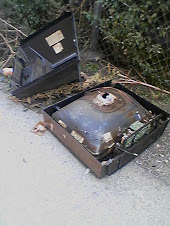
In 2008, New York City enacted a pioneering electronics waste law, becoming the first city in the nation to do so. But the law never went into effect and now the city government and manufacturers are locked in a contentious legal battle over whether producers should take a lion's share of responsibility for collecting discarded electronics.
Before the law could go into effect last July, the Consumer Electronics Association and the Information Technology Industry Council and ITAC Systems, Inc. filed a lawsuit to block it. The New York City Law Department and the National Resources Defense Counci are defending the law.
Oral arguments have been postponed three times since the fall as the two sides try to negotiate a settlement. The case is being heard by Judge William H. Pauley of Federal Court for the Southern District of New York.
"The stakes are high on this," said Barbara Kyle, national coordinator for the Electronics Take Back Coalition. "If the plaintiffs prevail on this, it can call into question legislation on a whole range of products where states are holding manufacturers responsible." For the city -- where only 10 percent of discarded electronics are recycled -- a plaintiffs' victory would add to the growing list of environmental reforms that failed, stalled, or were drastically revised. Manufacturers fear that, if they lose, they will have to comply with a law that they say imposes unreasonable burdens and enormous costs.
Picking Up the Pieces
The proposed law requires manufacturers to plan for and pay the full cost of collecting discarded electronics. Manufacturers must submit an e-waste plan detailing "convenient" methods by which consumers can return items. Manufacturers can be penalized $1,000 for each day the plan is past due, while city residents can be fined $100 for each improperly disposed item. The law covers computers, televisions, computer printers, and i-Pods, but not cell phones or household appliances.
The most controversial provision of the city's plan requires that manufacturers collect items over 15 pounds directly from consumers' residences. Items under 15 pounds can be mailed or dropped off at a collection point. The direct collection requirement -- which no state has -- was not part of the City Council legislation but a regulation from the Department of Sanitation, which governs how the law is administered.
Other highly contested elements of the law include an orphan waste rule, which requires manufacturers to take back certain electronics made by producers that no longer exist, and a performance standard, which sets minimums on how much must be collected.
The plaintiffs point out that Mayor Michael Bloomberg vetoed the performance standards component of the e-waste plan, which City Council passed in a separate bill in 2008. But the mayor did sign the bill containing all other aspect of the e-waste recycling plan, and the council later overrode the mayor's veto of the performance standard.
A Mountain of E-Waste
This law was prompted by an exponential growth in electronic waste and a growing awareness of its dangers.
Junked electronics are the fastest growing kind of waste in the U.S. Americans, who own over 2 billion pieces of high-tech electronics, discard over 3 million tons of them each year according to a 2007 report by the Environmental Protection Agency. Public Advocate Bill De Blasio, a longstanding proponent of the bill during his tenure in City Council, has written that the city spends over $6.4 million a year to export the nearly 30,000 tons of e-waste that travel through its waste stream.
Electronics contain lead, cadmium, mercury, all of which are dangerous when released into the environment, according to the city's brief. Such toxins can leach into groundwater from improperly contained landfills or be released into the air when crushed by compactors or burned in incinerators.
Plaintiffs say the law is unconstitutional, alleging, among other claims, that it would impede interstate commerce and violate the equal protection clause and due process.
But their essential problem with the law is cost. They claim that the city has "devised a program this is in order of magnitude more costly than any other E-waste program in the world."
"The city’s program costs six to eight times more than any other state program, and these excessive costs will be passed back to consumers in the form of higher prices," said Parker Brugge, vice president of environmental affairs for the Consumer Electronics Association. Brugge said that the association estimates the proposed law would cost manufacturers about $200 million annually.
Paying for Pick-up
Direct collection alone, according to the Consumer Electronics Association and other plaintiffs, "will cost manufacturers approximately $121, and potentially more, per pick-up from a city residence." James Slaughter, attorney for the plaintiffs, said direct collection is particularly expensive because whenever a customer calls to dispose an electronic item, "we have to come get it."
But the city and the Natural Resources Defense Council dispute the plaintiffs' cost estimates. Kate Sinding, attorney for the Natural Resources Defense Council, said that the plaintiffs' estimates are based on the most inconvenient ways of complying with the law. She said that in reality, "competition and the drive for efficiency would lead manufacturers to find the least costly option for compliance."
In support of this position, Jay Shepherd, a policy advisor from Washington State Department of Ecology, filed written testimony indicating that companies in his state have pooled resources and worked together to come up with cost effective ways of complying the state's e-waste laws.
The city and NRDC also indicate that direct collection is not the expensive, come and get it kind of rule the plaintiffs make it to be. And on the law's face, this is true. The regulation states that for items over 15 pounds, "convenient collection from a resident shall mean direct collection from a resident's home." Slaughter said this implies an on-demand pickup, but Sinding said the regulation is flexible, allowing companies to come out to collect every few weeks or so. The plaintiffs "interpret the direct collection requirement as being an on demand pickup requirement, but there is absolutely nothing in the regulations, or the law, that would compel anything like that," Sinding said.
The city also indicates that direct collection is "narrowly tailored" to New York City, where many residents do not own cars. Without cars, people would have to lug heavy items on mass transit.
Jennifer Carela, a Chelsea resident who hauls her out-of-use electronics on the subway to city-run collection programs, likes the proposed law for its convenience to city residents. "I've used the electronic drop off sites but it's always a production to plan your schedule around them, and I don't think most people care enough to lug their keyboards, CPUs, and TVs downtown to have them disposed of properly," she said.
Sharing the Burden?
The manufacturers also complain that the law shifts all responsibility to them, and that is what makes it particularly unfair. In California, consumers pay a fee at the time of sale. "There needs to be a shared responsibility among various stakeholders," Brugge said.
However, the city argues in its brief that one rationale for increasing manufacturer responsibility is that "requiring manufacturers to internalize the costs of recycling covered electronic equipment gives those manufacturers an incentive to reduce or remove toxic materials from products at the time that the products are first manufactured." Eighteen of the nineteen states with e-waste laws have enacted legislation that shifts burdens toward the producer, and such laws have come to be known as producer responsibility laws.
Elizabeth Grossman, whose 2006 book High Tech Trash chronicled how severely production and disposal of electronics affect the environment, said, "If you require a company to take physical and fiscal responsibility of their obsolete products, they've got a whole lot more incentive to make them easier to recycle and last longer."
Nili Belkin, a Park Slope resident, would like to see that happen. She recently got rid of her computer printer merely because the small roller that feeds through paper would have cost her nearly as much as a new printer. She hopes the law will encourage longer lasting, less disposable products.
City, State or Federal?
For now, only 19 states regulate e-waste. The number is likely to grow, according to experts.
The industry has said this matter should not be left to cities and states.
"We believe that electronics recycling is a national issue that requires a federal solution" said Brugge. "It is not feasible for manufacturers to comply with a unique recycling scheme for every municipality in the country."
Kyle noted, though, that what she considers a sound, comprehensive, proposal at the federal level never got off the ground, leaving states to take things in their own hands.
"This is really a fight about state's rights and city's rights," said Kyle.
great toxic links alert
Change makers - Join the fight against electronic waste
By Toxics Link, 10/03/2010
Source: Toxics Link
E-waste is a critical issue facing India today. With rapid technological advancement and growing obsolescence rate, the country is saddled with huge generation of this new stream of waste. The issue is not just of massive quantity but also of toxic nature of this waste. E-waste contains lead, mercury, arsenic, cadmium, PVC, Brominated Flame Retardants and other toxics and potentially hazardous substances, which can cause damage to our health and environment.
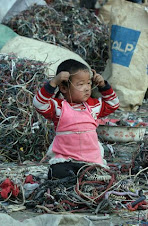
E-waste is end-of-life equipments like computers, mobiles, televisions, refrigerators, washing machines, electric wires, MP3 and DVD players etc, which run on electricity. Every discarded electrical and electronic gadget adds to the pollution and exposes millions of people to hazardous toxins. The issues is further complicated in India due to rudimentary processes used in the informal recycling sector where majority of it is currently recycled.
There have been attempts to change the situation, which has resulted in greater awareness in the issue and also setting up of authorized recyclers with environmentally sound recycling technologies. But there is still lot to be done.
E-waste is generated mainly from two sources- domestic and businesses. In recent times, though there have been some attempts to collect wastes from corporate or businesses; there has been hardly any initiative to provide this facility to households or individuals. This means the common man does not have a way of disposing off this hazardous waste in a safe manner.
Children, who are the real change makers of any society, can also take a lead in this and help find solutions. The students of St. Paul’s School, New Delhi in collaboration with Toxics Link, have taken up one such initiative and have set up a collection system for this hazardous E waste in their school.
Under an initiative by Toxics Link, St Paul’s school’s team of eleven students along with their teacher Mrs Manju Chawla, have initiated this task of spreading the word about e waste hazards and the need for its safe management. A special bin has now been placed in the school campus wherein the students drop E waste generated within the school premises and also bring E-waste from their respective homes. This waste is then sent to an E-waste recycler, authorised by Central Pollution Control Board for safe recycling.
They have plans to include the school neighborhood in the collection programme for e waste, thus involving peoples participation in finding solution to this complex issue of managing e waste.
Interpol
Illegal e-waste commerce focus of INTERPOL environmental crimes meeting
21 July 2009
© iStockPhoto / Ravi van Leeuwen
Millions of tonnes of personal computers are illegally disposed of each year
See also
Newsletter: Issue 01
LONDON, England - Developing an enforcement strategy to address the illegal trade and export of electronic waste (e-waste) is the focus of a two-day meeting of INTERPOL's Environmental Crime Programme which opened in London today.
As part of the Organization’s ongoing efforts in combating environmental crime, the INTERPOL e-waste project was established in 2007 to analyze and respond to illegal activities involving the exportation of scrapped computers, televisions, mobile telephones and other electronic waste to developing nations.
Electronic equipment contains a host of potentially hazardous materials including lead, arsenic mercury, cadmium and other toxic metals. The ‘smash and burn’ method often used in the illegal handling of e-waste in developing countries puts individual workers at risk of serious health problems such as damage to the brain, the central nervous system and internal organs.
These illegal operations also release significant levels of dangerous substances into the atmosphere and surrounding water resources which can reach such concentrated levels that the wider community is also affected.
“The illegal trade and export of e-waste not only affects the environment, but can also be linked to other crimes such as corruption, fraud and bribery,” said David Higgins, INTERPOL’s Environmental Crime Programme manager.
“There is also the risk that personal and sensitive information can be retrieved from scrapped computers and mobile phones, leaving the former owners open to identity theft.”
During the meeting in London, hosted by the Environment Agency of England and Wales, experts from Belgium, Canada, the Netherlands, the United Kingdom and the United States will discuss and share best practice in dealing with illegal e-waste exports, including the identification of modus operandi and the need for a multi-disciplinary approach involving all areas of law enforcement.
INTERPOL’s Environmental Crime Programme supports operational law enforcement activities in each of the 187 member countries through providing a secure international law enforcement communication network, assisting in building environmental law enforcement capacity globally and encouraging the exchange of environmental law enforcement intelligence internationally.
recyclingportal.eu offers this
WEEE Forum exceeds the mark of 2 Mt of electronic waste collection
Brussels – With more than 2 Mt of WEEE collected and properly treated and reported, 2009 has been recorded as a successful year for the 39 producer responsibility organisations of the WEEE Forum. This figure is up by 30 percent on 2008 when approximately 1.5 Mt was collected and properly treated.
Logo WEEE Forum
WEEE Forum
“We are extremely satisfied having exceeded the 2 Mt mark”, comments Andreas Röthlisberger, President. “The first and by far most important explanation is that all of our member organisations invested millions of euro’s in campaigns aimed at raising awareness among consumers and in building collection networks. It takes huge, sustained efforts to educate consumers on what to do with their end-of-life appliances”.
“In addition, says Pascal Leroy, Secretary General, “as the producer responsibility organisations share best practices amongst each other, good results are obtained while, at the same time, the development costs of new consumer awareness campaigns steadily decrease”.
Nevertheless, seen in the light of last year’s economic downturn, this performance is quite remarkable. The WEEE systems, all of them run on behalf of a community of 17,000 producers Europe-wide, showed stability and the consumers did not face increasing costs.
The WEEE Forum was founded in April 2002. Being one of the world’s only multinational e-waste centres of competence, the WEEE Forum’s mission is to contribute to an expert and constructive debate based on facts and figure
Subscribe to:
Posts (Atom)






 Posts


