e
February 5th, 2010
Published in Governence
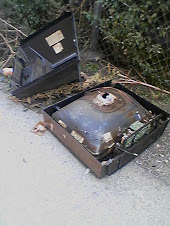
During 2005, 1,46,800 tonnes of e-waste was generated in the country, which is expected to increase to 8,00,000 by 2012. A survey carried out by the Central Pollution Control Board (CPCB) further states that the top ten cities generating e-waste are Mumbai, Delhi, Bangalore, Kolkata Chennai, Ahmedabad, Hyderabad, Pune, Surat and Nagpur. There is an estimate (2008)that the total obsolete computers originating from offices, business houses, industries and household is of the order of 2 million. Manufactures and assemblers in a single calendar year are estimated to produce around 1200 tonnes of electronic scrap.
Electronic waste or E-waste is one of the rapidly growing environmental problems of the World. In India, the electronic waste management assumes greater significance not only due to the generation of our own waste but also dumping of E-waste particularly computer waste from the developed countries.
A 2007 study also revealed that approximately 29,000 tonnes of E-waste is generated in the four Metro cities in the country. The total quantity of e-waste generation in Delhi is about 10,000 tonnes/annum.
The Ministry of Environment and Forests has notified the Hazardous Wastes (Management, Handling and Trans-boundary Movement) Rules, 2008 for proper management and handling of hazardous wastes which include e-waste. Rules, All the units handling e-waste need to register with CPCB and the hazardous wastes generated shall be sent or sold to a registered or authorized recycler or re-processor or re-user as per the rule.
The Guidelines for Environmentally Sound Management of e-waste published by CPCB provide the approach and methodology for environmentally sound management of e-waste, which include details such as e-waste composition and recycle potential of items of economic value, identification of possible hazardous contents in e-waste, the recycle, re-use and recovery options, treatment and disposal options and the environmentally sound e-waste treatment technologies. The Guidelines emphasize the concept of Extended Producer Responsibility.
Friday, February 5, 2010


Tuesday, February 2, 2010
HONG KONG GOVT GETS REAL
Hong Kong (HKSAR) - The Environment Bureau today (January 18) issued a consultation document to seek public views on introducing legislation to implement a mandatory producer responsibility scheme for the proper management of waste electrical and electronic equipment (WEEE).The consultation will last for around three months until April 30. WEEE contained hazardous components that were harmful to the environment and human health if not properly treated or disposed of, the Secretary for the Environment, Mr Edward Yau, said. He said various jurisdictions across the globe had put in place specific measures for the management of WEEE.The mainstream approach had been to bring WEEE under mandatory control through producer responsibility schemes.
"By introducing the proposed producer responsibility scheme, we could on the one hand avoid the negative impact that WEEE might bring about on the environment and on the other hand promote the recycling of waste and the reuse and recovery of useful materials," Mr Yau said."At the same time, we could foster the development of the local environmental industries." Hong Kong generates around 70,000 tonnes of waste electrical and electronic equipment each year and the volume has been increasing at the rate of 2% annually in recent years.Although 80% of locally generated WEEE is recovered by second-hand dealers, it is usually exported to developing countries for re-use and recovery of useful materials.This exporting strategy is not environmentally sound and is indeed unsustainable. The Legislative Council enacted the Product Eco-responsibility Ordinance (Cap 603) in July 2008 to provide a legal framework for implementing mandatory producer responsibility schemes for various products including electrical and electronic equipment.An environmental levy has already been introduced for plastic shopping bags and in his 2009-10 Policy Address the Chief Executive identified WEEE as the next target for a producer responsibility scheme. "The consultation document presents our analysis of the options for a WEEE scheme for Hong Kong, including the coverage of the scheme, how to provide proper treatment for waste electrical and electronic equipment, how to manage its flow and how to share the cost of the scheme.In drawing up the analysis, due regard has been given to relevant international experience as well as our local context," Mr Yau said.
"We will listen to the views of all parties in an open-minded manner." The consultation document has been uploaded to the website of the Environmental Protection Department (EPD): (www.epd.gov.hk/epd/weee).It is also obtainable from EPD and District Offices.People may forward their views and comments to the EPD by April 30 by post, email or facsimile, or over the Internet.Details are as follows - By post: Environmental Protection Department Waste Management Policy Group Room 4522, 45th floor, Revenue Tower 5 Gloucester Road Hong Kong By email: weee@epd.gov.hk By facsimile: 2318 1877 By Internet: www.epd.gov.hk/epd/weee
THANKS TO CHAD RAPHAEL FOR THIS
Factory workers in China protest over pay, use of toxic chemicals+
Jan 15 08:00 AM US/Eastern
HONG KONG, Jan. 15 (AP) - (Kyodo)—Thousands of workers in a factory in eastern China's Jiangsu Province protested Friday over the cancellation of annual bonuses and poor work safety environment, a human rights watchdog and local media reported.
The Information Center for Human Rights and Democracy said 10,000 workers staged a strike over the apparent cancellation of yearend bonuses for the second consecutive year due to the economic slump, and more than 100 of them were injured after clashing with hundreds of police officers.
The crowd later dispersed after the company promised to reconsider the bonuses.
An unidentified worker, who claimed to have been poisoned by the factory's unregulated use of chemical n-hexane, said more than 200 workers have suffered the same problem since July last year, and about 40 of them remain in hospital, the center said.
The worker said the authorities have knowledge of the chemical use but have done nothing about it.
The factory in Jiangsu's Suzhou Industrial Park, United Win (China) Technology, is a subsidiary of Taiwan's liquid crystal display manufacturer Wintek Group, Hong Kong's Cable TV said.
Footage showed angry workers demolishing the factory's signs and rallying outside the factory during the strike. Photographs posted on mainland websites showed police officers standing by with batons and shields.
A factory worker identifying himself only by the surname Zhu told Kyodo News the strike began in early morning and he left when police started using force against the crowd.
"Police started beating up people, men and women," Zhu said over telephone. "At least five to six workers were injured when I left."
He said business has recovered in the past year and the workers are disappointed that there was no bonus for 2009 year in addition to there having been no bonus for 2008.
Regarding the use of n-hexane, Zhu said at least three people, including an engineer, have died from poisoning and a few others have been paralyzed.
"I don't dare to work here any longer, I will quit after Chinese New Year," he said.
Jay Wuang, Wintek's financial department manager, said the incident was not a strike but rather workers "expressing their opinion" and he said the company will pay the bonuses for 2009. "It was a misunderstanding," Wuang said over telephone. "We have stopped using n-hexane once we learned of the workers' health problems. We have 13,000 workers in the factory but we cannot confirm if anyone has died from exposure to n-hexane."
He said "a handful" of workers were sick but they were all cured.
GREENPEACE RATINGS
Some companies really do make greener electronics
07 January 2010
Las Vegas, United States — Apple, Sony Ericsson and Nokia do well in our updated Guide to Greener Electronics, while Samsung, Dell, Lenovo and LGE disappoint.
Our electronics campaigners are blogging from the Consumer Electronics Show (CES 2010) in Las Vegas January 7-10. Their mission: To cut through the greenwash, and highlight product ranges on the market which really are free of hazardous chemicals like PVC (vinyl) plastic and brominated flame retardants (BFR).
CES is a major trade show where electronics companies come to demonstrate new products and jostle for industry media attention (which these days includes many technology blogs like Engadget and Gizmodo). Though it is not open to the public, CES say they expect over 140,000 attendees -- that's a lot of consumer electronics industry people in one place.
"In 2010, we should see significant developments, with products free of PVC and BFRs in the PC and TV markets.
Any company failing to achieve this goal is taking a big gamble with its green reputation. On a positive note, it's good to see non-ranked companies beyond the PC and TV sectors, like Cisco, committing to eliminate these harmful substances."
-- Iza Kruszewska, Greenpeace International toxics campaigner
Guide to Greener Electronics 14th Edition
Apple, Sony Ericsson and Nokia lead the way for product ranges free of the worst hazardous substances with HP following their lead. HP just released the Compaq 8000f Elite business desktop, its first completely PVC and BFR free product, at CES 2010.
Meanwhile Samsung, Dell, Lenovo and LG Electronics (LGE) pick up penalty points in the Guide for failing to follow through on a promised phase-out of toxics in their products.
Most of the companies in our ranking guide had pledged to remove toxic PVC (vinyl) plastic and BFRs from their product range by the end of 2009, which would have meant a greater show of greener, toxic-free products for visitors to see at the CES. But, for now, it's a no show for these companies, who have delayed their phase-out to 2011 or beyond. No doubt they won't mention their backtracking to journalists and bloggers they meet at CES.
What's all the concern about toxic chemicals and e-waste
PVC contaminates humans and the environment throughout its lifecycle; during its production, use, and disposal it is the single most environmentally damaging of all plastics, and can form dioxin, a known carcinogen, when burned. Some BFRs are highly resistant to degradation in the environment and are able to build up in animals and humans.
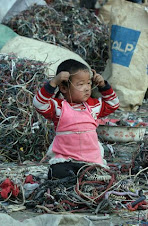
With the growth of electronic waste, workers who deal with e-waste and the wider community are exposed to significant health risks. Burning of e-waste to recover valuable resources, as routinely takes place in the backyards of China, India and much of the global South, can form dioxins. Eliminating the substances will decrease exposure and increase the recyclability and reusability of electronic products.
Consumers want green, not greenwash
Electronics companies have been moving their "environmental information" links higher and higher on product information webpages in the four years since our first Guide to Green Electronics. Some of it is only greenwash though, and informed consumers can tell the difference.
Last year Apple cleared the final hurdle in eliminating toxic PVC (vinyl) plastic, making it the first company to completely eliminate hazardous BFRs and PVC in its computer systems. Pressure from thousands of Apple lovers and advocates turned the company green in the time it took to go from iMac G5 (2006) to iMac Aluminum (2009).
"It's time for a little less conversation and a lot more action on removing toxic chemicals." That's what our electronics campaigner, Casey Harrell, is saying at CES. Apple, Sony Ericsson and Nokia are winning this game and HP is catching up, but the lack of action from other companies is ensuring that customers and the environment are still losing out.
Ban the toxic stuff for good
Several companies see their scores reduced in this edition of the Guide with the bar being raised on hazardous substances. Having endorsed the precautionary principle, companies now need to actively support bans on PVC, BFRs and chlorinated flame retardants (CFRs) during the revision of the European Union's Restriction of Hazardous Substances in Electronics Directive.
"Companies need to support legislative bans to ensure a consistent phase out of PVC and BFRs across all electronic products," said Iza Kruszewska Greenpeace International toxics campaigner. "Sony Ericsson and Apple are already calling on EU institutions to support such a ban. Other big players like HP and Dell, who have remained silent so far, and Acer need to ensure the ban is passed in the European Union parliament."
Nokia leads the ranking, with a score of 7.3 out of 10. Sony Ericsson follows closely, and is the only company to score full marks on all the toxic chemicals criteria. In third place is Toshiba, but it risks losing points if it fails to meet its commitment to market new models of all its consumer electronics products that are free of PVC and BFRs by 1 April 2010. Philips comes in fourth place, while Apple rises from ninth place to fifth.
Nintendo continues to languish at the bottom of the ranking. Sony is rewarded for its reported 17 percent reduction in greenhouse gas emissions over the period 2000-2008, with renewable energy now accounting for 8 percent of the total energy purchased globally each year by the company, up from 2.5 percent a year ago. It also gains for the reported use of 17,000 tons of recycled plastics annually in various products, representing 10 percent of all plastics used in the 2008 financial year. Almost 90 percent of this recycled plastic was post-consumer.
CBC DOES GOOD REPORTING
January 5, 2010
E-waste still being exported, says watchdog
By CBC News
As more people replace their old televisions with flat-panel screens, a toxic-waste watchdog is warning that many e-waste recyclers are still illegally shipping old TVs to developing nations.
As more people replace their old televisions with flat-panel screens, a toxic-waste watchdog is warning that many e-waste recyclers are still illegally shipping old TVs to developing nations.
"We predicted a tsunami of [cathode ray] TVs and it's unfortunately turning out to be true," said Jim Puckett, executive director of the Seattle-based Basel Action Network, which advocates for proper disposal of the mountains of e-waste produced every year.
Puckett advises consumers to bring their old TVs to municipally run depots and to avoid private recyclers that promise environmentally safe disposal.
"The so-called recyclers out there are not really recycling. What they're doing is loading up containers and shipping things off and it's too easy, even in Canada, where you are a party to the Basel Convention," said Puckett in an interview with CBC News.
The Basel Convention is an international treaty to minimize and control and movement of hazardous waste.
Puckett estimates 80 per cent of private recyclers in North America export e-waste to developing nations, where workers break down old TVs and computers using dangerous methods to get at raw materials.
He visited Ghana in late November, where a lot of e-waste ends up and said the African country is swamped with old televisions.
"They're getting way more than they can deal with," he said. "So many people are getting rid of perfectly good ones."
The export of e-waste is not as dire in Canada as it is in the U.S., where there are no export regulations. In Canada, exporting e-waste to developing nations is illegal. Puckett said it still occurs because of a lack of enforcement.
Almost every province in Canada has, or is in the process of developing, industry-led programs to ensure e-waste is disposed of in a safe, environmentally friendly way. Most provinces prohibit such waste from going to landfills.
In B.C., more than 1,300 metric tonnes of e-waste is collected every month from 97 depots. Of that, televisions make up between 70 and 80 per cent, said Joyce Thayer, executive director of the Electronic Stewardship Association of B.C.
"There is a trend in the replacement of old TVs, but it's been going on for some time," Thayer said in an interview with CBC News.
The B.C. stewardship, composed of electronics retailers and producers, deals with five approved recyclers that have been audited to ensure they don't export e-waste. Instead, it is safely dismantled and some of it smelted by the resource company Teck. In fact, medals for the Vancouver Olympics will be made with metals extracted from e-waste by Teck.
Geep Global, a Barrie, Ont., based recycler has seen a "tremendous increase" in the number of CRT TVs and computer monitors they process since becoming an approved member of the Ontario Electronic Stewardship.
"It's changed our whole monitor line, made it much busier," said Chris Gariepy, Geep's vice-president of international marketing.
Asked where the monitors would have gone before the Ontario program came into force in April 2009, Gariepy said much of it would have ended up in the landfill.
Flat-screen televisions were among the only products that did not decline in sales during the recession.
The U.S. is still in a TV-upgrade cycle. American digital research firm iSuppli estimates that 33.8 million flat-panel sets were shipped in the U.S. in 2009, up 17 per cent from 2008.
A major reason is that prices keep declining ? a 32-inch flat panel can now be had for just over $300 US, which is about what old tube TVs used to cost.
Samsung Electronics Co. recently reported that sales of LCD televisions with LED backlight technology surpassed an initial target of two million units in 2009 and will grow nearly fourfold to10 million this year, according to the Wall Street Journal.
NEW REPORT
SOFIA ECHO:
A European Commission study published on February 1 2010 recommends setting up a dedicated European body to oversee the implementation and enforcement of EU waste law.
The study is part of a series of steps being taken by the European Commission to improve waste management and ensure it meets the standards set by EU legislation to protect citizens and the environment.
Illegal dumping of waste continues on a significant scale, many landfill sites are sub standard and in some member states basic waste infrastructure is still missing. Illegal waste shipments are also a concern.
A second report published on February 1 reveals that almost one fifth of waste shipments inspected as part of recent enforcement actions in member states were illegal.
Environment Commissioner Stavros Dimas said: "Compliance with EU legislation is essential if we are to achieve the overarching goal of EU waste legislation, which is to protect the health of European citizens and the environment. We must look at all the options, including setting up an EU agency or body which could enable EU legislation to deliver the maximum benefits for citizens, the environment and the EU economy."
Overseeing the safe and environmentally sound management of waste is one of the most serious environmental challenges facing the EU today, a European Commission media statement said.
An estimated 2.6 billion tons of waste is generated in the EU each year – about 90 million tons of this is classified as hazardous.
The study recommends setting up a dedicated agency at EU level to tackle the underlying problems of poor implementation and enforcement of European waste legislation.
The scale of the problem has grown in recent years following increases in waste generated and shipped in the enlarged EU, the European Commission said.
In 2008, the European Parliament adopted a resolution urging the Commission to report on the feasibility of establishing a "Community environmental inspection force".
The agency would carry out a number of tasks such as reviews of enforcement systems in EU member states, co-ordinated controls and inspection activities.
This would be combined with the creation of a specific European body responsible for direct inspections and controls of facilities and sites in serious cases of non-compliance. A European network of EU member states would support the agency in a number of activities.
The recommendations are based on responses from EU member state officials and stakeholders through questionnaires, interviews and informal workshops, the European Commission said.
The annual cost for carrying out the recommendations is estimated at just more than 16 million euro.
In addition to other waste-related benefits, full implementation of EU waste law would reduce emissions of greenhouse gases, including methane from landfills, equivalent to almost 200 million tons of CO 2 a year, according to the European Commission.
This would save 2.5 billion euro annually at today's carbon price of about 13 euro a ton. Other significant economic benefits from strengthening implementation include a level playing field for European companies, better opportunities for innovation and increased access to valuable secondary raw materials, the European Commission said.
An in-depth cost-benefit analysis will be carried out this year. Further steps may be proposed during 2011.
Current gaps in implementation and enforcement have led to wide-scale illegal dumping and large numbers of landfills and other facilities and sites that do not meet EU standards, the European Commission said.
In some EU member states, waste infrastructure is inadequate or missing.
EU countries that have got into hot water with Brussels because of waste disposal issues include Bulgaria, because of the long-standing unresolved problem of Sofia waste disposal.
The European Commission said that there was also growing concern about the high number of cases of illegal waste shipments.
A lack of inspections and on-the-spot checks was identified as a contributory factor. In response, the European Commission supported a series of co-ordinated inspections, spot-checks and controls of waste shipments in member states in co-operation with IMPEL 1 , the EU network of officials from environmental administrations in the member states.
More than 10 000 transport inspections and several hundred company inspections were carried out.
In total, 22 member states and several neighbouring countries participated in the joint enforcement actions.
In about 19 per cent of cases involving transport containing waste, inspectors found shipments to be illegal.
Most of the cases concerned illegal exports from the EU to countries in Africa and Asia in contravention of the export ban on hazardous waste or violation of information requirements for exports of "green", non-hazardous waste.
IMPEL is continuing with joint inspections of waste shipments and aims to extend these to all EU member states, the European Commission said.
The Commission has also addressed the problem by proposing reinforced legislation, the EC media statement said.
The proposed revision of the directive on waste electrical and electronic equipment (WEEE) includes additional rules to avoid illegal shipments of electrical and electronic waste, especially when falsely declared as used products.
The Commission said that it was also assessing the feasibility of strengthening inspection requirements under EU rules on waste shipment.
GREEN MARKETING
Monday, January 4, 2010
Green Marketing More of a Trend Than a Fad
Environmental Leader and MediaBuyerPlanner partnered to study Green Marketing through the audiences of five industry publications to help determine if it's a staple or a fad. The report found that 33% of respondents said green marketing was more effective than their normal marketing efforts, with just 7% saying it was less effective. The remainder either did not detect a difference between their regular marketing efforts and their green efforts, or did not know which was more effective. Additional information from the Executive Summary is included for your perusal, and purchase information is available from a link at the conclusion of this Brief.
Companies that view themselves as the most green spend the most on green marketing, observes the report, while those that see themselves as least green spend just a fraction of their marketing budgets on such tactics. Marketers are backing up their beliefs of the compan! y's level of "greenness" with marketing campaigns, rather than creating green campaigns to be part of the trend. The research suggests that management first buys into "greenness" and, later, green marketing, rather than beginning green marketing efforts simply out of a desire to appear green.
71% of firms indicated that they were in the "somewhat green" to "very green" categories, but they tended to believe their customer base thinks them less green than they really arr. This belief is persistent among the respondents, and may indicate why green marketing is on the rise.
Here are some of the key findings explained in the study:
82% of respondents indicated they expect to spend more on green marketing in the future. Among manufacturers, that number is significantly higher. At least half, if not more, of respondents plan to engage in onli! ne marketing efforts in the future.
28% of marketers themselves think green marketing is more effective than other marketing messages, compared to 6% of marketers who think it is less effective. Management is even more optimistic, with 46% of them indicating a belief that green marketing is more efficacious. Just 23% of those in operations think green marketing is more effective.
Companies with smaller marketing budgets tend to spend more on green marketing. Firms with a marketing budget of under $250,000 spend just over 26% on green marketing, while those with budgets of more than $50 million spend 6% on green marketing.
The most popular medium for green marketing was the internet, with
74.2% of respondents having spent money online, followed by
Print (49.8%
Direct (40%)
Outdoor (7%)
Radio and TV (7%)
Mobile ! (6%)
29% of marketers with budgets between $10 million and $50 million, and 25% of those with budgets of more than $50 million, used outdoor, compared to 7.3% for all marketers.
Mobile was also a popular medium for marketers with the highest budgets:
14% of those in the $10 million to $50 million budget category spent money on mobile
16% in the more than $50 million budget category spent money on mobile
Compared to 6% for all marketers
Those firms that used the most trackable media are also those that said green marketing worked better than the average marketing message.
48% of respondents who employed direct marketing in their media mix said that it was more or much more effective, much like those who used internet (43%)
That contrasts with those respondents who had employed TV, 25% of! whom said it was more effective than average, indicating that green marketing works better than those who don't or can't measure results think it does.
Direct-oriented media showed the more positive results when asked if customers would pay more for green products or to a green company:
Of the people who used the two least trackable media, TV and outdoor, only 29% and 25% respectively indicated that customers would pay more
That compares to 44%, 42% and 46% for internet, print and direct respectively
Larger companies are more likely to target employees rather than customers:
Companies with media budgets of more than $10 million annually showed a much higher proclivity to have their own employees as their target audience, with customers being targeted in only 70% of their efforts
Firms with budgets&n! bsp;less than $250,000 were about 80% more likely to target customers directly, and only about half targeted their own staff
50% of marketers themselves indicate they have complete or consultative control of green marketing, while 57% of PR folks say that have control of the sustainability program. Sales and operations, on the other hand, are skeptical that marketers have so much control of the sustainability programs, with just 41% and 21% respectively saying control lies in the hands of marketers. However, those in management tended to agree that control of the sustainability program is in the hands of marketers, at 50%.
About half of companies reported that they are consciously taking steps to become more green. The most popular actions are:
Conserving energy in operations, at 59%
Changing products to reflect greener values (such as changing ingredients, packaging or! intended use), at 54%
And the Executive Summary observes that nearly half of respondents said the decision-makers at their companies hold green marketing in high regard, compared to just 15% who hold it in low regard. Companies with decision-makers who have a low regard for green marketing tend to be those with the larger marketing budgets between $10 million and $50 million per year, where more than a quarter indicated that their decision-makers held green marketing in low regard. Smaller companies, concludes the report, may believe green marketing to be more effective than larger companies do.
Subscribe to:
Posts (Atom)






 Posts


