TO FIND SITES LIKE THIS ONE?
http://www.cleanskies.com/
great network
Tuesday, October 6, 2009


AUSTRALIA FINALLY WAKING UP?
The Tipping Point offers this:
Tipping point: Australia's e-waste crisis
Creator:
Jeff Angel [1]
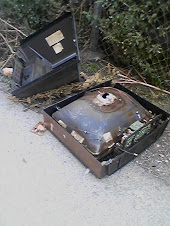
The 2009 Update of the Tipping Point report estimates that there are 234 million items of e-waste in or on their way to landfill.
The Report shows that a recycling scheme for televisions and computers would create 2,570 jobs nationally by the year 2015. This could be increased to 6,190 new jobs if all electronic waste items were included.
Environment Victoria Campaigner Fraser Brindley said that e-waste recycling made economic sense. “The government’s own figures show that a recycling scheme for televisions and computers would have a net economic benefit,” Mr Brindley said. “We’ve shown that this will translate into thousands of green collar jobs across the country.”
Mr Brindley also said that a recycling scheme for televisions and computers was a good start, but that the federal government should include all other e-waste in the future. “Televisions and computers are only 38% of the e-waste going to landfill,” Mr Brindley said. “We also need to deal with the mountains of mobile phones, printers, games consoles, videos and stereo that are not being recycled.”
This 2009 Update follows the release of the consultation regulatory impact statement (RIS) for televisions and computers. This is a government process that will inform the 5 November 2009 meeting of the Environment Protection and Heritage Council (EPHC), at which Ministers have promised to announce a recycling scheme for televisions and computers.
Tipping point: Australia's e-waste crisis
Creator:
Jeff Angel [1]
The 2009 Update of the Tipping Point report estimates that there are 234 million items of e-waste in or on their way to landfill.
The Report shows that a recycling scheme for televisions and computers would create 2,570 jobs nationally by the year 2015. This could be increased to 6,190 new jobs if all electronic waste items were included.
Environment Victoria Campaigner Fraser Brindley said that e-waste recycling made economic sense. “The government’s own figures show that a recycling scheme for televisions and computers would have a net economic benefit,” Mr Brindley said. “We’ve shown that this will translate into thousands of green collar jobs across the country.”
Mr Brindley also said that a recycling scheme for televisions and computers was a good start, but that the federal government should include all other e-waste in the future. “Televisions and computers are only 38% of the e-waste going to landfill,” Mr Brindley said. “We also need to deal with the mountains of mobile phones, printers, games consoles, videos and stereo that are not being recycled.”
This 2009 Update follows the release of the consultation regulatory impact statement (RIS) for televisions and computers. This is a government process that will inform the 5 November 2009 meeting of the Environment Protection and Heritage Council (EPHC), at which Ministers have promised to announce a recycling scheme for televisions and computers.
GREENPEACE'S LATEST GREENER ELECTRONICS GUIDE
--is available here
http://www.greenpeace.org/international/press/reports/guide-to-greener-electronics-13-edition
http://www.greenpeace.org/international/press/reports/guide-to-greener-electronics-13-edition
Monday, October 5, 2009
nbc
is owned by GE, one of the world's largest polluters--but don't worry! Read this TV Week story!
NBCU Enlists All TV Units in Eco Agenda
By Allison J. Waldman
In 2008, Lauren Zalaznick, president of NBC Universal Women and Lifestyle Entertainment Networks, undertook the leadership role in an environmental awareness initiative for NBC Universal called Green Is Universal. A year later, the commitment to green remains an integral part of the NBC Universal brand and corporate identity.
“I think the Green Is Universal initiative has really taken off both externally in how we’re interfacing with our consumers, and internally as far as how we as a company are really embracing green and driving it through our own operation,” said Beth Colleton, vice president of Green Is Universal.
When the program began one of the goals was the creation of a handbook about how to enact green production. Today the handbook exists and is actively in use. “Referencing the manual, what we did worked really well,” said Colleton. “We did some pilot work on film and TV shows to really learn how to create green production and worked that information into a play-by-play instruction manual – one for film and one for TV – that is now integrated into the business process of our Universal Pictures, Focus Features and Universal Media Studio operations.”
The green process isn’t found only in production, but also all business offices and operations.
"Green is sometimes very visual, you know you can see it right there with recycling, but sometimes green is the absence of activity. You might be in an office or in a TV studio and not realize that some green changes have been put in place,” said Colleton.
For instance, a green message might be found in a copy room. “We can communicate behavioral changes to our crews and employees, so there’ll be a message that if they print less, what the effect will be on the environment. The physical branding approach not only communicates information about best practices that are taking place, but informs our work force about the ways they can participate in change,” she said.
One new project NBCU is enacting is called “The Green Apprentice.” “We’ve put additional dollars aside to spur innovation and really encourage our work force to look for cutting-edge innovative ways to implement energy waste and water savings throughout our operations. The proposals are out right now and they’re starting to come in,” said Colleton. “Internally, we have just seen so much traction with green. People are looking for creative ways to implement green and are looking for more long-term solutions.”
Despite the recession NBCU hasn’t abandoned this effort, and the public has come to identify NBC as the green network. “We have some research that we did a few months ago that shows that. Consumers and the general public see the value of green not just in their belief system but in the way that they actually spend their dollars,” said Colleton.
The Green Is Universal message will be underscored during sweeps. “It’s the same as last year. From November 15 to 22, all of the brands of NBC Universal will go green, so to speak, and be dedicated to delivering green information in entertainment and content those seven days,” said Colleton.
Whether on Bravo or USA or NBC, many of the performers have shown great support for Green is Universal. “We are really lucky because our talent is so engaged in the cause of the environment that they often come to us looking for ways to get involved,” she said.
For the on-air, award-winning “The More You Know” PSA program, 23 different stars volunteered to participate in last year’s campaign. “We eventually had to tell folks beyond the 23 that we couldn’t take anymore. They’ve also participated in volunteer events and other public service initiatives to really drive the public to engage here,” said Colleton.
“One of the key differences is that green isn’t just a cause anymore, it’s really a lifestyle that people are recognizing locally, so it’s not a distant 100 years in the future what’s the state of the environment going to be,” she said. “People are seeing the effects of the environment in their everyday lives, so they are very much engaged in trying to change their own behavior for the betterment of themselves, their families and their communities, and most importantly their children.”
For NBCU, the initiative has proven to be a success. “Just this spring, the Audubon Society gave us the Rachel Carson Award,” said Colleton. “Since we’re not a manufacturing company or a building or textile company, they were appreciative of what we have in our arsenal to make a difference. We can communicate with 100 million people during a month and arm them with the right information so that they can make those changes in their daily lives. We do that in our entertainment shows, news properties and we deliver this information all year long.”
NBCU Enlists All TV Units in Eco Agenda
By Allison J. Waldman
In 2008, Lauren Zalaznick, president of NBC Universal Women and Lifestyle Entertainment Networks, undertook the leadership role in an environmental awareness initiative for NBC Universal called Green Is Universal. A year later, the commitment to green remains an integral part of the NBC Universal brand and corporate identity.
“I think the Green Is Universal initiative has really taken off both externally in how we’re interfacing with our consumers, and internally as far as how we as a company are really embracing green and driving it through our own operation,” said Beth Colleton, vice president of Green Is Universal.
When the program began one of the goals was the creation of a handbook about how to enact green production. Today the handbook exists and is actively in use. “Referencing the manual, what we did worked really well,” said Colleton. “We did some pilot work on film and TV shows to really learn how to create green production and worked that information into a play-by-play instruction manual – one for film and one for TV – that is now integrated into the business process of our Universal Pictures, Focus Features and Universal Media Studio operations.”
The green process isn’t found only in production, but also all business offices and operations.
"Green is sometimes very visual, you know you can see it right there with recycling, but sometimes green is the absence of activity. You might be in an office or in a TV studio and not realize that some green changes have been put in place,” said Colleton.
For instance, a green message might be found in a copy room. “We can communicate behavioral changes to our crews and employees, so there’ll be a message that if they print less, what the effect will be on the environment. The physical branding approach not only communicates information about best practices that are taking place, but informs our work force about the ways they can participate in change,” she said.
One new project NBCU is enacting is called “The Green Apprentice.” “We’ve put additional dollars aside to spur innovation and really encourage our work force to look for cutting-edge innovative ways to implement energy waste and water savings throughout our operations. The proposals are out right now and they’re starting to come in,” said Colleton. “Internally, we have just seen so much traction with green. People are looking for creative ways to implement green and are looking for more long-term solutions.”
Despite the recession NBCU hasn’t abandoned this effort, and the public has come to identify NBC as the green network. “We have some research that we did a few months ago that shows that. Consumers and the general public see the value of green not just in their belief system but in the way that they actually spend their dollars,” said Colleton.
The Green Is Universal message will be underscored during sweeps. “It’s the same as last year. From November 15 to 22, all of the brands of NBC Universal will go green, so to speak, and be dedicated to delivering green information in entertainment and content those seven days,” said Colleton.
Whether on Bravo or USA or NBC, many of the performers have shown great support for Green is Universal. “We are really lucky because our talent is so engaged in the cause of the environment that they often come to us looking for ways to get involved,” she said.
For the on-air, award-winning “The More You Know” PSA program, 23 different stars volunteered to participate in last year’s campaign. “We eventually had to tell folks beyond the 23 that we couldn’t take anymore. They’ve also participated in volunteer events and other public service initiatives to really drive the public to engage here,” said Colleton.
“One of the key differences is that green isn’t just a cause anymore, it’s really a lifestyle that people are recognizing locally, so it’s not a distant 100 years in the future what’s the state of the environment going to be,” she said. “People are seeing the effects of the environment in their everyday lives, so they are very much engaged in trying to change their own behavior for the betterment of themselves, their families and their communities, and most importantly their children.”
For NBCU, the initiative has proven to be a success. “Just this spring, the Audubon Society gave us the Rachel Carson Award,” said Colleton. “Since we’re not a manufacturing company or a building or textile company, they were appreciative of what we have in our arsenal to make a difference. We can communicate with 100 million people during a month and arm them with the right information so that they can make those changes in their daily lives. We do that in our entertainment shows, news properties and we deliver this information all year long.”
RICK MAXWELL TURNED ME ON TO THIS CRUCIAL STORY
http://www.businessweek.com/magazine/content/09_41/b4150034732629.htm?chan=magazine+channel_top+stories
Thursday, October 1, 2009
ZDNet Speaks re Apple
September 30th, 2009
Apple declares its environmental credentials
Posted by Heather Clancy @ 5:50 am
Much has been cyber-ink has been spilled (spilt?) over the past several days about Apple’s new Environmental disclosure site called, aptly enough, Apple and the Environment.
For all its vaunted and legendary hipness, Apple hasn’t been as vocal as its high-tech rivals in the green IT department, probably because it hasn’t had such spectacular things to say until just recently. Remember the public spat between Dell and Apple over green technology claims earlier this year? Apple hasn’t exactly scored very well on certain rankings, either, compared with its biggest rivals.
Now it has some good-ish news to report, like the fact that it takes 40 percent less packaging to ship 32,000 MacBook notebook computers in 2009 compared with what it took in 2006. Or that the 2008 model of the 15-inch MacBook Pro emits less carbon dioxide per hour of use than does a 60-watt lightbulb. OR, that in 2008, the company recycled 33 million pounds of electronic waste, or roughly 41.9 percent of the total weight of all the products it sold 7 years earlier. Although the actual amount recycled may seem really teeny compared with other technology companies, what percentage of the products that those companies ship out into the world actually are recycled?
Even Apple high priest Steve Jobs, who has been obviously been laying low for months for health reasons, is speaking out about the company’s green profile. When Steve talks about something, you KNOW its a pretty big deal for the entire company.
As you might expect, Apple’s new environmental reporting site is highly graphical, which gives you a pretty quick at a glance idea of how much damage you’re doing to the planet when you buy an Apple product.
What I’m REALLY longing for, though, is a better comparative site, where I could analyze an Apple model against, say, a Dell model in a more straightforward manner. There are so many variables that go into some of the green IT certifications (ala EPEAT), that you’re never really sure if you’re comparing apples to apples.
Now, I know many of you corporate IT types are thinking at this point: “Who cares about Apple?” You probably don’t, although plenty of small-business owners who make technology buying decisions DO care, especially as the Macintosh OS gains more business-friendly features that make them easier to manage than the alternatives. This is important information for them.
That is because while many high-tech vendors have been falling over themselves for months to preach the green IT gospel to the largest companies AND to consumers, the concerns of smaller businesses have been largely left out of the conversation.
Apple has now made it awfully easy to analyze the impact of its technology and of the process by which its products are made and get into your hands. Not to take away from the great work that Dell and Hewlett-Packard have done in that regard, but the simplicity of Apple’s disclosures is definitely worth emulating.
Heather Clancy
Apple declares its environmental credentials
Posted by Heather Clancy @ 5:50 am
Much has been cyber-ink has been spilled (spilt?) over the past several days about Apple’s new Environmental disclosure site called, aptly enough, Apple and the Environment.
For all its vaunted and legendary hipness, Apple hasn’t been as vocal as its high-tech rivals in the green IT department, probably because it hasn’t had such spectacular things to say until just recently. Remember the public spat between Dell and Apple over green technology claims earlier this year? Apple hasn’t exactly scored very well on certain rankings, either, compared with its biggest rivals.
Now it has some good-ish news to report, like the fact that it takes 40 percent less packaging to ship 32,000 MacBook notebook computers in 2009 compared with what it took in 2006. Or that the 2008 model of the 15-inch MacBook Pro emits less carbon dioxide per hour of use than does a 60-watt lightbulb. OR, that in 2008, the company recycled 33 million pounds of electronic waste, or roughly 41.9 percent of the total weight of all the products it sold 7 years earlier. Although the actual amount recycled may seem really teeny compared with other technology companies, what percentage of the products that those companies ship out into the world actually are recycled?
Even Apple high priest Steve Jobs, who has been obviously been laying low for months for health reasons, is speaking out about the company’s green profile. When Steve talks about something, you KNOW its a pretty big deal for the entire company.
As you might expect, Apple’s new environmental reporting site is highly graphical, which gives you a pretty quick at a glance idea of how much damage you’re doing to the planet when you buy an Apple product.
What I’m REALLY longing for, though, is a better comparative site, where I could analyze an Apple model against, say, a Dell model in a more straightforward manner. There are so many variables that go into some of the green IT certifications (ala EPEAT), that you’re never really sure if you’re comparing apples to apples.
Now, I know many of you corporate IT types are thinking at this point: “Who cares about Apple?” You probably don’t, although plenty of small-business owners who make technology buying decisions DO care, especially as the Macintosh OS gains more business-friendly features that make them easier to manage than the alternatives. This is important information for them.
That is because while many high-tech vendors have been falling over themselves for months to preach the green IT gospel to the largest companies AND to consumers, the concerns of smaller businesses have been largely left out of the conversation.
Apple has now made it awfully easy to analyze the impact of its technology and of the process by which its products are made and get into your hands. Not to take away from the great work that Dell and Hewlett-Packard have done in that regard, but the simplicity of Apple’s disclosures is definitely worth emulating.
Heather Clancy
ghanaian perspective
Comment: Is Ghana bridging the digital divide or creating a digital dump?
Have you thought about the impact of all the used computers, second hand fridges, televisions, mobile phones and other used appliances imported into the country and what becomes of them at the end of their life span? The West speaks a lot about global warming and how fast the world is overheating and ice in the oceans are melting. However, the impact of their electronic waste or E-waste could have far reaching consequences for our health in the future.
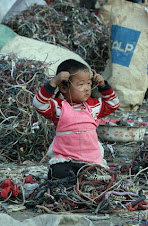
They come under the disguised description of second hand goods and donations from the West meant to bridge the digital divide and improve the lot of Africans. Research and investigation on e-waste into Ghana has revealed Ghana is gradually becoming one of the world’s digital dumping grounds for electronic waste. On the outskirts of Accra, Agbobloshie is fast becoming a record breaker in e-waste compilation. One study estimated that a hundred million tonnes of e-waste each year piles up at Agbobloshie and other surrounding dump sites in the country.
Why should we be concern? Our health and that of young men and women are being endangered by the highly toxic fumes released from the burning of electronic cables and components. People’s lives are being endangered daily in the name of earning a living for themselves and families. Children mostly under eighteen are seen at Agbobloshie and other areas burning toxic plastics and electronic scraps in search of copper and iron to sell for a living. Magnets from old speakers are used to gather small pieces of minerals left at the burn sites.
The health implications are deadly and destructive in the long run. Toxic chemicals are released into the environment for us to inhale and slowly destroy the system. The scrap components contain chemicals like lead, mercury and brominated flame retardants. Other chemicals such as phthalates which interferes with sexual reproduction are laden within the fumes released. Cancer, lungs infection and a destruction of children developing reproductive system are some of the effects of the gases released from these burning electronic gadgets.
Do we need such donations and second hand electronics to endanger the lives of our people? Is the environmental protection agency, the ministry of trade and industry and civil society interested in reducing or eradicating the dangers these imports have on our society? We need to take more interest in what is imported in this country and how each one of us dispose of our electronic gadgets. Family members of ours who are engaged in importing heavy consignments of these scrap electronics called second hand goods must be made aware of the effects of their trade on society.
Ghana’s Communications Minister has given hints of the possibility of government enacting legislation to stop the dumping of e-waste into Ghana in a telephone interview with ghanabusinessnews.com on Tuesday April 14, 2009. He added “we have taken a serious view of the situation and we are considering the passing of anti-dumping legislation, particularly of used computers.”
Emmanuel K. Dogbevi on Ghana business news website asserts the following: “Since April 2008, when the country’s Environmental Protection Agency (EPA) announced the formation of a committee to deal with the situation nothing concrete has happened.”
Much of what has happened, have been paper work and tough talk by public officials who appear not to be fully aware of the specific extent of the dumping and its measured effects on the country’s environment and human health.
Indeed, much of what has been done in concrete terms in direct relations to the dumping of e-waste into Ghana, have been done by foreign countries. The European media also, unlike the Ghanaian media has given the situation serious coverage and broadcast.”
The legislation should be implemented now without delay. We’ve heard a lot of empty talk before. Immediate action can avert the dangerous consequences that lie ahead.
Responsible governance is a partnership between government and the citizenry. We in Africa should be more proactive about our future and not take such issues for granted. If our health and future is important to us, no one should force us to take action on these things. Spread the word and let us take steps to remedy this situation.
Africa has hope because Africa has you.
Credit: Joseph Foray Jnr.
[vice president, strategic planning for the 42nd Generation - an African Youth organization.]
(E-mail: africanreality.over-blog.net)
Story from Myjoyonline.Com News:
http://news.myjoyonline.com/features/200909/35812.asp
Have you thought about the impact of all the used computers, second hand fridges, televisions, mobile phones and other used appliances imported into the country and what becomes of them at the end of their life span? The West speaks a lot about global warming and how fast the world is overheating and ice in the oceans are melting. However, the impact of their electronic waste or E-waste could have far reaching consequences for our health in the future.
They come under the disguised description of second hand goods and donations from the West meant to bridge the digital divide and improve the lot of Africans. Research and investigation on e-waste into Ghana has revealed Ghana is gradually becoming one of the world’s digital dumping grounds for electronic waste. On the outskirts of Accra, Agbobloshie is fast becoming a record breaker in e-waste compilation. One study estimated that a hundred million tonnes of e-waste each year piles up at Agbobloshie and other surrounding dump sites in the country.
Why should we be concern? Our health and that of young men and women are being endangered by the highly toxic fumes released from the burning of electronic cables and components. People’s lives are being endangered daily in the name of earning a living for themselves and families. Children mostly under eighteen are seen at Agbobloshie and other areas burning toxic plastics and electronic scraps in search of copper and iron to sell for a living. Magnets from old speakers are used to gather small pieces of minerals left at the burn sites.
The health implications are deadly and destructive in the long run. Toxic chemicals are released into the environment for us to inhale and slowly destroy the system. The scrap components contain chemicals like lead, mercury and brominated flame retardants. Other chemicals such as phthalates which interferes with sexual reproduction are laden within the fumes released. Cancer, lungs infection and a destruction of children developing reproductive system are some of the effects of the gases released from these burning electronic gadgets.
Do we need such donations and second hand electronics to endanger the lives of our people? Is the environmental protection agency, the ministry of trade and industry and civil society interested in reducing or eradicating the dangers these imports have on our society? We need to take more interest in what is imported in this country and how each one of us dispose of our electronic gadgets. Family members of ours who are engaged in importing heavy consignments of these scrap electronics called second hand goods must be made aware of the effects of their trade on society.
Ghana’s Communications Minister has given hints of the possibility of government enacting legislation to stop the dumping of e-waste into Ghana in a telephone interview with ghanabusinessnews.com on Tuesday April 14, 2009. He added “we have taken a serious view of the situation and we are considering the passing of anti-dumping legislation, particularly of used computers.”
Emmanuel K. Dogbevi on Ghana business news website asserts the following: “Since April 2008, when the country’s Environmental Protection Agency (EPA) announced the formation of a committee to deal with the situation nothing concrete has happened.”
Much of what has happened, have been paper work and tough talk by public officials who appear not to be fully aware of the specific extent of the dumping and its measured effects on the country’s environment and human health.
Indeed, much of what has been done in concrete terms in direct relations to the dumping of e-waste into Ghana, have been done by foreign countries. The European media also, unlike the Ghanaian media has given the situation serious coverage and broadcast.”
The legislation should be implemented now without delay. We’ve heard a lot of empty talk before. Immediate action can avert the dangerous consequences that lie ahead.
Responsible governance is a partnership between government and the citizenry. We in Africa should be more proactive about our future and not take such issues for granted. If our health and future is important to us, no one should force us to take action on these things. Spread the word and let us take steps to remedy this situation.
Africa has hope because Africa has you.
Credit: Joseph Foray Jnr.
[vice president, strategic planning for the 42nd Generation - an African Youth organization.]
(E-mail: africanreality.over-blog.net)
Story from Myjoyonline.Com News:
http://news.myjoyonline.com/features/200909/35812.asp
Subscribe to:
Posts (Atom)






 Posts
Posts


