Ground Floor: Who cares about e-waste in Ghana?
Posted By admin On March 6, 2009 @ 10:55 am In Editorials/Opinion | No Comments
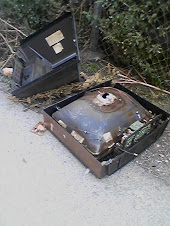
Discarded computer cases in Ghana [1]
Discarded computer cases in Ghana
I am dedicating my column this week to the critical problem of e-waste dumping in Ghana.
There is now no doubt, that Ghana is a choice destination for dumping of e-waste from America and Europe.
Recent developments in Europe, particularly, the UK and Holland paint a very clear picture of the horror the country is confronted with.
Since I first wrote an informative article for the Daily Graphic which the newspaper published in its June 5, 2007 edition, and subsequently wrote an online version of the story drawing attention to the dangers the country could possibly be faced with in the event that we gloss over the increasing presence of health and environment threatening e-waste in Ghana, not much has happened in the country.
I have subsequently written a number of articles on the subject and still do.
Indeed, not even the media in Ghana has seen the issue as a major problem deserving of the kind of attention that it gives to some of the mundane issues we hear in the electronic media and read in the press.
The only time the media in Ghana did any coverage of the issue as it would some of the other issues of importance to it, was when a press conference was held on it or when the international media covered the issue.
Even though, I have worked for some radio stations in this country, my efforts to encourage producers and presenters to give the matter some attention did not receive any appreciable response. In one or two instances, the matter was touched but only after some other media has reported it.
As for government agencies tasked with monitoring and protecting Ghana’s environment and the health of citizens, the least said about them the better.
All the time that I have been contacted on the subject, it has been by foreign individuals, organizations or media. Most of the work and report that has been done on e-waste in Ghana, apart from those I have done and what my good friend Mike Anane has been doing, have been done by foreigners. And this leads me to ask; who cares about e-waste in Ghana?
On August 5, 2008, Greenpeace released a report on Ghana, which detailed the extent of pollution the country is exposed to due to the presence of e-waste in the country. And I found out later that, the international organization, actually followed up on my works to do their investigation.
Following that, one of the biggest publications in Germany Süddeutsche Zeitung sent down one of their editors, Michael Bitala to consult me on the subject in Ghana and he subsequently did a story which has awaken Germans to the magnitude of the problem in Ghana.
After his article, a German TV station, Proseiben flew down a crew to consult with me and did a documentary on the subject.
So far, as a journalist, I feel like a lone crusader on the subject that affects Ghana. I do feel lonely sometimes in this quest. I did not choose to, I got involved in the matter as part of my duty. I wasn’t even paid to write on the subject – I did it all as part of my regular writings on matters of local importance that have global relevance, just as I have written extensively on the global food and energy crisis, financial meltdown and the biofuels debate.
In a telephone conversation I had this morning March 6, 2009, with Dutch journalist, Weert Schenk of Volkskrant newspaper, something hit me so hard. He told me nine Ghanaians have been cited in the deadly trade of exporting e-waste from the Netherlands to Ghana.
Eight people have been arrested in the east of the country.
He told me these people have been involved in the deadly trade since 2003 or even earlier.
The eight who were arrested included three Turkish citizens and five Ghanaians, but in keeping with Dutch laws, police have not released their names to the media.
The British authorities have also arrested a man in Sussex and he has been released on bail awaiting court appearance in May 2009.
The export of e-waste from Europe is illegal and a contravention of the WEEE. The Waste Electrical and Electronic Equipment (WEEE) directive stipulates that Information Technology (IT) manufacturers are legally responsible for the safe disposal of their products, and are obliged to ensure all products are disposed of in an environmentally friendly manner themselves or sign up with a government-approved waste-handling firm to do it on their behalf.
These countries are acting to curtail the export of these deadly toxic chemicals into our country, and we are doing nothing about it as a country.
In an interview I had with a former deputy Minister of Environment and Rural Development, he told me specifically that there is no e-waste dumping in Ghana.
The Ghana Environmental Protection Agency (EPA) has done little so far. The agency is either under-staffed or poorly resourced. The EPA told the media in April 2008 that it was setting up a committee to draft policy for handling and managing e-waste in Ghana, but nothing has happened since the announcement was made.
Each time I have called the EPA for information on the subject, they had asked me to travel to their offices before they could talk to me. This attitude simply makes nonsense of the importance of the telephone and the need to cut down on the cost of doing business.
Meanwhile, CEOs of multi-nationals and other public officials in other parts of the world would speak on the phone and answer questions on their activities.
Some Ghanaian officials would not respond to your requests for an interview even after you have fulfilled their request to send your questionnaire in advance. For months, you would not even get the courtesy of a call or an appointment.
The press office of the UK Environment Agency has been responding to my queries. An official, Scarlett Elworthy has told me the UK government is investigating specifically the dumping of e-waste in Ghana.
Our country and our people are at great risk of the dangers that e-waste poses, but there is official inaction to deal with the problem.
I formed a group on Facebook, Ghanaians Against Dumping of E-waste. Even though membership of the group is growing, most who have signed on are Ghanaians living abroad. Not many Ghanaians living at home have signed on, even though, there are lots of Ghanaians at home on Facebook.
I am doing my part, but I can’t do it all. I would however, continue to do what I have to do.
It is however time for us as a country to take decisive action to deal with this issue once and for all. Because our environment and people are in grave danger of being exposed to the cocktail of toxic chemicals that e-waste emits into the system.
The time to act is now!
By Emmanuel K. Dogbevi
Email: edogbevi@hotmail.com
Article printed from Ghana Business News: http://ghanabusinessnews.com
Friday, March 6, 2009


LET'S HOPE THIS IS ACTUALLY POLICED AND LIVED BY...
Thanks to Jenn Barb for the reference:
(XIN) China issues regulation on disposal of waste electrical
and electronic equipment BEIJING, Mar 04, 2009 (Xinhua via COMTEX) -- China's State Council, or Cabinet, announced Wednesday a regulation, signed by Premier Wen Jiabao, on the disposal of waste electrical and electronic equipment, in a bid to promote recycling, environmental protection and safeguard human health.
Treatment will be done only by treatment firms, which get a license from local governments, said the regulation which will take effect on Jan. 1, 2011.
A fund, paid for by domestic producers and sellers of imported electrical and electronic equipment, will offer subsidies for treatment.
The regulation outlines the government's backing for scientific research and technology development on disposal as well as the use of new equipment and technology. It also bans the use of out-dated treatment methods for waste equipment.
Since 2003, more than five million TV sets, four million fridges, six million washing machines and five million computers have needed treatment each year, said the State-owned Assets Supervision and Administration Commission.
(XIN) China issues regulation on disposal of waste electrical
and electronic equipment BEIJING, Mar 04, 2009 (Xinhua via COMTEX) -- China's State Council, or Cabinet, announced Wednesday a regulation, signed by Premier Wen Jiabao, on the disposal of waste electrical and electronic equipment, in a bid to promote recycling, environmental protection and safeguard human health.
Treatment will be done only by treatment firms, which get a license from local governments, said the regulation which will take effect on Jan. 1, 2011.
A fund, paid for by domestic producers and sellers of imported electrical and electronic equipment, will offer subsidies for treatment.
The regulation outlines the government's backing for scientific research and technology development on disposal as well as the use of new equipment and technology. It also bans the use of out-dated treatment methods for waste equipment.
Since 2003, more than five million TV sets, four million fridges, six million washing machines and five million computers have needed treatment each year, said the State-owned Assets Supervision and Administration Commission.
CNET ON GREENER GADGETS
March 4, 2009 10:01 AM PST
How best to make digital gadgets greener?
by Martin LaMonica
NEW YORK--There's a long way to go to make consumer electronics an environmentally sustainable industry and sometimes the best path isn't always clear.
Panelists and attendees at the Greener Gadgets conference here last week discussed the many ways that manufacturers could claim a greener product--a recycling program, less hazardous materials, and, increasingly, the embedded carbon footprint.
But to manufacturers--and the consumers themselves--what constitutes "green" is still a work in progress.
"I think that people are more focused on doing the right thing but there is very little for them to hang that on," said Ken Rother, the president and chief operating officer of environmental consumer Web site Treehugger.
Rother said that many Treehugger readers appear particularly concerned with carbon emissions so they would welcome standard ways to report how much energy use is embedded in a product.
But it's difficult to measure that carbon footprint in electronics cost effectively because the consumer electronics industry has a complex supply chain with multiple tiers of suppliers, said Aaron Dallek, the co-founder and chief technology officer of Planet Metrics, which makes software to help businesses measure their carbon emissions.
"The big question is how do companies approach this because...the ability to measure products' (carbon footprint) is not very good," Dallek said. However, it is clear is that designing products with fewer parts and materials reduces the embedded energy content, he said.
Click on the image to see a photo gallery of the 2008 Greener Gadgets conference.
(Credit: Martin LaMonica/CNET)
Representatives from different companies said that many decisions made in the name of environmental sustainability, such as reducing materials and packaging, reduce carbon emissions and save money.
For example, excessive plastic packaging for a small USB key simply adds cost to the manufacturer in terms of material and the embedded energy, said Ron Gonen, the CEO of RecycleBank, which runs municipal programs to reward consumers with coupons to recycle more.
Dell's decision to use LED screens in all its laptops by next year has a number of benefits, said Michael Murphy, senior manager of environmental affairs at Dell. Because they are 43 percent more energy efficient than current screens, batteries can last twice as long. It also eliminates the use of mercury.
The thinner screens also mean less packaging and less weight--which makes it "cheaper for everyone" in Dell's supply chain, he said.
Conflicted about regulations
Greener product designs aren't only driven by cost savings, though. IT and consumer electronics companies are facing a growing number of environmental regulations, notably European recycling and hazardous material mandates called WEEE (Waste Electrical and Electronic Equipment) and RoHS (Restriction of Hazardous Substances Directive).
For Intel, meeting the RoHS directive meant taking lead out of most of its chips. The company exceeded the minimum standard because it saw that it could get a "marketing advantage" that way, said Stephen Harper, director of environment and energy policy at Intel, who spoke on a panel.
"We need a combination of minimum standards and we also have to allow for competition that will drive competition beyond the minimum standards," Harper said.
At the same time, Harper and Dell's Murphy complained some regulations are ineffective. The EPEAT standard, which mandates that government agencies purchase energy-efficient computer gear, is only followed by 11 percent of agencies in their procurement practices, Harper said.
Also, regulators need to harmonize regulations across regions and do a cradle-to-grave lifecycle analysis of environmental benefits when setting rules. For example, removing all lead from electronics could lead manufacturers to use equally hazardous alternatives, Harper said.
E-waste and recycling
The conference also highlighted the issue of electronics recycling as a way for manufacturers to be more environmentally responsible. But even though more than half of consumer electronics companies now offer recycling and take-back programs now, an estimated 98 percent of electronics are still not recycled.
Recycle Bank's Gonen said that society needs to attach a monetary price to waste, either through a fine or by rewarding consumers to recycle. Counting on consumers to "do the right thing" to protect the environment will keep recycling rates low, he argued.
"When you don't recycle your e-waste, there is a major environmental cost and a major economic cost," he said. "That is the way to motivate people. But first you need to give them the infrastructure, the information on how to do it."
Retailers, too, have a big role in recycling and in making the electronics industry more environmentally sustainable in general, said Parker Brugge, the vice president of environmental affairs and industry sustainability at the Consumer Electronics Association.
Inventor Saul Griffith calculates his carbon footprint to make the case for a green design revolution in consumer electronics.
(Credit: Martin LaMonica/CNET)
"There is a growing, very small percentage of consumers interested in eco-friendly products. What will really drive change is when retailers demand it," he said.
The keynote speaker, inventor Saul Griffith, argued that designers need to start to make "greener electronic object d'art" or heirloom products that can last decades as a Rolex watch or Mont Blanc pen does.
Dell's Murphy argued that Dell already designs its products for long life and modular upgrades and that company already runs a large refurbishing business. But other speakers conceded that designing products that last decades would represent a completely different way of designing and selling products in high tech.
But even without heirloom products, the industry can still do quite a bit more to be greener, taking advantage of new technologies in the process, said Carl Smith, president and CEO of Rechargeable Battery Recycling.
"Green is not a yes or no question--it's an attribute," Smith said. "It's a balance between technology advancement and meeting our environmental goals."
How best to make digital gadgets greener?
by Martin LaMonica
NEW YORK--There's a long way to go to make consumer electronics an environmentally sustainable industry and sometimes the best path isn't always clear.
Panelists and attendees at the Greener Gadgets conference here last week discussed the many ways that manufacturers could claim a greener product--a recycling program, less hazardous materials, and, increasingly, the embedded carbon footprint.
But to manufacturers--and the consumers themselves--what constitutes "green" is still a work in progress.
"I think that people are more focused on doing the right thing but there is very little for them to hang that on," said Ken Rother, the president and chief operating officer of environmental consumer Web site Treehugger.
Rother said that many Treehugger readers appear particularly concerned with carbon emissions so they would welcome standard ways to report how much energy use is embedded in a product.
But it's difficult to measure that carbon footprint in electronics cost effectively because the consumer electronics industry has a complex supply chain with multiple tiers of suppliers, said Aaron Dallek, the co-founder and chief technology officer of Planet Metrics, which makes software to help businesses measure their carbon emissions.
"The big question is how do companies approach this because...the ability to measure products' (carbon footprint) is not very good," Dallek said. However, it is clear is that designing products with fewer parts and materials reduces the embedded energy content, he said.
Click on the image to see a photo gallery of the 2008 Greener Gadgets conference.
(Credit: Martin LaMonica/CNET)
Representatives from different companies said that many decisions made in the name of environmental sustainability, such as reducing materials and packaging, reduce carbon emissions and save money.
For example, excessive plastic packaging for a small USB key simply adds cost to the manufacturer in terms of material and the embedded energy, said Ron Gonen, the CEO of RecycleBank, which runs municipal programs to reward consumers with coupons to recycle more.
Dell's decision to use LED screens in all its laptops by next year has a number of benefits, said Michael Murphy, senior manager of environmental affairs at Dell. Because they are 43 percent more energy efficient than current screens, batteries can last twice as long. It also eliminates the use of mercury.
The thinner screens also mean less packaging and less weight--which makes it "cheaper for everyone" in Dell's supply chain, he said.
Conflicted about regulations
Greener product designs aren't only driven by cost savings, though. IT and consumer electronics companies are facing a growing number of environmental regulations, notably European recycling and hazardous material mandates called WEEE (Waste Electrical and Electronic Equipment) and RoHS (Restriction of Hazardous Substances Directive).
For Intel, meeting the RoHS directive meant taking lead out of most of its chips. The company exceeded the minimum standard because it saw that it could get a "marketing advantage" that way, said Stephen Harper, director of environment and energy policy at Intel, who spoke on a panel.
"We need a combination of minimum standards and we also have to allow for competition that will drive competition beyond the minimum standards," Harper said.
At the same time, Harper and Dell's Murphy complained some regulations are ineffective. The EPEAT standard, which mandates that government agencies purchase energy-efficient computer gear, is only followed by 11 percent of agencies in their procurement practices, Harper said.
Also, regulators need to harmonize regulations across regions and do a cradle-to-grave lifecycle analysis of environmental benefits when setting rules. For example, removing all lead from electronics could lead manufacturers to use equally hazardous alternatives, Harper said.
E-waste and recycling
The conference also highlighted the issue of electronics recycling as a way for manufacturers to be more environmentally responsible. But even though more than half of consumer electronics companies now offer recycling and take-back programs now, an estimated 98 percent of electronics are still not recycled.
Recycle Bank's Gonen said that society needs to attach a monetary price to waste, either through a fine or by rewarding consumers to recycle. Counting on consumers to "do the right thing" to protect the environment will keep recycling rates low, he argued.
"When you don't recycle your e-waste, there is a major environmental cost and a major economic cost," he said. "That is the way to motivate people. But first you need to give them the infrastructure, the information on how to do it."
Retailers, too, have a big role in recycling and in making the electronics industry more environmentally sustainable in general, said Parker Brugge, the vice president of environmental affairs and industry sustainability at the Consumer Electronics Association.
Inventor Saul Griffith calculates his carbon footprint to make the case for a green design revolution in consumer electronics.
(Credit: Martin LaMonica/CNET)
"There is a growing, very small percentage of consumers interested in eco-friendly products. What will really drive change is when retailers demand it," he said.
The keynote speaker, inventor Saul Griffith, argued that designers need to start to make "greener electronic object d'art" or heirloom products that can last decades as a Rolex watch or Mont Blanc pen does.
Dell's Murphy argued that Dell already designs its products for long life and modular upgrades and that company already runs a large refurbishing business. But other speakers conceded that designing products that last decades would represent a completely different way of designing and selling products in high tech.
But even without heirloom products, the industry can still do quite a bit more to be greener, taking advantage of new technologies in the process, said Carl Smith, president and CEO of Rechargeable Battery Recycling.
"Green is not a yes or no question--it's an attribute," Smith said. "It's a balance between technology advancement and meeting our environmental goals."
FURTHER AFRICAN ACTION
Africa: Blueprint to Process E-Waste Developed
Naomi Antony
5 March 2009
Concerns over mounting electronic waste in Africa have led to the development of a framework to help the continent deal with the problem.
E-waste - unwanted electronic goods such as computers and mobile phones - needs to be disposed of or recycled carefully to avoid health problems and environmental contamination from component toxic materials such as lead and mercury.
In some African countries there have been fears that the use of electronics is rising with no parallel increase in safe disposal methods.
A team of organisations - which began investigating e-waste in Africa in 2007 (see Hewlett Packard to aid Africa's e-waste battle) - reported last month that the scenario varies widely from country to country.
Morocco, for example, produces 13,500 tonnes of e-waste per year from computers alone, whereas this figure is around 3,000 tonnes in Kenya, according to research by the group, which includes the Global Digital Solidarity Fund, the Swiss Institute for Material Science (Empa) and computer company Hewlett-Packard (HP).
They said that these figures could double or triple as a result of strong growth in the ICT sector.
The group also initiated a pilot scheme establishing a local, self-sustainable e-waste recycling facility in Cape Town, South Africa. Started in 2008, the facility has so far processed around 60 tonnes of e-waste, generating an income of US$14,000 and creating direct employment for 19 people.
"The Cape Town Pilot is a local decentralised first-step recycling solution that can be used as a model for other African countries," said Mathias Schluep, project manager for sustainable technology cooperation at Empa, at a press briefing (17 February).
"We now know how to approach a country [tackling e-waste] at the beginning to find out what solution we can come up with, how to get the right information."
Kirsty McIntyre, HP's environmental compliance manager, said the project is intended to make sure that e-waste processing is done in an environmentally sound manner that protects the health and safety of workers.
The group has now put together a series of recommendations for dealing with e-waste, though it emphasises that there is no one-size-fits-all solution to the global problem.
"What we're looking for are regional solutions," McIntyre told SciDev.Net. "It's very difficult to get across how long it takes to do this kind of work. There are pockets of academic work on e-waste, but nobody has ever pulled it all together."
The second phase of the project seeks to engage government and corporate partners to extend e-waste management programmes to other African countries, eventually reaching the entire continent.
SciDev.Net.
Naomi Antony
5 March 2009
Concerns over mounting electronic waste in Africa have led to the development of a framework to help the continent deal with the problem.
E-waste - unwanted electronic goods such as computers and mobile phones - needs to be disposed of or recycled carefully to avoid health problems and environmental contamination from component toxic materials such as lead and mercury.
In some African countries there have been fears that the use of electronics is rising with no parallel increase in safe disposal methods.
A team of organisations - which began investigating e-waste in Africa in 2007 (see Hewlett Packard to aid Africa's e-waste battle) - reported last month that the scenario varies widely from country to country.
Morocco, for example, produces 13,500 tonnes of e-waste per year from computers alone, whereas this figure is around 3,000 tonnes in Kenya, according to research by the group, which includes the Global Digital Solidarity Fund, the Swiss Institute for Material Science (Empa) and computer company Hewlett-Packard (HP).
They said that these figures could double or triple as a result of strong growth in the ICT sector.
The group also initiated a pilot scheme establishing a local, self-sustainable e-waste recycling facility in Cape Town, South Africa. Started in 2008, the facility has so far processed around 60 tonnes of e-waste, generating an income of US$14,000 and creating direct employment for 19 people.
"The Cape Town Pilot is a local decentralised first-step recycling solution that can be used as a model for other African countries," said Mathias Schluep, project manager for sustainable technology cooperation at Empa, at a press briefing (17 February).
"We now know how to approach a country [tackling e-waste] at the beginning to find out what solution we can come up with, how to get the right information."
Kirsty McIntyre, HP's environmental compliance manager, said the project is intended to make sure that e-waste processing is done in an environmentally sound manner that protects the health and safety of workers.
The group has now put together a series of recommendations for dealing with e-waste, though it emphasises that there is no one-size-fits-all solution to the global problem.
"What we're looking for are regional solutions," McIntyre told SciDev.Net. "It's very difficult to get across how long it takes to do this kind of work. There are pockets of academic work on e-waste, but nobody has ever pulled it all together."
The second phase of the project seeks to engage government and corporate partners to extend e-waste management programmes to other African countries, eventually reaching the entire continent.
SciDev.Net.
Monday, March 2, 2009
FURTHER OBEDIENCE TO THE DIRTY DIGGER AND E-WASTE AVOIDANCE
Jack Bauer saves the world again: 24 goes carbon neutral
* Dan Glaister in Los Angeles
* The Guardian, Tuesday 3 March 2009
* larger | smaller
* Article history
Jack Bauer, hero of the TV series 24, may have it in for terrorists but he just loves the planet. According to Fox, makers of the long-running espionage series, the programme is about to become the first "carbon neutral" TV series.
The programme's makers have cut down on its prime polluter, fuel used for on-set generators, transport and special effects.
But if the thought of Bauer chasing the bad guys at sober speeds in an environmentally responsible hybrid vehicle does not set the pulse racing, fans of the show need not fear. The thrills and spills diet of car chases, explosions and torture will not be toned down, it will be offset.
For while Fox intends to reduce the environmental impact of the show through changes to its working practices, it will also purchase carbon offsets from wind-power plants in India.
"If we've needed a car chase, we've had a car chase," Howard Gordon, executive producer of 24, told the New York Times. "Our obligation is first and foremost to the fans. If we have budget cuts and need to save money, then we'll have fewer car crashes."
Gordon denied that the greening of Bauer had anything to do with currying favour with the show's liberal critics.
"People continue to ascribe political agendas to the show, so they may see this cynically, but, no, absolutely, one has nothing to do with the other," he said.
Yet while Bauer and his cohorts stride forcefully into the green future, the real US government is finding it more difficult to achieve its aims. The US House of Representatives has announced that it is scrapping its intention to make its offices carbon neutral. The plan, part of the Green the Capitol initiative, also depended on the purchase of carbon offsets.
While the result of Fox's efforts on 24 may appeal to liberal critics, the method is controversial. Offsets have been criticised for allowing a polluter to merely buy credit without having to change its behaviour.
Fox is part of Rupert Murdoch's News Corporation, which last year set itself the challenge of becoming carbon neutral by 2010. Other TV companies also intend to reduce their carbon footprint. Warner Bros and Disney both have environmental divisions, while NBC Universal plans to "green" three of its TV shows, including Saturday Night Live.
* Dan Glaister in Los Angeles
* The Guardian, Tuesday 3 March 2009
* larger | smaller
* Article history
Jack Bauer, hero of the TV series 24, may have it in for terrorists but he just loves the planet. According to Fox, makers of the long-running espionage series, the programme is about to become the first "carbon neutral" TV series.
The programme's makers have cut down on its prime polluter, fuel used for on-set generators, transport and special effects.
But if the thought of Bauer chasing the bad guys at sober speeds in an environmentally responsible hybrid vehicle does not set the pulse racing, fans of the show need not fear. The thrills and spills diet of car chases, explosions and torture will not be toned down, it will be offset.
For while Fox intends to reduce the environmental impact of the show through changes to its working practices, it will also purchase carbon offsets from wind-power plants in India.
"If we've needed a car chase, we've had a car chase," Howard Gordon, executive producer of 24, told the New York Times. "Our obligation is first and foremost to the fans. If we have budget cuts and need to save money, then we'll have fewer car crashes."
Gordon denied that the greening of Bauer had anything to do with currying favour with the show's liberal critics.
"People continue to ascribe political agendas to the show, so they may see this cynically, but, no, absolutely, one has nothing to do with the other," he said.
Yet while Bauer and his cohorts stride forcefully into the green future, the real US government is finding it more difficult to achieve its aims. The US House of Representatives has announced that it is scrapping its intention to make its offices carbon neutral. The plan, part of the Green the Capitol initiative, also depended on the purchase of carbon offsets.
While the result of Fox's efforts on 24 may appeal to liberal critics, the method is controversial. Offsets have been criticised for allowing a polluter to merely buy credit without having to change its behaviour.
Fox is part of Rupert Murdoch's News Corporation, which last year set itself the challenge of becoming carbon neutral by 2010. Other TV companies also intend to reduce their carbon footprint. Warner Bros and Disney both have environmental divisions, while NBC Universal plans to "green" three of its TV shows, including Saturday Night Live.
ATLANTA HAS 10 YEARS OF E-WASTE CLEAN-UPS
City of Atlanta to sponsor Electronic Waste Day 2009
ATLANTA (March 2, 2009) – The City of Atlanta will host an Electronic Waste Recycling Day Saturday, April 18 from 9:00 a.m. – 1:00 p.m. at Turner Field’s Blue Lot.
Residents are encouraged to bring their old computers and household electronics to be recycled.
This is the seventh year the City of Atlanta has sponsored e-waste recycling. In 2008, more than 1,000 items including computers, cell phones, stereos, televisions and other electronics were recycled.
Electronics account for up to five percent of landfill volume and contributes up to 70 percent of the toxins found in landfills because every year newer and better products are being sold to consumers.
The goal of Electronic Waste Recycling Day is to promote the recovery, reuse, and recycling of obsolete electronic equipment and to encourage the design, manufacture, and purchase of environmentally responsible electronic equipment.
The E-Waste Recycling Day is sponsored by Atlanta City Councilwoman Carla Smith; Keep Atlanta Beautiful; Turner Field; Advanced Disposal; Dream Sanitation; Atlanta Recycling Solutions, LLC.; the Atlanta Department of Public Works; and Best Buy.
The following items will be accepted at the city of Atlanta’s E-Waste Recycling Day:
* COMPUTER MONITORS
* TELEVISIONS ($10 fee required)
* MICROWAVE OVENS
* COMPUTER CPUs
* STEREOS
* TELEPHONES
* LAPTOPS
* COPIERS
* CB RADIOS
* PRINTERS
* VIDEO MACHINES
* CD PLAYERS
* DISK DRIVES
* VCRs and DVD PLAYERS
* PORTABLE RADIOS
* FLOPPY DRIVES
* CAMCORDERS
* CELL PHONES
* TEST & NETWORKING EQUIPMENT
* CAMERAS
* KEYBOARDS
* MODEMS
* RECORD PLAYERS
* SCANNERS
* CURCUIT BOARDS
* SPEAKERS
* ELECTRICAL PANELS
* TYPEWRITERS
* UPS / BATTERY BACK-UP
* FAX MACHINES
* CD ROMS
* PROJECTORS
* CABLES
* COMPUTER MOUSES
The following items will not be accepted: consoles, projection televisions, vacuum cleaners, refrigerators, washers, dryers, freezers, de-humidifiers or humidifiers, gas-powered equipment, tires, household trash and NON-electronic equipment.
For more information, please call Councilwoman Smith’s office at (404) 330-6039.
ATLANTA (March 2, 2009) – The City of Atlanta will host an Electronic Waste Recycling Day Saturday, April 18 from 9:00 a.m. – 1:00 p.m. at Turner Field’s Blue Lot.
Residents are encouraged to bring their old computers and household electronics to be recycled.
This is the seventh year the City of Atlanta has sponsored e-waste recycling. In 2008, more than 1,000 items including computers, cell phones, stereos, televisions and other electronics were recycled.
Electronics account for up to five percent of landfill volume and contributes up to 70 percent of the toxins found in landfills because every year newer and better products are being sold to consumers.
The goal of Electronic Waste Recycling Day is to promote the recovery, reuse, and recycling of obsolete electronic equipment and to encourage the design, manufacture, and purchase of environmentally responsible electronic equipment.
The E-Waste Recycling Day is sponsored by Atlanta City Councilwoman Carla Smith; Keep Atlanta Beautiful; Turner Field; Advanced Disposal; Dream Sanitation; Atlanta Recycling Solutions, LLC.; the Atlanta Department of Public Works; and Best Buy.
The following items will be accepted at the city of Atlanta’s E-Waste Recycling Day:
* COMPUTER MONITORS
* TELEVISIONS ($10 fee required)
* MICROWAVE OVENS
* COMPUTER CPUs
* STEREOS
* TELEPHONES
* LAPTOPS
* COPIERS
* CB RADIOS
* PRINTERS
* VIDEO MACHINES
* CD PLAYERS
* DISK DRIVES
* VCRs and DVD PLAYERS
* PORTABLE RADIOS
* FLOPPY DRIVES
* CAMCORDERS
* CELL PHONES
* TEST & NETWORKING EQUIPMENT
* CAMERAS
* KEYBOARDS
* MODEMS
* RECORD PLAYERS
* SCANNERS
* CURCUIT BOARDS
* SPEAKERS
* ELECTRICAL PANELS
* TYPEWRITERS
* UPS / BATTERY BACK-UP
* FAX MACHINES
* CD ROMS
* PROJECTORS
* CABLES
* COMPUTER MOUSES
The following items will not be accepted: consoles, projection televisions, vacuum cleaners, refrigerators, washers, dryers, freezers, de-humidifiers or humidifiers, gas-powered equipment, tires, household trash and NON-electronic equipment.
For more information, please call Councilwoman Smith’s office at (404) 330-6039.
NEW YORK TIMES PIECE ON THE EGREGIOUS but green '24'
March 2, 2009
Car Crashes to Please Mother Nature
By LESLIE KAUFMAN
When a dark-colored S.U.V. raced through the streets of Washington, flipped over and burst into flames on Fox’s fast-paced action show “24” last week, viewers probably were not calculating how much carbon dioxide the explosion produced.
But executives at Fox have been paying close attention.
On Monday the network will announce that “24” is going green, becoming the first “carbon neutral” television series.
Among other things, Fox says, it has hired consultants to measure the carbon-dioxide output from the production, started using 20 percent biodiesel fuel in trucks and generators, installed motion monitors in bathrooms and kitchens to make the lights more efficient and paid the higher fees that help California utilities buy wind and solar power.
Car crashes posed a bigger problem; even hybrid vehicles emit carbon dioxide when blown up. To achieve true carbon neutrality the scripts would have to avoid shooting on location and staging chase scenes, something likely to disappoint even the greenest viewers.
So the producers decided to settle for buying carbon offsets, which in theory make up for emissions of carbon dioxide, the main heat-trapping gas linked to global warming, by paying other people to generate enough clean energy to compensate — in this case wind-power plants in India. The producers said they bought enough credits to offset 1,291 tons of carbon dioxide, just over a half-season’s worth of emissions.
“If we’ve needed a car chase, we’ve had a car chase,” said Howard Gordon, executive producer of “24.” “Our obligation is first and foremost to the fans. If we have budget cuts and need to save money, then we’ll have fewer car crashes.”
Rupert Murdoch, spurred by a presentation by former Vice President Al Gore, said last year that he intended to make News Corporation, Fox’s parent, carbon neutral by 2010, and the network’s campaign, the producers say, is part of that effort. Still, the green fervor is an interesting turn for a show known more for playing out terrorist themes pioneered by the Bush administration and for graphic portrayals of torture in prime time.
Mr. Gordon said that he knew more skeptical viewers might see the effort as a way to rehabilitate the show’s reputation among liberals, but he insisted that there was no connection.
“People continue to ascribe political agendas to the show, so they may see this cynically, but, no, absolutely, one has nothing to do with the other,” he said.
Fox is not the first network to tout its devotion to the planet. In November NBC Universal committed to “greening” three shows, including the “Nightly News With Brian Williams” and “Saturday Night Live,” by using alternative fuels and increasing recycling and composting. Warner Brothers and Disney also have environmental divisions.
Still, Fox executives said that they were the first to make a series carbon neutral and that they hoped “24” would be a model for other shows and inspire a higher level of environmental consciousness in viewers. On Monday the network will begin broadcasting announcements in which the stars of “24” — including Kiefer Sutherland, who plays Agent Jack Bauer — encourage viewers to take steps themselves.
“No one is kidding themselves that viewers want to see Jack Bauer stop in the middle of an action scene and deliver some line about the environment,” said Dana Walden, a chairwoman of 20th Century Fox Television, who was the force behind the carbon-neutral scheme. But, she added, Fox hoped that the result would be “a more gratifying viewing experience, even if it is at a more subconscious level.”
Figuring out how to reduce carbon-dioxide emissions on a show that often shoots on location and is known for explosion-enhanced action was not easy.
The first step was to evaluate how much of the greenhouse gas was produced, examining everything from the cars used to ferry scripts across the Los Angeles area to flights taken by actors and executives. Two categories accounted for 95 percent of emissions: fuel for on-site generators, transportation and special effects; and the electricity used for sets and offices.
The cast, crew and contractors all made substantial adjustments. They shared scripts electronically and drove around in hybrid vehicles, eliminating the use of 1,300 gallons of gasoline, according to the network.
Joel Makower, executive editor of GreenBiz.com, which advises businesses and evaluates the effectiveness of environmental measures, said he was impressed with the show’s efforts.
“These are not just feel-good measures,” Mr. Makower said. “They did their homework.”
Still, by the show’s own accounting, the realities of production often limited what could be done. Although 1,300 gallons of gas represents about 10 cross-country car trips, Fox said, it is not much for a show that goes through at least 1,000 gallons a week. (For other series Fox said it was experimenting with hybrid five-ton semi trucks.)
The effect of carbon offsets is hard to evaluate. It can be difficult to track whether the clean energy that is supposed to make up the debt is actually produced. And although it is possible to replace the hot, energy-consuming floodlights that studios use with lights using compact-fluorescent technology, the quality of the light “is not yet up to exacting production standards,” said Mike Posey, Fox’s associate director in charge of the green initiative.
Mr. Gordon said there was still reason to try. “We are arguably the worst possible offender, which is why, in a way, it made sense to start with us,” he said. “If we can do it, anyone can.”
Car Crashes to Please Mother Nature
By LESLIE KAUFMAN
When a dark-colored S.U.V. raced through the streets of Washington, flipped over and burst into flames on Fox’s fast-paced action show “24” last week, viewers probably were not calculating how much carbon dioxide the explosion produced.
But executives at Fox have been paying close attention.
On Monday the network will announce that “24” is going green, becoming the first “carbon neutral” television series.
Among other things, Fox says, it has hired consultants to measure the carbon-dioxide output from the production, started using 20 percent biodiesel fuel in trucks and generators, installed motion monitors in bathrooms and kitchens to make the lights more efficient and paid the higher fees that help California utilities buy wind and solar power.
Car crashes posed a bigger problem; even hybrid vehicles emit carbon dioxide when blown up. To achieve true carbon neutrality the scripts would have to avoid shooting on location and staging chase scenes, something likely to disappoint even the greenest viewers.
So the producers decided to settle for buying carbon offsets, which in theory make up for emissions of carbon dioxide, the main heat-trapping gas linked to global warming, by paying other people to generate enough clean energy to compensate — in this case wind-power plants in India. The producers said they bought enough credits to offset 1,291 tons of carbon dioxide, just over a half-season’s worth of emissions.
“If we’ve needed a car chase, we’ve had a car chase,” said Howard Gordon, executive producer of “24.” “Our obligation is first and foremost to the fans. If we have budget cuts and need to save money, then we’ll have fewer car crashes.”
Rupert Murdoch, spurred by a presentation by former Vice President Al Gore, said last year that he intended to make News Corporation, Fox’s parent, carbon neutral by 2010, and the network’s campaign, the producers say, is part of that effort. Still, the green fervor is an interesting turn for a show known more for playing out terrorist themes pioneered by the Bush administration and for graphic portrayals of torture in prime time.
Mr. Gordon said that he knew more skeptical viewers might see the effort as a way to rehabilitate the show’s reputation among liberals, but he insisted that there was no connection.
“People continue to ascribe political agendas to the show, so they may see this cynically, but, no, absolutely, one has nothing to do with the other,” he said.
Fox is not the first network to tout its devotion to the planet. In November NBC Universal committed to “greening” three shows, including the “Nightly News With Brian Williams” and “Saturday Night Live,” by using alternative fuels and increasing recycling and composting. Warner Brothers and Disney also have environmental divisions.
Still, Fox executives said that they were the first to make a series carbon neutral and that they hoped “24” would be a model for other shows and inspire a higher level of environmental consciousness in viewers. On Monday the network will begin broadcasting announcements in which the stars of “24” — including Kiefer Sutherland, who plays Agent Jack Bauer — encourage viewers to take steps themselves.
“No one is kidding themselves that viewers want to see Jack Bauer stop in the middle of an action scene and deliver some line about the environment,” said Dana Walden, a chairwoman of 20th Century Fox Television, who was the force behind the carbon-neutral scheme. But, she added, Fox hoped that the result would be “a more gratifying viewing experience, even if it is at a more subconscious level.”
Figuring out how to reduce carbon-dioxide emissions on a show that often shoots on location and is known for explosion-enhanced action was not easy.
The first step was to evaluate how much of the greenhouse gas was produced, examining everything from the cars used to ferry scripts across the Los Angeles area to flights taken by actors and executives. Two categories accounted for 95 percent of emissions: fuel for on-site generators, transportation and special effects; and the electricity used for sets and offices.
The cast, crew and contractors all made substantial adjustments. They shared scripts electronically and drove around in hybrid vehicles, eliminating the use of 1,300 gallons of gasoline, according to the network.
Joel Makower, executive editor of GreenBiz.com, which advises businesses and evaluates the effectiveness of environmental measures, said he was impressed with the show’s efforts.
“These are not just feel-good measures,” Mr. Makower said. “They did their homework.”
Still, by the show’s own accounting, the realities of production often limited what could be done. Although 1,300 gallons of gas represents about 10 cross-country car trips, Fox said, it is not much for a show that goes through at least 1,000 gallons a week. (For other series Fox said it was experimenting with hybrid five-ton semi trucks.)
The effect of carbon offsets is hard to evaluate. It can be difficult to track whether the clean energy that is supposed to make up the debt is actually produced. And although it is possible to replace the hot, energy-consuming floodlights that studios use with lights using compact-fluorescent technology, the quality of the light “is not yet up to exacting production standards,” said Mike Posey, Fox’s associate director in charge of the green initiative.
Mr. Gordon said there was still reason to try. “We are arguably the worst possible offender, which is why, in a way, it made sense to start with us,” he said. “If we can do it, anyone can.”
Subscribe to:
Posts (Atom)






 Posts
Posts


