Greenpeace Calls On Philips To Take Back & Recycle
Thursday, 16 October 2008, 10:24 am
Press Release: Greenpeace
Greenpeace calls on Philips to take back and recycle at Red Square event
Moscow, Russia, 15 October 2008 – As Philips business relations gathered for the Philips Simplicity Event in Moscow’s Red Square to celebrate its 110 years on the Russian market, Greenpeace activists unveiled a banner with the text “Philips: simply take back & recycle” and handed out leaflets to people attending the event. Greenpeace is calling on the company to accept responsibility for its own-branded electronic waste (e-waste) and to take back and recycle its products in every country where they are sold, including Russia.
Philips only takes back its e-waste in countries where it is legally obliged to do so, and refuses to shoulder the real costs of its own e-waste fairly. Instead, Philips tries to make other producers bear its costs and make consumers pay higher or distorted costs by supporting ‘collective producer responsibility’.(1)
Other electronics producers, including Sony, Toshiba, Dell and Lenovo, accept responsibility for their own-branded obsolete products, supporting ‘Individual Producer Responsibility’(2), and setting up voluntary take-back systems for their products. Philips stands out in sharp contrast, as it actively lobbies against the implementation of individual producer responsibility, under existing legislation and its adoption in future legislation(3).
“Although it promises 'sense and simplicity', Philips is instead promoting a senseless and irresponsible approach to tackling e-waste,” said Martin Hojsik, Greenpeace International toxics campaigner. “Philips should simply take financial responsibility for its own products. And, it has to make sure all its discarded products are c`llected worldwide so that the burden of cleaning up this toxic e-waste is not put on the shoulders of unprotected, poor people."(4)
A recent study by Greenpeace International on the dumping of e-waste in Ghana found a lot of discarded Philips products on dumpsites(5). As there are no recycling facilities for hazardous e-waste in the country, the recycling workers treating the waste - often children - are exposed to a cocktail of toxic chemicals and poisons when the products are broken apart.
In Russia, Philips also fails to ensure that its discarded products are properly recycled. “It is outrageous that Philips refuses to take back its e-waste in Russia,” said Alexey Kiselev, Greenpeace Russia toxics campaigner. When e-waste is burned the toxics chemicals in the products are release into the environment. A recent study showed that soil from places where e-waste is burned is severely polluted."(6)
Greenpeace wants all electronics companies to take back their products in all countries where they are sold. They should pay for the recycling of their own products, and should thus avoid distorting the costs passed on to the consumers. When producers pay, they have an incentive to stop using toxic materials in the design of their products and make them more durable and recyclable in order to lower the recycling costs.
Notes to editors:
(1) Koninklijke Philips Electronics N.V. Sustainability Report 2006, page 55 http://www.philips.com/shared/assets/Downloadablefile/Sustainability-Annual-Report-2006(2)-16090.pdf
(2) Greenpeace Questions and Answers about Individual Producer Responsibility:
http://www.greenpeace.org/electronics/iprqa
(3) June 2008 Philips submitted a position paper to the European Commission in which the company asks for the deletion of the principle of Individual Producer Responsibility in the WEEE-directive. http://www.greenpeace.org/electronics/philipssubmission
(4) Greenpeace demands to Philips:
http://www.greenpeace.org/electronics/philips
(5) Poisoning the poor is available at: http://www.greenpeace.org/international/press/reports/poisoning-the-poor-electonic
(6) The study on environmental contamination in Russia associated with electronics production, recycling and disposal ‘Russian Refuse’ is available at: http://www.greenpeace.org/russia/ru/press/reports/pbdes-and-other-contaminants-a
Friday, October 17, 2008


THE SOUTH AND E-CYCLING
tennessean.com
October 15, 2008
The proper disposal of e-waste is critical
By Aaron Schroer
Lead, mercury, cadmium, polyvinyl chloride and chromium are all toxic chemicals lurking within your electronics.
Electronics that are used in households, offices, hospitals and schools have a limited life span but are more frequently made obsolete by advancements in technology.
What happens to these products as they reach the end of their life? One would probably be surprised to find graveyards of yesterday's technology stored in stockrooms, empty cubicles, warehouses, gyms, garages, and closets. Every year millions of pounds of E-waste are discarded in landfills and dumped in rural settings, causing toxic pollution while poisoning streams and polluting fields but never decomposing.
What options are available for the environmentally concerned responsible e-steward? "Reduce, Reuse and Recycle!" This is the mantra of recyclers and it is commonly represented by the three arrows of the popular recycling icon. Keeping these three principles in mind will ensure that the growth of e-waste will be stunted and ultimately be a problem of the past.
"Reduce" the amount of potentially hazardous electronics purchased to meet needs efficiently. Simple ideas, like networking a printer to serve a group of users, can be very beneficial in saving money on the front end as well as reducing the amount of equipment that is ultimately made obsolete. While shopping for new products, look for the "Energy Star" stamp.
Products that are obsolete for one may be highly sought after by others. "Reuse" is possible through donations to charitable organizations, such as cell phones for soldiers and the Salvation Army. Online classifieds help people save money and cut down on waste simultaneously.
When a product is outdated and no longer desirable it is critical that it be disposed of properly. Most dumps, landfills and scrap yards are increasingly becoming aware of the toxicity in these electronics and are turning them away. While less than 20 percent of e-waste in America is currently being recycled, companies like Green Earth Computer Recycling Services specialize in recycling these electronics.
Governments all over the world are taking steps to regulate what can be dumped and how these products are handled. The public is demanding less toxic electronics and manufacturers are responding with greener machines and pledges of improvements as they make progress with new innovative design. To curb the e-waste crisis, it is up to individuals, businesses and organizations to be proactive with the proper disposition of electronics that are currently in use or storage.
A simple phone call to a computer recycling company is all that is necessary to get outdated equipment moving in the right direction.
October 15, 2008
The proper disposal of e-waste is critical
By Aaron Schroer
Lead, mercury, cadmium, polyvinyl chloride and chromium are all toxic chemicals lurking within your electronics.
Electronics that are used in households, offices, hospitals and schools have a limited life span but are more frequently made obsolete by advancements in technology.
What happens to these products as they reach the end of their life? One would probably be surprised to find graveyards of yesterday's technology stored in stockrooms, empty cubicles, warehouses, gyms, garages, and closets. Every year millions of pounds of E-waste are discarded in landfills and dumped in rural settings, causing toxic pollution while poisoning streams and polluting fields but never decomposing.
What options are available for the environmentally concerned responsible e-steward? "Reduce, Reuse and Recycle!" This is the mantra of recyclers and it is commonly represented by the three arrows of the popular recycling icon. Keeping these three principles in mind will ensure that the growth of e-waste will be stunted and ultimately be a problem of the past.
"Reduce" the amount of potentially hazardous electronics purchased to meet needs efficiently. Simple ideas, like networking a printer to serve a group of users, can be very beneficial in saving money on the front end as well as reducing the amount of equipment that is ultimately made obsolete. While shopping for new products, look for the "Energy Star" stamp.
Products that are obsolete for one may be highly sought after by others. "Reuse" is possible through donations to charitable organizations, such as cell phones for soldiers and the Salvation Army. Online classifieds help people save money and cut down on waste simultaneously.
When a product is outdated and no longer desirable it is critical that it be disposed of properly. Most dumps, landfills and scrap yards are increasingly becoming aware of the toxicity in these electronics and are turning them away. While less than 20 percent of e-waste in America is currently being recycled, companies like Green Earth Computer Recycling Services specialize in recycling these electronics.
Governments all over the world are taking steps to regulate what can be dumped and how these products are handled. The public is demanding less toxic electronics and manufacturers are responding with greener machines and pledges of improvements as they make progress with new innovative design. To curb the e-waste crisis, it is up to individuals, businesses and organizations to be proactive with the proper disposition of electronics that are currently in use or storage.
A simple phone call to a computer recycling company is all that is necessary to get outdated equipment moving in the right direction.
SONY CYNICAL?
Easy to be cynical/skeptical about this, but at least fun to see old Sony advertising as part of it textualizing the spirit of e-cycling
http://www.sonystyle.com/webapp/wcs/stores/servlet/ContentDisplayView?&cmsId=content/SilverBullets/green/index_green&hideHeaderFooter=false&storeId=10151&catalogId=10551&langId=-1
http://www.sonystyle.com/webapp/wcs/stores/servlet/ContentDisplayView?&cmsId=content/SilverBullets/green/index_green&hideHeaderFooter=false&storeId=10151&catalogId=10551&langId=-1
Saturday, October 11, 2008
GOOD SAN JOSE STORY
SJ Mercury News Logo
Let's stop sending our e-waste to world's poorest places
Sunday October 5th 2008 by Chris O'Brien
It wasn't too surprising that Sheila Davis seemed a bit disoriented as we sat down recently at a restaurant chain in a San Jose strip mall to discuss her recent trip to India.
After all, the executive director of the Silicon Valley Toxics Coalition had just returned from a monthlong mission to study the impact of electronic waste on that country. Sitting together in this spotless eating establishment, she was a long way from her recent visit to corners of India that lack much of the basic infrastructure we take for granted: running water, sewage treatment, and garbage removal.
As if all this weren't enough, the communities are grappling with something potentially more troubling. Davis and her group were investigating how much of our electronic waste - our cell phones, PCs, laptops, iPods, etc. - was still being exported from the United States to some of the world's poorest regions.
Answer: A lot - and we should stop it now.
While there have been some efforts to address e-waste in the U.S., they have fallen short. To a shocking degree our electronic leftovers still find their way overseas to rural villages in developing countries, including an estimated 20 million pounds in 2006 from California alone, according to SVTC data.
In these remote areas, entire village economies are built around residents doing the extremely dangerous work of ripping these products apart to harvest the hazardous metals and chemicals they contain.
Davis' trip reminds us that Silicon Valley has a special responsibility to address this shameful problem. The valley leads the world in the innovation that creates these products. It needs to learn how to clean up after itself.
With a new president on the horizon, there's an opportunity to have a major impact on this problem.
I hope that Davis' experience will galvanize the rest of us to demand action.
If you're not familiar with SVTC's work, you should be. The group was formed in 1982 to fight groundwater contamination, a battle that led to the recognition of 29 Superfund sites in Santa Clara County. The high-tech industry had transformed us into Silicon Valley, but it did so at a heavy environmental cost.
Since then, SVTC has continued to identify issues at the intersection of technology and the environment.
As part of that ongoing work, Davis left for India in mid-August and returned in mid-September. SVTC organized the trip in partnership with the Chintan Environmental Research and Action Group, a non-profit based in India.
They visited several villages around Delhi. They saw living rooms piled high with discarded electronic products. They saw adults and children smashing them apart with their hands, or crude tools. Of course, no one was wearing protective gear or taking basic safety precautions.
These homes were the last stop on a long chain that begins with people who pay for electronic waste in the United States, ship it overseas, and pay these villagers to do the risky work of salvaging valuable metals and chemicals.
"These places were never meant for taking apart electronics," Davis said.
The problem with e-waste has been on the radar a long time. Back in November 2002, the Mercury News published a series documenting how our e-waste was being exported to villages in China. The series raised questions about the potential impact on health, including reports of respiratory, skin and stomach problems, and an increasing number of miscarriages in areas where dismantling was a big trade.
Those reports prompted the state to pass the Electronic Waste Recycling Act of 2003. That program collects a fee from consumers when we buy electronics and uses that money to pay approved collectors and recyclers of e-waste.
But Davis notes that the program is not widely known among consumers, who may not realize they can take their old cell phones and personal computers to one of these approved collectors. And it's still possible that some collectors might find it more lucrative to ship their e-waste overseas rather than send it to an approved collector.
Some companies, including Dell and Hewlett-Packard, have instituted recycling programs. Dell will take back any product for free, while HP will charge a small fee in most cases. According to the companies, they reuse and recycle as much as they can.
Still, Davis believes none of these actions has led electronics companies to fundamentally rethink the way they do business, so it plans to launch a campaign around e-waste.
Fortunately, there's more we can do than wring our hands and stick our cell phones in a closet at home. We can push the federal government, under a new president, to take two big steps.
First, ratify a United Nations treaty known as the Basel Convention, which was written in 1989, and a subsequent amendment that was adopted in 1995. Together, these two measures ban shipment of hazardous waste from developed countries to developing countries. The U.S. is one of the few developed nations that have not ratified this treaty and its amendment.
The other step is to pass a federal "take back" law. Such a law requires that electronics company take back any product once a consumer is ready to get rid of it. The goal is to get companies to take responsibility for the entire life of a product. Hopefully, this will encourage them to design products that are greener and easier to recycle.
"If manufacturers have to pay for it, then they'll start caring about the cost," Davis said.
Davis is right. Volunteer measures have only gone so far.
If we want to take responsibility for our own e-waste, the best way to get industry's attention is to give them a swift kick in the bottom line.
Let's stop sending our e-waste to world's poorest places
Sunday October 5th 2008 by Chris O'Brien
It wasn't too surprising that Sheila Davis seemed a bit disoriented as we sat down recently at a restaurant chain in a San Jose strip mall to discuss her recent trip to India.
After all, the executive director of the Silicon Valley Toxics Coalition had just returned from a monthlong mission to study the impact of electronic waste on that country. Sitting together in this spotless eating establishment, she was a long way from her recent visit to corners of India that lack much of the basic infrastructure we take for granted: running water, sewage treatment, and garbage removal.
As if all this weren't enough, the communities are grappling with something potentially more troubling. Davis and her group were investigating how much of our electronic waste - our cell phones, PCs, laptops, iPods, etc. - was still being exported from the United States to some of the world's poorest regions.
Answer: A lot - and we should stop it now.
While there have been some efforts to address e-waste in the U.S., they have fallen short. To a shocking degree our electronic leftovers still find their way overseas to rural villages in developing countries, including an estimated 20 million pounds in 2006 from California alone, according to SVTC data.
In these remote areas, entire village economies are built around residents doing the extremely dangerous work of ripping these products apart to harvest the hazardous metals and chemicals they contain.
Davis' trip reminds us that Silicon Valley has a special responsibility to address this shameful problem. The valley leads the world in the innovation that creates these products. It needs to learn how to clean up after itself.
With a new president on the horizon, there's an opportunity to have a major impact on this problem.
I hope that Davis' experience will galvanize the rest of us to demand action.
If you're not familiar with SVTC's work, you should be. The group was formed in 1982 to fight groundwater contamination, a battle that led to the recognition of 29 Superfund sites in Santa Clara County. The high-tech industry had transformed us into Silicon Valley, but it did so at a heavy environmental cost.
Since then, SVTC has continued to identify issues at the intersection of technology and the environment.
As part of that ongoing work, Davis left for India in mid-August and returned in mid-September. SVTC organized the trip in partnership with the Chintan Environmental Research and Action Group, a non-profit based in India.
They visited several villages around Delhi. They saw living rooms piled high with discarded electronic products. They saw adults and children smashing them apart with their hands, or crude tools. Of course, no one was wearing protective gear or taking basic safety precautions.
These homes were the last stop on a long chain that begins with people who pay for electronic waste in the United States, ship it overseas, and pay these villagers to do the risky work of salvaging valuable metals and chemicals.
"These places were never meant for taking apart electronics," Davis said.
The problem with e-waste has been on the radar a long time. Back in November 2002, the Mercury News published a series documenting how our e-waste was being exported to villages in China. The series raised questions about the potential impact on health, including reports of respiratory, skin and stomach problems, and an increasing number of miscarriages in areas where dismantling was a big trade.
Those reports prompted the state to pass the Electronic Waste Recycling Act of 2003. That program collects a fee from consumers when we buy electronics and uses that money to pay approved collectors and recyclers of e-waste.
But Davis notes that the program is not widely known among consumers, who may not realize they can take their old cell phones and personal computers to one of these approved collectors. And it's still possible that some collectors might find it more lucrative to ship their e-waste overseas rather than send it to an approved collector.
Some companies, including Dell and Hewlett-Packard, have instituted recycling programs. Dell will take back any product for free, while HP will charge a small fee in most cases. According to the companies, they reuse and recycle as much as they can.
Still, Davis believes none of these actions has led electronics companies to fundamentally rethink the way they do business, so it plans to launch a campaign around e-waste.
Fortunately, there's more we can do than wring our hands and stick our cell phones in a closet at home. We can push the federal government, under a new president, to take two big steps.
First, ratify a United Nations treaty known as the Basel Convention, which was written in 1989, and a subsequent amendment that was adopted in 1995. Together, these two measures ban shipment of hazardous waste from developed countries to developing countries. The U.S. is one of the few developed nations that have not ratified this treaty and its amendment.
The other step is to pass a federal "take back" law. Such a law requires that electronics company take back any product once a consumer is ready to get rid of it. The goal is to get companies to take responsibility for the entire life of a product. Hopefully, this will encourage them to design products that are greener and easier to recycle.
"If manufacturers have to pay for it, then they'll start caring about the cost," Davis said.
Davis is right. Volunteer measures have only gone so far.
If we want to take responsibility for our own e-waste, the best way to get industry's attention is to give them a swift kick in the bottom line.
Tuesday, October 7, 2008
Obama & McCain Answer DISCOVER’s Questio
While there’s little doubt the economy will be the defining issue in this election, the candidates’ positions on environmental issues can’t be downplayed (after all, what good are $700 billion bailouts if our coastlines are underwater). With the goal of keeping the environment front and center during this election season, best-selling author and DISCOVER contributor Thomas Kostigen put five questions to the two candidates, on topics including climate change, the dwindling water supply, hazardous waste, alt-energy investments, and the private sector’s role in contributing to the clean-up.
As you may recall, both Obama and McCain recently answered 14 questions on science policy from ScienceDebate 2008. While the Obama camp’s answers concerning climate change and alt-energy investments are largely consistent with what ScienceDebate received, this time he includes more detail, including his plans for allocation of the revenue generated by cap-and-trade auctions as well as his proposal to create a $10 billion venture capital fund to bolster clean technology development.
September 26 2008
Similarly, McCain’s responses on energy and global warming echo what he told ScienceDebate, including his pledge to instate permanent alt-energy tax breaks (a promise that Obama makes as well) and a vow to “lead by example” in the “greening of the federal government.”
Questions to Barack Obama
TK: Ensuring an adequate water supply is a huge issue, arguably a bigger challenge than energy. Recent estimates say we are going to have to increase our supply of freshwater by 20 percent in the next 20 years to meet world demand. Two-thirds of the world’s population will experience water shortages by 2025. Meanwhile, the Clean Water Act hasn’t been updated since 1972. What plans do you have for addressing the freshwater issue?
BO: Water quality and availability are critical issues for America and the world. An Obama administration will put water issues—both quantity and quality—at the top of our environmental agenda.
My family and I have lived near one of the world’s most precious freshwater treasures, Lake Michigan, for nearly 20 years. I understand how clean water can make a difference in people’s lives and a community’s economic health. I have seen beaches close because of pollution. As a result, I worked to understand and address the root causes of beach closings, including polluted runoff and sewage overflows that limit the time families can spend along some of our most treasured coasts.
It’s time to revitalize the Clean Water Act. I am troubled by recent court rulings that have confused rather than clarified federal jurisdiction over “waters of the United States,” including environmentally sensitive wetlands critical to maintaining supplies of clean freshwater. I will support efforts to ensure that federal protection of the nation’s waters is strengthened, not weakened. As president, I will also work to restore funding to the Clean Water State Revolving Fund (SRF) and other programs aimed at improving the quality of our nation’s lakes, rivers, and drinking water.
TK: While the number of landfills in the United States has shrunk over the past 20 years from 8,000 to 1,700, we now create twice as much waste. Do you have any plans to create incentives for manufacturers to develop environmentally friendly products? And how should we deal with the growth of hazardous consumer waste, including electronics and compact fluorescent light bulbs?
BO: Waste—household and hazardous—represents an ongoing challenge to the United States. I believe we need incentives to minimize waste production and promote much more recycling. We can do this by more aggressively using the federal laws that regulate waste disposal and product manufacture so that we use fewer toxic chemicals, generate less manufacturing waste, and reduce packaging materials. We can also challenge manufacturers of computers, printers, and other electronic equipment to more effectively take back these products when they are discarded so that their components can be reused rather than shipped to landfills.
TK: What are your plans for alternative-energy investments and research, as well as for the tactical implementation of different power sources?
BO: I have committed to a broad array of incentives that would engage the private sector in developing alternative energy. Moving toward a clean-energy future will require galvanizing the American people and harnessing our spirit of innovation. I will invest $150 billion over 10 years to advance the next generation of biofuels and fuel infrastructure, accelerate the commercialization of plug-in hybrids, promote development of commercial-scale renewable energy, invest in low-emissions coal plants, and begin the transition to a new digital electricity grid. A principal focus of this fund will be ensuring that technologies that are developed in the United States are rapidly commercialized here and deployed around the globe. I will double science and research funding for clean-energy projects, including those that make use of our biomass, solar, and wind resources. I will establish a federal investment program to help manufacturing centers modernize and help Americans learn the new skills they need to produce green products. I will create a Clean Technologies Venture Capital Fund to fill a critical gap in U.S. technology development, and I will invest $10 billion per year into this fund for five years. The fund will partner with existing investment funds and our National Laboratories to ensure that promising technologies move beyond the lab and are commercialized in the United States.
TK: During World War II Franklin Delano Roosevelt called upon the automakers in Detroit to do their part for the war and repurpose their facilities to make military equipment. The automakers complied, but it took tough talk and convincing. Do the private sector and the public today need a similar call to arms? If so, what is it?
BO: America does need a new spirit of commitment to a clean-energy future and a cleaner environment. Progress in these key areas depends on strong political leadership, which has been entirely lacking in Washington for too long. In addition, it is critical that we create incentives to guide the private sector toward the innovation required to address our pressing energy and environmental challenges. A good example is the automobile industry, where I would push our manufacturers to make more-efficient vehicles using advanced technologies like plug-in hybrids and would provide tax incentives for consumers to purchase these vehicles and financial assistance to help the industry retool our existing plants to build them.
TK: What is the most imminent danger brought on by climate change, and what are you going to do about it?
BO: The dangers posed by climate change are varied and complex. As a result of climate change, sea levels are rising, storms are becoming more intense, regions are experiencing extended drought, ocean food chains are at risk, and habitat and agricultural patterns around the globe are changing. These serious impacts are under way today. However, the greatest risk to our planet is the prospect of reaching a so-called tipping point in the climate system—like the release of methane in permafrost regions or a shift in the Gulf Stream—that would result in runaway climate change impacts we cannot control or respond to.
I support implementation of an economy-wide cap-and-trade system to reduce carbon emissions by the amount science says is necessary to avoid catastrophic climate change: 80 percent below 1990 levels by 2050. My proposed cap-and-trade system will require 100 percent auction of credits. Some of the revenue generated by the auction will be used to support the development of clean energy, to invest in energy-efficiency improvements, and to address transition costs, including helping American workers affected by this economic transition. I will also develop domestic incentives that reward forest owners, farmers, and ranchers when they plant trees, restore grasslands, or undertake farming practices that capture carbon dioxide from the atmosphere.
Questions to John McCain
TK: Ensuring an adequate water supply is a huge issue, arguably a bigger challenge than energy. Recent estimates say we are going to have to increase our supply of freshwater by 20 percent in the next 20 years to meet world demand. Two-thirds of the world’s population will experience water shortages by 2025. Meanwhile, the Clean Water Act hasn’t been updated since 1972. What plans do you have for addressing the freshwater issue?
JM: As a westerner, I understand the vital role that water plays in the development of western economies and in maintaining a high quality of life. Water is truly our lifeblood. I believe that we must develop, manage, and use our limited water supplies wisely and with a conservation ethic to ensure that we have sufficient supplies to meet municipal, tribal, industrial, agricultural, recreational, and environmental needs. I believe that water rights must be respected, and that disputes are better resolved not in the courts but through negotiations that build consensus. I understand the importance of state law and local prerogatives in the allocation of water resources, and that all levels of government must work together with stakeholders to ensure that our lifeblood is protected, managed, and utilized in a wise, just, and sustainable manner.
The Clean Water Act is one of our most successful environmental laws. As president I will work to develop policies that provide necessary protection of our aquatic resources, build strong and lasting partnerships, and respect local conditions and needs.
D: While the number of landfills in the United States has shrunk over the past 20 years from 8,000 to 1,700, we now create twice as much waste. Do you have any plans to create incentives for manufacturers to develop environmentally friendly products? And how should we deal with the growth of hazardous consumer waste, including electronics and compact fluorescent light bulbs?
JM: I am proud of my long-standing commitment to conserving America’s natural resources and promoting environmental stewardship. I know we face immense environmental challenges that will impact the quality of life we leave our children and future generations. Essential to this commitment is promoting an ethos of conservation across our nation. I will lead by example and will make greening the federal government a priority of my administration. The federal government is the largest electricity consumer on earth and occupies 3.3 billion square feet of space worldwide. It provides an enormous opportunity to lead by example. By applying a higher efficiency standard to new buildings leased or purchased or retrofitting existing buildings, we can save taxpayers money in energy costs and move the construction market in the direction of green technology to reduce waste and consumption.
TK: What are your plans for alternative energy investments and research, as well as for the tactical implementation of different power sources?
JM: I will encourage the market for alternative, low-carbon energy sources as well as wind, hydro, and solar power. According to the Department of Energy, wind could provide as much as one-fifth of our electricity by 2030. The U.S. solar energy industry continued its double-digit annual growth rate in 2006. Also, across the country, water is currently the leading renewable-energy source used by electric utilities to generate electric power. Developing these and other sources of renewable energy will require that we rationalize the current patchwork of temporary tax credits that provide commercial feasibility. I voted against the patchwork of tax credits for renewable power in the past because they were temporary and reflected special interests, not what was the best policy. Because of the urgent need to reform our energy portfolio, I will put in place real support for these sources of energy in the form of permanent credits that are fair, level, and rational, letting the market decide which ideas can move us toward clean and renewable energy.
TK: During World War II Franklin Delano Roosevelt called upon the automakers in Detroit to do their part for the war and repurpose their facilities to make military equipment. The automakers complied, but it took tough talk and convincing. Do the private sector and the public today need a similar call to arms? If so, what is it?
JM: Climate change is the single greatest environmental challenge of our time. The facts of global warming demand our urgent attention, especially in Washington. Not only does our dependence on foreign oil bring about sizable national security risks, but the preponderance of scientific evidence points to the warming of our climate from the burning of fossil fuels. We can no longer deny our responsibility to lead the world in reducing our carbon emissions.
A cap-and-trade system harnesses human ingenuity in the pursuit of alternatives to carbon-based fuels. Market participants are allotted total permits equal to the cap on greenhouse-gas emissions. If they can invent, improve, or acquire a way to reduce their emissions, they can sell their extra permits for cash. The profit motive will coordinate the efforts of venture capitalists, corporate planners, entrepreneurs, and environmentalists on the common motive of reducing emissions.
TK: What is the most imminent danger brought on by climate change, and what are you going to do about it?
JM: The burning of oil and other fossil fuels is contributing to the dangerous accumulation of greenhouse gases in the earth’s atmosphere, altering our climate with the potential for major social, economic, and political upheaval. The world is already feeling the powerful effects of global warming, and far more dire consequences are predicted if we let the growing deluge of greenhouse-gas emissions continue and wreak havoc with God’s creation. A group of senior retired military officers recently warned about the potential upheaval caused by conflicts over water, arable land, and other natural resources under strain from a warming planet.
As president, I will submit to Congress a cap-and-trade system to set clear limits on all greenhouse-gas emissions, while also allowing the sale of rights to excess emissions. We will cap emissions according to specific goals, measuring progress by reference to past carbon emissions. By the year 2012 we will seek a return to 2005 levels of emission; by 2020, a return to 1990 levels; and so on until we have achieved a reduction of at least 60 percent below 1990 levels by the year 2050. In the course of time, it may be that new ideas and technologies will come along that we can hardly imagine today, allowing all industries to change with a speed that will surprise us. More likely, however, there will be some companies that need extra emissions rights, and they will be able to buy them. The system to meet these targets and timetables will give these companies extra time to adapt—and that is good economic policy. The cap-and-trade system will create jobs, improve livelihoods, and strengthen futures across our country.
As you may recall, both Obama and McCain recently answered 14 questions on science policy from ScienceDebate 2008. While the Obama camp’s answers concerning climate change and alt-energy investments are largely consistent with what ScienceDebate received, this time he includes more detail, including his plans for allocation of the revenue generated by cap-and-trade auctions as well as his proposal to create a $10 billion venture capital fund to bolster clean technology development.
September 26 2008
Similarly, McCain’s responses on energy and global warming echo what he told ScienceDebate, including his pledge to instate permanent alt-energy tax breaks (a promise that Obama makes as well) and a vow to “lead by example” in the “greening of the federal government.”
Questions to Barack Obama
TK: Ensuring an adequate water supply is a huge issue, arguably a bigger challenge than energy. Recent estimates say we are going to have to increase our supply of freshwater by 20 percent in the next 20 years to meet world demand. Two-thirds of the world’s population will experience water shortages by 2025. Meanwhile, the Clean Water Act hasn’t been updated since 1972. What plans do you have for addressing the freshwater issue?
BO: Water quality and availability are critical issues for America and the world. An Obama administration will put water issues—both quantity and quality—at the top of our environmental agenda.
My family and I have lived near one of the world’s most precious freshwater treasures, Lake Michigan, for nearly 20 years. I understand how clean water can make a difference in people’s lives and a community’s economic health. I have seen beaches close because of pollution. As a result, I worked to understand and address the root causes of beach closings, including polluted runoff and sewage overflows that limit the time families can spend along some of our most treasured coasts.
It’s time to revitalize the Clean Water Act. I am troubled by recent court rulings that have confused rather than clarified federal jurisdiction over “waters of the United States,” including environmentally sensitive wetlands critical to maintaining supplies of clean freshwater. I will support efforts to ensure that federal protection of the nation’s waters is strengthened, not weakened. As president, I will also work to restore funding to the Clean Water State Revolving Fund (SRF) and other programs aimed at improving the quality of our nation’s lakes, rivers, and drinking water.
TK: While the number of landfills in the United States has shrunk over the past 20 years from 8,000 to 1,700, we now create twice as much waste. Do you have any plans to create incentives for manufacturers to develop environmentally friendly products? And how should we deal with the growth of hazardous consumer waste, including electronics and compact fluorescent light bulbs?
BO: Waste—household and hazardous—represents an ongoing challenge to the United States. I believe we need incentives to minimize waste production and promote much more recycling. We can do this by more aggressively using the federal laws that regulate waste disposal and product manufacture so that we use fewer toxic chemicals, generate less manufacturing waste, and reduce packaging materials. We can also challenge manufacturers of computers, printers, and other electronic equipment to more effectively take back these products when they are discarded so that their components can be reused rather than shipped to landfills.
TK: What are your plans for alternative-energy investments and research, as well as for the tactical implementation of different power sources?
BO: I have committed to a broad array of incentives that would engage the private sector in developing alternative energy. Moving toward a clean-energy future will require galvanizing the American people and harnessing our spirit of innovation. I will invest $150 billion over 10 years to advance the next generation of biofuels and fuel infrastructure, accelerate the commercialization of plug-in hybrids, promote development of commercial-scale renewable energy, invest in low-emissions coal plants, and begin the transition to a new digital electricity grid. A principal focus of this fund will be ensuring that technologies that are developed in the United States are rapidly commercialized here and deployed around the globe. I will double science and research funding for clean-energy projects, including those that make use of our biomass, solar, and wind resources. I will establish a federal investment program to help manufacturing centers modernize and help Americans learn the new skills they need to produce green products. I will create a Clean Technologies Venture Capital Fund to fill a critical gap in U.S. technology development, and I will invest $10 billion per year into this fund for five years. The fund will partner with existing investment funds and our National Laboratories to ensure that promising technologies move beyond the lab and are commercialized in the United States.
TK: During World War II Franklin Delano Roosevelt called upon the automakers in Detroit to do their part for the war and repurpose their facilities to make military equipment. The automakers complied, but it took tough talk and convincing. Do the private sector and the public today need a similar call to arms? If so, what is it?
BO: America does need a new spirit of commitment to a clean-energy future and a cleaner environment. Progress in these key areas depends on strong political leadership, which has been entirely lacking in Washington for too long. In addition, it is critical that we create incentives to guide the private sector toward the innovation required to address our pressing energy and environmental challenges. A good example is the automobile industry, where I would push our manufacturers to make more-efficient vehicles using advanced technologies like plug-in hybrids and would provide tax incentives for consumers to purchase these vehicles and financial assistance to help the industry retool our existing plants to build them.
TK: What is the most imminent danger brought on by climate change, and what are you going to do about it?
BO: The dangers posed by climate change are varied and complex. As a result of climate change, sea levels are rising, storms are becoming more intense, regions are experiencing extended drought, ocean food chains are at risk, and habitat and agricultural patterns around the globe are changing. These serious impacts are under way today. However, the greatest risk to our planet is the prospect of reaching a so-called tipping point in the climate system—like the release of methane in permafrost regions or a shift in the Gulf Stream—that would result in runaway climate change impacts we cannot control or respond to.
I support implementation of an economy-wide cap-and-trade system to reduce carbon emissions by the amount science says is necessary to avoid catastrophic climate change: 80 percent below 1990 levels by 2050. My proposed cap-and-trade system will require 100 percent auction of credits. Some of the revenue generated by the auction will be used to support the development of clean energy, to invest in energy-efficiency improvements, and to address transition costs, including helping American workers affected by this economic transition. I will also develop domestic incentives that reward forest owners, farmers, and ranchers when they plant trees, restore grasslands, or undertake farming practices that capture carbon dioxide from the atmosphere.
Questions to John McCain
TK: Ensuring an adequate water supply is a huge issue, arguably a bigger challenge than energy. Recent estimates say we are going to have to increase our supply of freshwater by 20 percent in the next 20 years to meet world demand. Two-thirds of the world’s population will experience water shortages by 2025. Meanwhile, the Clean Water Act hasn’t been updated since 1972. What plans do you have for addressing the freshwater issue?
JM: As a westerner, I understand the vital role that water plays in the development of western economies and in maintaining a high quality of life. Water is truly our lifeblood. I believe that we must develop, manage, and use our limited water supplies wisely and with a conservation ethic to ensure that we have sufficient supplies to meet municipal, tribal, industrial, agricultural, recreational, and environmental needs. I believe that water rights must be respected, and that disputes are better resolved not in the courts but through negotiations that build consensus. I understand the importance of state law and local prerogatives in the allocation of water resources, and that all levels of government must work together with stakeholders to ensure that our lifeblood is protected, managed, and utilized in a wise, just, and sustainable manner.
The Clean Water Act is one of our most successful environmental laws. As president I will work to develop policies that provide necessary protection of our aquatic resources, build strong and lasting partnerships, and respect local conditions and needs.
D: While the number of landfills in the United States has shrunk over the past 20 years from 8,000 to 1,700, we now create twice as much waste. Do you have any plans to create incentives for manufacturers to develop environmentally friendly products? And how should we deal with the growth of hazardous consumer waste, including electronics and compact fluorescent light bulbs?
JM: I am proud of my long-standing commitment to conserving America’s natural resources and promoting environmental stewardship. I know we face immense environmental challenges that will impact the quality of life we leave our children and future generations. Essential to this commitment is promoting an ethos of conservation across our nation. I will lead by example and will make greening the federal government a priority of my administration. The federal government is the largest electricity consumer on earth and occupies 3.3 billion square feet of space worldwide. It provides an enormous opportunity to lead by example. By applying a higher efficiency standard to new buildings leased or purchased or retrofitting existing buildings, we can save taxpayers money in energy costs and move the construction market in the direction of green technology to reduce waste and consumption.
TK: What are your plans for alternative energy investments and research, as well as for the tactical implementation of different power sources?
JM: I will encourage the market for alternative, low-carbon energy sources as well as wind, hydro, and solar power. According to the Department of Energy, wind could provide as much as one-fifth of our electricity by 2030. The U.S. solar energy industry continued its double-digit annual growth rate in 2006. Also, across the country, water is currently the leading renewable-energy source used by electric utilities to generate electric power. Developing these and other sources of renewable energy will require that we rationalize the current patchwork of temporary tax credits that provide commercial feasibility. I voted against the patchwork of tax credits for renewable power in the past because they were temporary and reflected special interests, not what was the best policy. Because of the urgent need to reform our energy portfolio, I will put in place real support for these sources of energy in the form of permanent credits that are fair, level, and rational, letting the market decide which ideas can move us toward clean and renewable energy.
TK: During World War II Franklin Delano Roosevelt called upon the automakers in Detroit to do their part for the war and repurpose their facilities to make military equipment. The automakers complied, but it took tough talk and convincing. Do the private sector and the public today need a similar call to arms? If so, what is it?
JM: Climate change is the single greatest environmental challenge of our time. The facts of global warming demand our urgent attention, especially in Washington. Not only does our dependence on foreign oil bring about sizable national security risks, but the preponderance of scientific evidence points to the warming of our climate from the burning of fossil fuels. We can no longer deny our responsibility to lead the world in reducing our carbon emissions.
A cap-and-trade system harnesses human ingenuity in the pursuit of alternatives to carbon-based fuels. Market participants are allotted total permits equal to the cap on greenhouse-gas emissions. If they can invent, improve, or acquire a way to reduce their emissions, they can sell their extra permits for cash. The profit motive will coordinate the efforts of venture capitalists, corporate planners, entrepreneurs, and environmentalists on the common motive of reducing emissions.
TK: What is the most imminent danger brought on by climate change, and what are you going to do about it?
JM: The burning of oil and other fossil fuels is contributing to the dangerous accumulation of greenhouse gases in the earth’s atmosphere, altering our climate with the potential for major social, economic, and political upheaval. The world is already feeling the powerful effects of global warming, and far more dire consequences are predicted if we let the growing deluge of greenhouse-gas emissions continue and wreak havoc with God’s creation. A group of senior retired military officers recently warned about the potential upheaval caused by conflicts over water, arable land, and other natural resources under strain from a warming planet.
As president, I will submit to Congress a cap-and-trade system to set clear limits on all greenhouse-gas emissions, while also allowing the sale of rights to excess emissions. We will cap emissions according to specific goals, measuring progress by reference to past carbon emissions. By the year 2012 we will seek a return to 2005 levels of emission; by 2020, a return to 1990 levels; and so on until we have achieved a reduction of at least 60 percent below 1990 levels by the year 2050. In the course of time, it may be that new ideas and technologies will come along that we can hardly imagine today, allowing all industries to change with a speed that will surprise us. More likely, however, there will be some companies that need extra emissions rights, and they will be able to buy them. The system to meet these targets and timetables will give these companies extra time to adapt—and that is good economic policy. The cap-and-trade system will create jobs, improve livelihoods, and strengthen futures across our country.
Sunday, October 5, 2008
FANTASTIC TEXT PROVIDED BY RICK MAXWELL
BUSINESS WEEK
In Depth October 2, 2008, 5:00PM EST text size: TT
Dangerous Fakes
How counterfeit, defective computer components from China are getting into U.S. warplanes and ships
by Brian Grow, Chi-Chu Tschang, Cliff Edwards and Brian Burnsed
The American military faces a growing threat of potentially fatal equipment failure—and even foreign espionage—because of counterfeit computer components used in warplanes, ships, and communication networks. Fake microchips flow from unruly bazaars in rural China to dubious kitchen-table brokers in the U.S. and into complex weapons. Senior Pentagon officials publicly play down the danger, but government documents, as well as interviews with insiders, suggest possible connections between phony parts and breakdowns.
In November 2005, a confidential Pentagon-industry program that tracks counterfeits issued an alert that "BAE Systems experienced field failures," meaning military equipment malfunctions, which the large defense contractor traced to
fake microchips. Chips are the tiny electronic circuits found in computers and other gear.
The alert from the Government-Industry Data Exchange Program (GIDEP), reviewed by BusinessWeek (MHP), said two batches of chips "were never shipped" by their supposed manufacturer, Maxim Integrated Products in Sunnyvale, Calif. "Maxim considers these parts to be counterfeit," the alert states. (In response to BusinessWeek's questions, BAE said the alert had referred erroneously to field failures. The company denied there were any malfunctions.)
In a separate incident last January, a chip falsely identified as having been made by Xicor, now a unit of Intersil in Milpitas, Calif., was discovered in the flight computer of an F-15 fighter jet at Robins Air Force Base in Warner Robins, Ga. People familiar with the situation say technicians were repairing the F-15 at the time. Special Agent Terry Mosher of the Air Force Office of Special Investigations confirms that the 409th Supply Chain Management Squadron eventually found four counterfeit Xicor chips.
THREAT OF ESPIONAGE
Potentially more alarming than either of the two aircraft episodes are hundreds of counterfeit routers made in China and sold to the Army, Navy, Air Force, and Marines over the past four years. These fakes could facilitate foreign espionage, as well as cause accidents. The U.S. Justice Dept. is prosecuting the operators of an electronics distributor in Texas—and last year obtained guilty pleas from the proprietors of a company in Washington State—for allegedly selling the military dozens of falsely labeled routers, devices that direct data through digital networks. The routers were marked as having been made by the San Jose technology giant Cisco Systems (CSCO).
Referring to the seizure of more than 400 fake routers so far, Melissa E. Hathaway, head of cyber security in the Office of the Director of National Intelligence, says: "Counterfeit products have been linked to the crash of mission-critical networks, and may also contain hidden 'back doors' enabling network security to be bypassed and sensitive data accessed [by hackers, thieves, and spies]." She declines to elaborate. In a 50-page presentation for industry audiences, the FBI concurs that the routers could allow Chinese operatives to "gain access to otherwise secure systems" (page 38).
It's very difficult to determine whether tiny fake parts have contributed to particular plane crashes or missile mishaps, says Robert P. Ernst, who heads research into counterfeit parts for the Naval Air Systems Command's Aging Aircraft Program in Patuxent River, Md. Ernst estimates that as many as 15% of all the spare and replacement microchips the Pentagon buys are counterfeit. As a result, he says, "we are having field failures regularly within our weapon systems—and in almost every weapon system." He declines to provide details but says that, in his opinion, fake parts almost certainly have contributed to serious accidents. When a helicopter goes down in Iraq or Afghanistan, he explains, "we don't always do the root-cause investigation of every component failure."
While anxiety about fake computer components has begun to spread within the Pentagon, top officials have been slow to respond, says Ernst, 48, a civilian engineer for the military for the past 26 years. "I am very frustrated with the leadership's inability to react to this issue." Retired four-star General William G.T. Tuttle Jr., former chief of the Army Materiel Command and now a defense industry consultant, agrees: "What we have is a pollution of the military supply chain."
Much of that pollution emanates from the Chinese hinterlands. BusinessWeek tracked counterfeit military components used in gear made by BAE Systems to traders in Shenzhen, China. The traders typically obtain supplies from recycled-chip emporiums such as the Guiyu Electronics Market outside the city of Shantou in southeastern China. The garbage-strewn streets of Guiyu reek of burning plastic as workers in back rooms and open yards strip chips from old PC circuit boards. The components, typically less than an inch long, are cleaned in the nearby Lianjiang River and then sold from the cramped premises of businesses such as Jinlong Electronics Trade Center.
A sign for Jinlong Electronics advertises in Chinese that it sells "military" circuitry, meaning chips that are more durable than commercial components and able to function at extreme temperatures. But proprietor Lu Weilong admits that his wares are counterfeit. His employees sand off the markings on used commercial chips and relabel them as military. Everyone in Guiyu does this, he says: "The dates [on the chips] are 100% fake, because the products pulled off the computer boards are from the '80s and '90s, [while] customers demand products from after 2000."
BusinessWeek traced the path of components from Guiyu to BAE Systems Electronics & Integrated Solutions in Nashua, N.H. The company's confidential reports to the Government-Industry Data Exchange Program were critical to this research. A unit of BAE's $15 billion U.S. division, the electronics operation makes a variety of sophisticated equipment, ranging from missile-warning systems for fighter jets to laser-targeting devices for snipers. It has reported far more counterfeiting incidents than its rivals: 45 over the past three years. Industry executives say that large figure may reflect BAE's candor or its aggressive pursuit of low-priced chips from China. The Justice Dept. is investigating BAE's military electronic-parts procurement, a company spokesman confirmed.
In a statement, the company said that it "has attempted to pursue the origin of components provided through the supply chain, [but] has no further insight, nor certification to the origins of components that are provided by supply-chain distributors." Only a "small percentage" of its parts have turned out to be counterfeit, BAE said. It now has restricted its purchases to original chipmakers and their approved distributors "except in very limited circumstances," such as when it needs a hard-to-find component.
BAE isn't unique. Other contractors that have reported counterfeit microchips to GIDEP include Boeing (BA) Satellite Systems, Raytheon (RTN) Missile Systems, Northrop Grumman (NOC) Navigation Systems, and Lockheed Martin Missiles & Fire Control. The companies all said they take the threat of counterfeits seriously but wouldn't comment on specific incidents.
The flood of counterfeit military microelectronics results largely from the Pentagon's need for parts for aging equipment and its long efforts to save money. In the mid-1990s, after the collapse of the Soviet Union, the Clinton Administration launched an initiative, continued during the Bush years, of buying all sorts of components off the shelf. In addition to the traditional pattern of purchasing equipment from original manufacturers and their large, authorized distributors, the Pentagon began doing business with smaller U.S. parts brokers that sprang up to offer low-cost items, including microchips. Federal affirmative-action goals have further encouraged the military to favor suppliers that qualify as "disadvantaged." The chips wholesale for as little as 10 cents and as much as $2,000 each, depending on their complexity and quality. The Pentagon spends about $3.5 billion a year on spare chips, many of them for planes and ships that are 10 or 20 years old.
Name-brand manufacturers and well-established distributors, some of which acquire the rights to make obsolete chips, say they mark up prices 10% to 30%. Smaller brokers settle for far less generous margins. The number of small brokers increased sharply after 1994, when Congress stopped requiring government contractors to certify that they were either original manufacturers or authorized distributors. The brokers have to obtain a contractor code but receive little or no oversight. Hundreds are now operating, some out of suburban basements and second bedrooms. A BusinessWeek analysis of a contracting database identified at least 24 active brokers that list residential homes as their place of business. Several have won chip contracts for "critical applications," which the Pentagon defines as "essential to weapon system performance...or the operating personnel." In many cases these entrepreneurs comb Web sites such as brokerforum.net and netcomponents.com, which connect them with traders in Shenzhen and Guiyu. The brokers sell either directly to Pentagon depots or via suppliers to defense contractors such as BAE.
ON A QUIET STREET
Mariya Hakimuddin owns IT Enterprise, a company she runs with her mother out of a modest one-story house in Bakersfield, Calif. Rosebushes line the street, and a basketball hoop hangs in the driveway. Hakimuddin, who is in her 40s, says she has no college education. She began brokering military chips four years ago, after friends told her about the expanding trade. Since 2004 she has won Pentagon contracts worth a total of $2.7 million, records show. The military has acquired microchips and other parts from IT Enterprise for use in radar on the aircraft carrier USS Ronald Reagan and the antisubmarine combat system of Spruance-class destroyers.
Hakimuddin says she knows little about the parts she has bought and sold. She started her business by signing up on the Internet for a government supplier code. After the Defense Dept. approved her application, with no inspection, she began scanning online military procurement requests. She plugged part codes into Google (GOOG) and found Web sites offering low prices. Then she ordered parts and had them shipped directly to military depots. "I wouldn't know what [the parts] were before I'd order them," she says, standing near her front door. "I didn't even know what the parts were for."
The Navy's Ernst became concerned about IT Enterprise in March 2007. His team found a suspicious transistor—a basic type of microchip—supplied by the firm for use in the AV-8B Harrier, a Marine Corps fighter jet. The transistor, which turned up during an inspection of a military depot in Cherry Point, N.C., was supposed to contain lead in its solder joints, but didn't. That defect could cause solders to crack and the flight control system to fail, Ernst explains. When a member of the team telephoned IT Enterprise in Bakersfield, he heard children chattering in the background, Ernst recalls. "It was the 'Aha!' moment for me on counterfeit parts," he says.
Unknown to Ernst, a separate Defense inquiry later found that at least five shipments from IT Enterprise since 2004 had contained counterfeit microcircuits, including those intended for the USS Ronald Reagan, according to Pentagon records. During her interview with BusinessWeek, Hakimuddin denied any wrongdoing and blamed her suppliers, but she wouldn't name them. In January the Defense Dept. banned IT Enterprise, Hakimuddin, and her mother, Lubaina Nooruddin, from supplying the military for three years.
The Hakimuddins weren't deterred. A month after Mariya was barred, her husband, Mukerram, received his own supplier code, using the same home address with a new company name, Mil Enterprise. This time the Pentagon caught on more quickly, banning Mukerram for three years as well. He couldn't be reached for comment. People familiar with the matter say the Defense Criminal Investigative Service is looking into IT Enterprise.
In written responses to questions about kitchen-table brokers, officials at the Defense Supply Center in Columbus, Ohio—a major Pentagon electronic-parts buyer—said they don't inspect brokers or conduct background checks. "The law does not prohibit" work-at-home brokers or using the Internet to find parts, the officials said. "Is there risk? Yes, there is risk," Brigadier General Patricia E. McQuistion, the center's commander, says in an interview. She estimates that "less than one-quarter of 1% of what we buy is compromised."
RULE CHANGE
Nevertheless, after BusinessWeek's inquiries, the center in August issued new contracting rules for microchips. Suppliers now must document the "conformance" and "traceability" of chips when they place bids. Previously such records didn't have to be filed at the bidding stage and were sometimes missing or faked, industry and government officials say.
Even after the likes of IT Enterprise are identified, it can take time to clean up the mess. On Feb. 5, 2008, a manager at Tobyhanna Army Depot, the Pentagon's largest electronics maintenance facility, in Stroud Township, Pa., notified the supply center in Columbus that his unit had discovered counterfeit chips supplied by IT Enterprise for use in global positioning systems on F-15 fighters, according to internal Pentagon e-mails reviewed by BusinessWeek. The e-mails show that, as late as July, the Columbus center was still trying to locate parts purchased from IT Enterprise.
In a July 24 e-mail, an F-15 engineer, whom BusinessWeek agreed not to identify, wrote: "Suppose that a part like that makes it onto a flight-critical piece of hardware or mission-essential piece of hardware. The[re] is a very good chance that the part may work...but what happens at 40[,000] ft and -50 degrees? Hardware failure. Not good."
Ernst says the Hakimuddin episode helped him realize how blind the military has been: "We don't know how big the counterfeit problem is, and, to me, that is irresponsible." Now he's trying to get others in the bureaucracy to confront what he considers to be a crisis: "The risk of counterfeiting is so high, and the cost to our weapon systems is so great, that we need to take action." Glenn Benninger, a senior civilian engineer at the Naval Surface Warfare Center in Crane, Ind., concurs: "Counterfeiting has literally exploded over the last few years, but not a lot of people have been paying attention."
The pending investigations could force the Defense Dept. to heed such warnings. In addition to the Justice Dept.'s probe of BAE, there is the Pentagon's in-house criminal inquiry. "The DoD takes this threat very seriously," John J. Young Jr., Defense Under Secretary for Acquisition, Technology, and Logistics, said in a statement. "This security threat will require great vigilance by DoD to defeat, but we will do everything within our power to do so."
Policies aimed at promoting "disadvantaged" businesses have apparently encouraged dealings with brokers that otherwise might seem questionable. Federal affirmative-action goals require the Pentagon to seek to make 22% of its purchases from small contractors—as measured by staff and revenue—including those run by women, military veterans, or members of certain ethnic minority groups. A contracting database refers to IT Enterprise as a "Subcontinent Asian American Owned Business." Hakimuddin wouldn't discuss her ethnicity but says she was born in the U.S.
Daniel Spencer designated his wife, Brenda, as the legal owner of his brokering business, BDS Supply. "I thought we'd get some kind of benefit [from being woman-owned]," says Spencer, 54, who acknowledges that he runs the company with his wife. Working from home in Great Falls, Mont., he says, he buys from legitimate suppliers and has parts shipped to him before sending them on to the Pentagon. But he admits that, despite a background in computers, he doesn't have the expertise to identify fake chips. Promod Dubey, who runs Phoenix Systems Engineering, a broker in Lake Mary, Fla., complains that military procurement offices "want the cheapest possible s--t they can get." Dubey, who lists Phoenix as a "small disadvantaged" business on Pentagon documents, says he acquires parts from China only as a "last resort" because "sometimes the quality is questionable." Neither he nor Spencer has been accused of impropriety in their military work.
Contractor reports to the GIDEP counterfeits database show a total of 115 incidents over the past six years. But "everybody believes the [GIDEP] reports are just the tip of the iceberg," says Brian Hughitt, manager of quality assurance for NASA. Hughitt says that, during testing, NASA inspectors have identified two shipments of counterfeit chips in the past 18 months. One lot was installed in flight hardware. "That's something that is going to be launched into space," Hughitt says, declining to elaborate. "It could have been real bad." NASA, which helps launch military satellites and missiles, is investigating the shipments.
TRACKING THE CONNECTION
To understand the counterfeiting phenomenon, BusinessWeek independently traced four incidents of phony parts that BAE Systems reported to GIDEP. The circuitous trails all led back to China, as did those of at least six other BAE incidents that BusinessWeek did not investigate in detail.
In April 2007 BAE reported receiving fake military-grade chips purportedly made by Philips Semiconductor for undisclosed weapon systems. A production date stamped on the supposedly military-grade chips identified them as having been made in 1998. But NXP Semiconductors, a unit spun off from the Dutch company Philips two years ago, confirms that it stopped making military-grade chips in 1997.
BAE bought the chips from Port Electronics, a Salem (N.H.) distributor. Robert W. Wentworth, a vice-president at Port, says in an interview that BAE asked his firm to find a series of older microchips to avoid a redesign of weapon systems "that would have cost [BAE] millions." He declines to specify the weapons but adds: "These people [at BAE] were desperate to find the parts."
BAE said in a statement that, after discovering the counterfeits in 2007, it "immediately ceased" using all independent chip brokers, including Port. Following a careful review, BAE added, it again began buying certain products from Port, which it described as a "small disadvantaged and disabled veteran-owned business." Without commenting directly on Wentworth's account, BAE said that redesigning older weapon technology is expensive and that it sometimes makes more economic sense to seek "small quantities of the original parts."
Port obtained the fake Philips chips from another distributor, Aapex International, in Salem, Mass. Aapex had purchased the components from Hong Kong Fair International Electronics in Shenzhen, according to BAE documents. A brochure provided by Hong Kong Fair at its office on the 15th floor of a well-kept commercial building says it enjoys "a good relationship and faithful partnership" with Aapex. Jiang Hongyan, 43, Hong Kong Fair's export manager, says in an interview that her company never tests the microchips it supplies and rarely knows anything about the companies from which it buys. "We are a trading company," says Jiang, who wears red-rimmed glasses and uses the English name "Snow." She adds: "We buy goods with one hand and sell them with the other hand. We do not have any capability to do research, production, or modifications."
SUPPLIER WARNINGS
The owner of Aapex, Marie Gauthier, says her company purchased chips from Hong Kong Fair only once. She says she doesn't know anything about the brochure in which Hong Kong Fair boasts of its "faithful partnership" with Aapex. She says she made chip sales worth $2 million to Port Electronics between 1999 and 2007. "Ninety-nine percent of it was for BAE," she says. BAE engineers regularly contacted Aapex in their search for older, hard-to-find chips, Gauthier says. She told the defense contractor she was buying parts from China. "We notified BAE that this was high-risk," says Gauthier. "They begged us because they said they needed the product." E-mail exchanges, reviewed by BusinessWeek, confirm that Aapex repeatedly warned Port and BAE about parts from China.
Gauthier says BAE and Port no longer buy from Aapex. "I got thrown under the bus by BAE," she says. "They did not want to take responsibility, so they pointed at us." BAE declined to comment on her assertion or on the e-mail exchanges.
Hong Kong Fair bought the fake Philips chips from the Guiyu Electronics Market, according to the BAE documents. No specific vendor is listed in BAE's GIDEP report. At Jinlong Electronics Trade Center in Guiyu, proprietor Lu Weilong says he could easily supply many types of military-grade chips, including those acquired for BAE. As he speaks, he turns to a PC in the back of his cluttered store and types military part numbers into Google to see from which kinds of circuit boards they can be extracted. "I have the circuit boards at home," he says confidently.
Some Chinese parts providers appear to have set up front companies in the U.S. and sell to brokers that supply the U.S. defense industry. JFBK of Fullerton, Calif., seems to be one such Chinese affiliate. The company is identified in GIDEP documents from this past June as having provided chips to North Shore Components, a distributor in Bellport, N.Y. The chips, typically used in the FA-18 fighter and E-2C Hawkeye surveillance plane, were supposed to have been made by National Semiconductor (NSM) in Santa Clara, Calif., but they turned out to be counterfeits of only commercial grade, according to North Shore's report to GIDEP. North Shore Vice-President Joseph Ruggiero says in an interview that his company found JFBK on the chip-trading Web site NetComponents.
JFBK's office in a strip mall in Fullerton is a single small room that also houses two other companies: MeiXin Technologies and New World Tech, both chip brokers. JFBK's Web site describes a "knowledgeable and friendly staff" with "years of collective experience and professional support." One afternoon in mid-July, four women and a man, who all appeared to be in their 20s, sat at desks with small signs tacked above them bearing the names of the three companies. The employees answered the phone on each desk with the name of the company designated on the card. Asked about microchip sales, one young woman, who declined to give her name, said: "We're not allowed to talk about what we do."
According to the California Department of Corporations, JFBK and New World have been "dissolved" as legal entities since 2000. MeiXin is still listed as active. Public records identify a woman named JianJu Cho as the agent for JFBK. Reached by phone while on vacation in Florida, Cho said neither she nor her staff knows much about microchips. "I don't have any knowledge about electronic components," said Cho. "All the things just depend on what our supplier tells us." Cho says the owners of JFBK and MeiXin are "a couple from China and a man from Taiwan. MeiXin and JFBK [are from] China; New World is from Taiwan."
A company called Tongda MeiXin Electronics operates on the 15th floor of an office building in Shenzhen. Under the MeiXin nameplate is another sign that states, in Chinese, "JFBK Shenzhen office." Asked about the relationship between JFBK and Tongda MeiXin, Wang Tong, general manager of MeiXin, says: "We are their supplier." Wang, 27, says JFBK probably didn't appreciate that the purportedly military-grade chips supplied to North Shore were counterfeit because neither MeiXin nor JFBK knows where the product came from. "They don't understand the technology," says Tong. "They only do trade. None of us understand the technology."
Wayne Chao, secretary general of the China Electronics Purchasing Assn., based in Shenzhen, admits that microchip counterfeiting is rife in China: "It's widespread, and we acknowledge that." Asked why Chinese officials don't shut down the blatant counterfeiting, he says: "Everyone wants to blame China. But it's difficult to differentiate between a legitimate product and a fake."
U.S. chipmakers say it is not their job to police a disorderly global marketplace, although some companies are at least trying to assess the challenge. John Sullivan, vice-president for worldwide security at Dallas-based Texas Instruments (TXN), has traveled to chip markets in Shenzhen to photograph allegedly counterfeit stockpiles and label-printing machines.
U.S. Customs & Border Protection officials at American ports have seized eight shipments of fake military-grade chips purportedly made by Texas Instruments in the past three years, according to GIDEP records. Sullivan says Pentagon representatives have met with TI and other chipmakers. "They're not seeing it as just an economic problem; they're seeing it as a problem that could affect national security and health and safety," he says.
Major chipmakers blame the Pentagon and its practice of buying from small brokers for the spread of counterfeit military-grade chips. "We've been telling people [at Defense] for 10 years to buy only from us or our authorized distributor," says Chuck Mulloy, a spokesman for Intel (INTC). "The military is slavishly following the low-cost paradigm but not following the idea of checking the quality as well."
Hong Kong Fair's Jiang, the alleged supplier of counterfeit chips to BAE, argues that if the U.S. military wants guaranteed high-quality chips, it should purchase them directly from the original manufacturers or their official franchisees. "Why do you come to China to buy it? You know that these things in China are cheap," Jiang says. "Why are they cheap? They have problems with quality."
For a video tour of a microchip bazaar in China where counterfeits are sold, go to www.businessweek.com/go/tv/counterfeit
In Depth October 2, 2008, 5:00PM EST text size: TT
Dangerous Fakes
How counterfeit, defective computer components from China are getting into U.S. warplanes and ships
by Brian Grow, Chi-Chu Tschang, Cliff Edwards and Brian Burnsed
The American military faces a growing threat of potentially fatal equipment failure—and even foreign espionage—because of counterfeit computer components used in warplanes, ships, and communication networks. Fake microchips flow from unruly bazaars in rural China to dubious kitchen-table brokers in the U.S. and into complex weapons. Senior Pentagon officials publicly play down the danger, but government documents, as well as interviews with insiders, suggest possible connections between phony parts and breakdowns.
In November 2005, a confidential Pentagon-industry program that tracks counterfeits issued an alert that "BAE Systems experienced field failures," meaning military equipment malfunctions, which the large defense contractor traced to
fake microchips. Chips are the tiny electronic circuits found in computers and other gear.
The alert from the Government-Industry Data Exchange Program (GIDEP), reviewed by BusinessWeek (MHP), said two batches of chips "were never shipped" by their supposed manufacturer, Maxim Integrated Products in Sunnyvale, Calif. "Maxim considers these parts to be counterfeit," the alert states. (In response to BusinessWeek's questions, BAE said the alert had referred erroneously to field failures. The company denied there were any malfunctions.)
In a separate incident last January, a chip falsely identified as having been made by Xicor, now a unit of Intersil in Milpitas, Calif., was discovered in the flight computer of an F-15 fighter jet at Robins Air Force Base in Warner Robins, Ga. People familiar with the situation say technicians were repairing the F-15 at the time. Special Agent Terry Mosher of the Air Force Office of Special Investigations confirms that the 409th Supply Chain Management Squadron eventually found four counterfeit Xicor chips.
THREAT OF ESPIONAGE
Potentially more alarming than either of the two aircraft episodes are hundreds of counterfeit routers made in China and sold to the Army, Navy, Air Force, and Marines over the past four years. These fakes could facilitate foreign espionage, as well as cause accidents. The U.S. Justice Dept. is prosecuting the operators of an electronics distributor in Texas—and last year obtained guilty pleas from the proprietors of a company in Washington State—for allegedly selling the military dozens of falsely labeled routers, devices that direct data through digital networks. The routers were marked as having been made by the San Jose technology giant Cisco Systems (CSCO).
Referring to the seizure of more than 400 fake routers so far, Melissa E. Hathaway, head of cyber security in the Office of the Director of National Intelligence, says: "Counterfeit products have been linked to the crash of mission-critical networks, and may also contain hidden 'back doors' enabling network security to be bypassed and sensitive data accessed [by hackers, thieves, and spies]." She declines to elaborate. In a 50-page presentation for industry audiences, the FBI concurs that the routers could allow Chinese operatives to "gain access to otherwise secure systems" (page 38).
It's very difficult to determine whether tiny fake parts have contributed to particular plane crashes or missile mishaps, says Robert P. Ernst, who heads research into counterfeit parts for the Naval Air Systems Command's Aging Aircraft Program in Patuxent River, Md. Ernst estimates that as many as 15% of all the spare and replacement microchips the Pentagon buys are counterfeit. As a result, he says, "we are having field failures regularly within our weapon systems—and in almost every weapon system." He declines to provide details but says that, in his opinion, fake parts almost certainly have contributed to serious accidents. When a helicopter goes down in Iraq or Afghanistan, he explains, "we don't always do the root-cause investigation of every component failure."
While anxiety about fake computer components has begun to spread within the Pentagon, top officials have been slow to respond, says Ernst, 48, a civilian engineer for the military for the past 26 years. "I am very frustrated with the leadership's inability to react to this issue." Retired four-star General William G.T. Tuttle Jr., former chief of the Army Materiel Command and now a defense industry consultant, agrees: "What we have is a pollution of the military supply chain."
Much of that pollution emanates from the Chinese hinterlands. BusinessWeek tracked counterfeit military components used in gear made by BAE Systems to traders in Shenzhen, China. The traders typically obtain supplies from recycled-chip emporiums such as the Guiyu Electronics Market outside the city of Shantou in southeastern China. The garbage-strewn streets of Guiyu reek of burning plastic as workers in back rooms and open yards strip chips from old PC circuit boards. The components, typically less than an inch long, are cleaned in the nearby Lianjiang River and then sold from the cramped premises of businesses such as Jinlong Electronics Trade Center.
A sign for Jinlong Electronics advertises in Chinese that it sells "military" circuitry, meaning chips that are more durable than commercial components and able to function at extreme temperatures. But proprietor Lu Weilong admits that his wares are counterfeit. His employees sand off the markings on used commercial chips and relabel them as military. Everyone in Guiyu does this, he says: "The dates [on the chips] are 100% fake, because the products pulled off the computer boards are from the '80s and '90s, [while] customers demand products from after 2000."
BusinessWeek traced the path of components from Guiyu to BAE Systems Electronics & Integrated Solutions in Nashua, N.H. The company's confidential reports to the Government-Industry Data Exchange Program were critical to this research. A unit of BAE's $15 billion U.S. division, the electronics operation makes a variety of sophisticated equipment, ranging from missile-warning systems for fighter jets to laser-targeting devices for snipers. It has reported far more counterfeiting incidents than its rivals: 45 over the past three years. Industry executives say that large figure may reflect BAE's candor or its aggressive pursuit of low-priced chips from China. The Justice Dept. is investigating BAE's military electronic-parts procurement, a company spokesman confirmed.
In a statement, the company said that it "has attempted to pursue the origin of components provided through the supply chain, [but] has no further insight, nor certification to the origins of components that are provided by supply-chain distributors." Only a "small percentage" of its parts have turned out to be counterfeit, BAE said. It now has restricted its purchases to original chipmakers and their approved distributors "except in very limited circumstances," such as when it needs a hard-to-find component.
BAE isn't unique. Other contractors that have reported counterfeit microchips to GIDEP include Boeing (BA) Satellite Systems, Raytheon (RTN) Missile Systems, Northrop Grumman (NOC) Navigation Systems, and Lockheed Martin Missiles & Fire Control. The companies all said they take the threat of counterfeits seriously but wouldn't comment on specific incidents.
The flood of counterfeit military microelectronics results largely from the Pentagon's need for parts for aging equipment and its long efforts to save money. In the mid-1990s, after the collapse of the Soviet Union, the Clinton Administration launched an initiative, continued during the Bush years, of buying all sorts of components off the shelf. In addition to the traditional pattern of purchasing equipment from original manufacturers and their large, authorized distributors, the Pentagon began doing business with smaller U.S. parts brokers that sprang up to offer low-cost items, including microchips. Federal affirmative-action goals have further encouraged the military to favor suppliers that qualify as "disadvantaged." The chips wholesale for as little as 10 cents and as much as $2,000 each, depending on their complexity and quality. The Pentagon spends about $3.5 billion a year on spare chips, many of them for planes and ships that are 10 or 20 years old.
Name-brand manufacturers and well-established distributors, some of which acquire the rights to make obsolete chips, say they mark up prices 10% to 30%. Smaller brokers settle for far less generous margins. The number of small brokers increased sharply after 1994, when Congress stopped requiring government contractors to certify that they were either original manufacturers or authorized distributors. The brokers have to obtain a contractor code but receive little or no oversight. Hundreds are now operating, some out of suburban basements and second bedrooms. A BusinessWeek analysis of a contracting database identified at least 24 active brokers that list residential homes as their place of business. Several have won chip contracts for "critical applications," which the Pentagon defines as "essential to weapon system performance...or the operating personnel." In many cases these entrepreneurs comb Web sites such as brokerforum.net and netcomponents.com, which connect them with traders in Shenzhen and Guiyu. The brokers sell either directly to Pentagon depots or via suppliers to defense contractors such as BAE.
ON A QUIET STREET
Mariya Hakimuddin owns IT Enterprise, a company she runs with her mother out of a modest one-story house in Bakersfield, Calif. Rosebushes line the street, and a basketball hoop hangs in the driveway. Hakimuddin, who is in her 40s, says she has no college education. She began brokering military chips four years ago, after friends told her about the expanding trade. Since 2004 she has won Pentagon contracts worth a total of $2.7 million, records show. The military has acquired microchips and other parts from IT Enterprise for use in radar on the aircraft carrier USS Ronald Reagan and the antisubmarine combat system of Spruance-class destroyers.
Hakimuddin says she knows little about the parts she has bought and sold. She started her business by signing up on the Internet for a government supplier code. After the Defense Dept. approved her application, with no inspection, she began scanning online military procurement requests. She plugged part codes into Google (GOOG) and found Web sites offering low prices. Then she ordered parts and had them shipped directly to military depots. "I wouldn't know what [the parts] were before I'd order them," she says, standing near her front door. "I didn't even know what the parts were for."
The Navy's Ernst became concerned about IT Enterprise in March 2007. His team found a suspicious transistor—a basic type of microchip—supplied by the firm for use in the AV-8B Harrier, a Marine Corps fighter jet. The transistor, which turned up during an inspection of a military depot in Cherry Point, N.C., was supposed to contain lead in its solder joints, but didn't. That defect could cause solders to crack and the flight control system to fail, Ernst explains. When a member of the team telephoned IT Enterprise in Bakersfield, he heard children chattering in the background, Ernst recalls. "It was the 'Aha!' moment for me on counterfeit parts," he says.
Unknown to Ernst, a separate Defense inquiry later found that at least five shipments from IT Enterprise since 2004 had contained counterfeit microcircuits, including those intended for the USS Ronald Reagan, according to Pentagon records. During her interview with BusinessWeek, Hakimuddin denied any wrongdoing and blamed her suppliers, but she wouldn't name them. In January the Defense Dept. banned IT Enterprise, Hakimuddin, and her mother, Lubaina Nooruddin, from supplying the military for three years.
The Hakimuddins weren't deterred. A month after Mariya was barred, her husband, Mukerram, received his own supplier code, using the same home address with a new company name, Mil Enterprise. This time the Pentagon caught on more quickly, banning Mukerram for three years as well. He couldn't be reached for comment. People familiar with the matter say the Defense Criminal Investigative Service is looking into IT Enterprise.
In written responses to questions about kitchen-table brokers, officials at the Defense Supply Center in Columbus, Ohio—a major Pentagon electronic-parts buyer—said they don't inspect brokers or conduct background checks. "The law does not prohibit" work-at-home brokers or using the Internet to find parts, the officials said. "Is there risk? Yes, there is risk," Brigadier General Patricia E. McQuistion, the center's commander, says in an interview. She estimates that "less than one-quarter of 1% of what we buy is compromised."
RULE CHANGE
Nevertheless, after BusinessWeek's inquiries, the center in August issued new contracting rules for microchips. Suppliers now must document the "conformance" and "traceability" of chips when they place bids. Previously such records didn't have to be filed at the bidding stage and were sometimes missing or faked, industry and government officials say.
Even after the likes of IT Enterprise are identified, it can take time to clean up the mess. On Feb. 5, 2008, a manager at Tobyhanna Army Depot, the Pentagon's largest electronics maintenance facility, in Stroud Township, Pa., notified the supply center in Columbus that his unit had discovered counterfeit chips supplied by IT Enterprise for use in global positioning systems on F-15 fighters, according to internal Pentagon e-mails reviewed by BusinessWeek. The e-mails show that, as late as July, the Columbus center was still trying to locate parts purchased from IT Enterprise.
In a July 24 e-mail, an F-15 engineer, whom BusinessWeek agreed not to identify, wrote: "Suppose that a part like that makes it onto a flight-critical piece of hardware or mission-essential piece of hardware. The[re] is a very good chance that the part may work...but what happens at 40[,000] ft and -50 degrees? Hardware failure. Not good."
Ernst says the Hakimuddin episode helped him realize how blind the military has been: "We don't know how big the counterfeit problem is, and, to me, that is irresponsible." Now he's trying to get others in the bureaucracy to confront what he considers to be a crisis: "The risk of counterfeiting is so high, and the cost to our weapon systems is so great, that we need to take action." Glenn Benninger, a senior civilian engineer at the Naval Surface Warfare Center in Crane, Ind., concurs: "Counterfeiting has literally exploded over the last few years, but not a lot of people have been paying attention."
The pending investigations could force the Defense Dept. to heed such warnings. In addition to the Justice Dept.'s probe of BAE, there is the Pentagon's in-house criminal inquiry. "The DoD takes this threat very seriously," John J. Young Jr., Defense Under Secretary for Acquisition, Technology, and Logistics, said in a statement. "This security threat will require great vigilance by DoD to defeat, but we will do everything within our power to do so."
Policies aimed at promoting "disadvantaged" businesses have apparently encouraged dealings with brokers that otherwise might seem questionable. Federal affirmative-action goals require the Pentagon to seek to make 22% of its purchases from small contractors—as measured by staff and revenue—including those run by women, military veterans, or members of certain ethnic minority groups. A contracting database refers to IT Enterprise as a "Subcontinent Asian American Owned Business." Hakimuddin wouldn't discuss her ethnicity but says she was born in the U.S.
Daniel Spencer designated his wife, Brenda, as the legal owner of his brokering business, BDS Supply. "I thought we'd get some kind of benefit [from being woman-owned]," says Spencer, 54, who acknowledges that he runs the company with his wife. Working from home in Great Falls, Mont., he says, he buys from legitimate suppliers and has parts shipped to him before sending them on to the Pentagon. But he admits that, despite a background in computers, he doesn't have the expertise to identify fake chips. Promod Dubey, who runs Phoenix Systems Engineering, a broker in Lake Mary, Fla., complains that military procurement offices "want the cheapest possible s--t they can get." Dubey, who lists Phoenix as a "small disadvantaged" business on Pentagon documents, says he acquires parts from China only as a "last resort" because "sometimes the quality is questionable." Neither he nor Spencer has been accused of impropriety in their military work.
Contractor reports to the GIDEP counterfeits database show a total of 115 incidents over the past six years. But "everybody believes the [GIDEP] reports are just the tip of the iceberg," says Brian Hughitt, manager of quality assurance for NASA. Hughitt says that, during testing, NASA inspectors have identified two shipments of counterfeit chips in the past 18 months. One lot was installed in flight hardware. "That's something that is going to be launched into space," Hughitt says, declining to elaborate. "It could have been real bad." NASA, which helps launch military satellites and missiles, is investigating the shipments.
TRACKING THE CONNECTION
To understand the counterfeiting phenomenon, BusinessWeek independently traced four incidents of phony parts that BAE Systems reported to GIDEP. The circuitous trails all led back to China, as did those of at least six other BAE incidents that BusinessWeek did not investigate in detail.
In April 2007 BAE reported receiving fake military-grade chips purportedly made by Philips Semiconductor for undisclosed weapon systems. A production date stamped on the supposedly military-grade chips identified them as having been made in 1998. But NXP Semiconductors, a unit spun off from the Dutch company Philips two years ago, confirms that it stopped making military-grade chips in 1997.
BAE bought the chips from Port Electronics, a Salem (N.H.) distributor. Robert W. Wentworth, a vice-president at Port, says in an interview that BAE asked his firm to find a series of older microchips to avoid a redesign of weapon systems "that would have cost [BAE] millions." He declines to specify the weapons but adds: "These people [at BAE] were desperate to find the parts."
BAE said in a statement that, after discovering the counterfeits in 2007, it "immediately ceased" using all independent chip brokers, including Port. Following a careful review, BAE added, it again began buying certain products from Port, which it described as a "small disadvantaged and disabled veteran-owned business." Without commenting directly on Wentworth's account, BAE said that redesigning older weapon technology is expensive and that it sometimes makes more economic sense to seek "small quantities of the original parts."
Port obtained the fake Philips chips from another distributor, Aapex International, in Salem, Mass. Aapex had purchased the components from Hong Kong Fair International Electronics in Shenzhen, according to BAE documents. A brochure provided by Hong Kong Fair at its office on the 15th floor of a well-kept commercial building says it enjoys "a good relationship and faithful partnership" with Aapex. Jiang Hongyan, 43, Hong Kong Fair's export manager, says in an interview that her company never tests the microchips it supplies and rarely knows anything about the companies from which it buys. "We are a trading company," says Jiang, who wears red-rimmed glasses and uses the English name "Snow." She adds: "We buy goods with one hand and sell them with the other hand. We do not have any capability to do research, production, or modifications."
SUPPLIER WARNINGS
The owner of Aapex, Marie Gauthier, says her company purchased chips from Hong Kong Fair only once. She says she doesn't know anything about the brochure in which Hong Kong Fair boasts of its "faithful partnership" with Aapex. She says she made chip sales worth $2 million to Port Electronics between 1999 and 2007. "Ninety-nine percent of it was for BAE," she says. BAE engineers regularly contacted Aapex in their search for older, hard-to-find chips, Gauthier says. She told the defense contractor she was buying parts from China. "We notified BAE that this was high-risk," says Gauthier. "They begged us because they said they needed the product." E-mail exchanges, reviewed by BusinessWeek, confirm that Aapex repeatedly warned Port and BAE about parts from China.
Gauthier says BAE and Port no longer buy from Aapex. "I got thrown under the bus by BAE," she says. "They did not want to take responsibility, so they pointed at us." BAE declined to comment on her assertion or on the e-mail exchanges.
Hong Kong Fair bought the fake Philips chips from the Guiyu Electronics Market, according to the BAE documents. No specific vendor is listed in BAE's GIDEP report. At Jinlong Electronics Trade Center in Guiyu, proprietor Lu Weilong says he could easily supply many types of military-grade chips, including those acquired for BAE. As he speaks, he turns to a PC in the back of his cluttered store and types military part numbers into Google to see from which kinds of circuit boards they can be extracted. "I have the circuit boards at home," he says confidently.
Some Chinese parts providers appear to have set up front companies in the U.S. and sell to brokers that supply the U.S. defense industry. JFBK of Fullerton, Calif., seems to be one such Chinese affiliate. The company is identified in GIDEP documents from this past June as having provided chips to North Shore Components, a distributor in Bellport, N.Y. The chips, typically used in the FA-18 fighter and E-2C Hawkeye surveillance plane, were supposed to have been made by National Semiconductor (NSM) in Santa Clara, Calif., but they turned out to be counterfeits of only commercial grade, according to North Shore's report to GIDEP. North Shore Vice-President Joseph Ruggiero says in an interview that his company found JFBK on the chip-trading Web site NetComponents.
JFBK's office in a strip mall in Fullerton is a single small room that also houses two other companies: MeiXin Technologies and New World Tech, both chip brokers. JFBK's Web site describes a "knowledgeable and friendly staff" with "years of collective experience and professional support." One afternoon in mid-July, four women and a man, who all appeared to be in their 20s, sat at desks with small signs tacked above them bearing the names of the three companies. The employees answered the phone on each desk with the name of the company designated on the card. Asked about microchip sales, one young woman, who declined to give her name, said: "We're not allowed to talk about what we do."
According to the California Department of Corporations, JFBK and New World have been "dissolved" as legal entities since 2000. MeiXin is still listed as active. Public records identify a woman named JianJu Cho as the agent for JFBK. Reached by phone while on vacation in Florida, Cho said neither she nor her staff knows much about microchips. "I don't have any knowledge about electronic components," said Cho. "All the things just depend on what our supplier tells us." Cho says the owners of JFBK and MeiXin are "a couple from China and a man from Taiwan. MeiXin and JFBK [are from] China; New World is from Taiwan."
A company called Tongda MeiXin Electronics operates on the 15th floor of an office building in Shenzhen. Under the MeiXin nameplate is another sign that states, in Chinese, "JFBK Shenzhen office." Asked about the relationship between JFBK and Tongda MeiXin, Wang Tong, general manager of MeiXin, says: "We are their supplier." Wang, 27, says JFBK probably didn't appreciate that the purportedly military-grade chips supplied to North Shore were counterfeit because neither MeiXin nor JFBK knows where the product came from. "They don't understand the technology," says Tong. "They only do trade. None of us understand the technology."
Wayne Chao, secretary general of the China Electronics Purchasing Assn., based in Shenzhen, admits that microchip counterfeiting is rife in China: "It's widespread, and we acknowledge that." Asked why Chinese officials don't shut down the blatant counterfeiting, he says: "Everyone wants to blame China. But it's difficult to differentiate between a legitimate product and a fake."
U.S. chipmakers say it is not their job to police a disorderly global marketplace, although some companies are at least trying to assess the challenge. John Sullivan, vice-president for worldwide security at Dallas-based Texas Instruments (TXN), has traveled to chip markets in Shenzhen to photograph allegedly counterfeit stockpiles and label-printing machines.
U.S. Customs & Border Protection officials at American ports have seized eight shipments of fake military-grade chips purportedly made by Texas Instruments in the past three years, according to GIDEP records. Sullivan says Pentagon representatives have met with TI and other chipmakers. "They're not seeing it as just an economic problem; they're seeing it as a problem that could affect national security and health and safety," he says.
Major chipmakers blame the Pentagon and its practice of buying from small brokers for the spread of counterfeit military-grade chips. "We've been telling people [at Defense] for 10 years to buy only from us or our authorized distributor," says Chuck Mulloy, a spokesman for Intel (INTC). "The military is slavishly following the low-cost paradigm but not following the idea of checking the quality as well."
Hong Kong Fair's Jiang, the alleged supplier of counterfeit chips to BAE, argues that if the U.S. military wants guaranteed high-quality chips, it should purchase them directly from the original manufacturers or their official franchisees. "Why do you come to China to buy it? You know that these things in China are cheap," Jiang says. "Why are they cheap? They have problems with quality."
For a video tour of a microchip bazaar in China where counterfeits are sold, go to www.businessweek.com/go/tv/counterfeit
Subscribe to:
Posts (Atom)
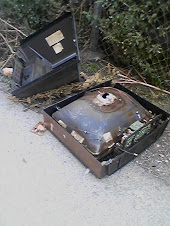




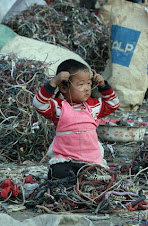


 Posts
Posts


