There Is More to Green Than Global Warming
By Thomas Kostigen, Huffington Post
Posted on October 3, 2008, Printed on October 3, 2008
http://www.alternet.org/story/101491/
There is more to being green than the fight to stop global warming. All of our natural resources are in peril because of what we do and what that does to our planet. Yet, to hear the battle cry of environmentalists these days you'd think there's only one war to be fought -- over our energy supply and its consequences.
We are facing a fresh water crisis. We are facing a food crisis. We are facing a crisis over deforestation. And we are facing crises in our oceans. While carbon emissions from fossil fuels pollute the air, so does a lot of other stuff.
Now is the time to press for leadership in the protection of all our natural resources. We'll have let an opportunity for a better planet -- in this election of "change" -- to pass us by if we just focus on the cause celebre that global warming is today.
We must increase our freshwater supply by about 20 percent by the year 2025 to meet world demand, and 90 cities still dump sewage into the Great Lakes, which supply water to 10 percent of the US population. The Lakes' resource is so great, we are going to great lengths to protect it: Congress last week passed a law formally banning the export of water from the Great Lakes beyond its basin. The price of most food has doubled over the past year, forcing millions deeper into poverty and malnourishment. There is now six times as much plastic as zooplankton in parts of the Pacific Ocean, and 90 percent of the big fish on Earth have disappeared.
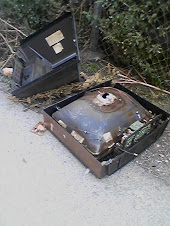
Meanwhile, we have an ever-increasing waste and electronic-waste burden on our hands. We each create twice as much trash per day as we did 40 years ago. The average size of our landfills has multiplied 25 times in that period as well. And our e-waste burden is so bad that we ship 80 percent of it overseas to countries with weak environmental standards. These countries in turn make products from our discards and ship them right back to us. (And we wonder how lead paint gets in toys.)
As well, up to 40 percent of global wood production is from illegal timber operations. Deforestation not only displaces people and endangers species, it is the second biggest cause of climate change. (It isn't only fossil fuels that cause global warming.)
To be sure, an alternative energy supply is needed and important. But let's not forget the importance of other environmental factors crucial to our health and well-being, not to mention the planet's.
Friday, October 3, 2008


CXO REPRESENTS INDIAN MANUFACTURING POSITIONS
Manufacturers Want Exclusive e-Waste Rules
In a bid to draw the attention of the Ministry of Environment and Forests (MoEF) for a separate set of laws for e-waste management, within the Environment Protection Act, manufacturing organizations across industries are drafting a proposal.
The proposal will be submitted to the ministry in the next two months. The organizations that include MAIT, Indian Cellular Association (ICA), Telecom Equipment Manufacturer's Association (TEMA), Electronic Industries Association of India (ELCINA), Consumer Electronics and Appliances Manufacturers Association (CEAMA), are currently finalizing the draft.
As of now there is no law on e-waste management. Also government endorsed system for collection, recycling, and disposal of e-waste is absent. According to Ramapathy of Greenpeace, though manufacturers are trying to implement take-back schemes, they have not yet taken off in India. The reason for this according to Satish Sinha, associate director Toxics Link, a NGO, is that both corporate and personal users want incentives before availing take-back schemes and collection routes.
"Even if we install collection boxes, they are scavenged and valuable parts of the equipment are stolen," said Pranshu Singhal, environment manager for Nokia. A structured approach towards e-waste collection and recycling is needed.
Not that the government has not done anything. Infact, earlier 2008, the MoEF and the Central Pollution Control Board (CPCB) released a comprehensive set of guidelines on e-waste management. The document asks manufacturers to follow RoHS compliance, and extended producer responsibility (EPR) for shared accountability.
Vinnie Mehta, executive director of MAIT in an exclusive chat with CXOtoday said, "The EPA has rules and regulations for different verticals. Even though there is a rule for handling hazardous byproducts, e-waste does not fall under this category. The reason being it is an end-of-lifecycle produce and there are no distinct rules for managing it."
"To ensure a working system for e-waste management across India, and also participation by manufacturers and corporate organizations, proper laws are needed. This is the rationale behind our initiative."
Lack of awareness is the root cause for the sorry state of e-waste management in India and MAIT is hoping to remedy this by spreading awareness at the grassroot level with the help of NGOs. It is also working with CII to spread awareness among the corporates.
Mehta said, "Corporate organizations want to work with known operators. As of today such government approved operators in India is very few."
Another problem that needs to be addressed is the illegal or quasi-legal entry of e-waste into the country. "Our laws do not permit the entry of second hand electronic goods. They are not even properly implemented. The government needs to setup a system to monitor various ports to restrict the illegal entry of e-waste," said Mehta. Seconding this, Sinha said the government refuses to acknowledge the existence of illegal e-waste imports, and unless it changes this attitude nothing much can be done.
In a bid to draw the attention of the Ministry of Environment and Forests (MoEF) for a separate set of laws for e-waste management, within the Environment Protection Act, manufacturing organizations across industries are drafting a proposal.
The proposal will be submitted to the ministry in the next two months. The organizations that include MAIT, Indian Cellular Association (ICA), Telecom Equipment Manufacturer's Association (TEMA), Electronic Industries Association of India (ELCINA), Consumer Electronics and Appliances Manufacturers Association (CEAMA), are currently finalizing the draft.
As of now there is no law on e-waste management. Also government endorsed system for collection, recycling, and disposal of e-waste is absent. According to Ramapathy of Greenpeace, though manufacturers are trying to implement take-back schemes, they have not yet taken off in India. The reason for this according to Satish Sinha, associate director Toxics Link, a NGO, is that both corporate and personal users want incentives before availing take-back schemes and collection routes.
"Even if we install collection boxes, they are scavenged and valuable parts of the equipment are stolen," said Pranshu Singhal, environment manager for Nokia. A structured approach towards e-waste collection and recycling is needed.
Not that the government has not done anything. Infact, earlier 2008, the MoEF and the Central Pollution Control Board (CPCB) released a comprehensive set of guidelines on e-waste management. The document asks manufacturers to follow RoHS compliance, and extended producer responsibility (EPR) for shared accountability.
Vinnie Mehta, executive director of MAIT in an exclusive chat with CXOtoday said, "The EPA has rules and regulations for different verticals. Even though there is a rule for handling hazardous byproducts, e-waste does not fall under this category. The reason being it is an end-of-lifecycle produce and there are no distinct rules for managing it."
"To ensure a working system for e-waste management across India, and also participation by manufacturers and corporate organizations, proper laws are needed. This is the rationale behind our initiative."
Lack of awareness is the root cause for the sorry state of e-waste management in India and MAIT is hoping to remedy this by spreading awareness at the grassroot level with the help of NGOs. It is also working with CII to spread awareness among the corporates.
Mehta said, "Corporate organizations want to work with known operators. As of today such government approved operators in India is very few."
Another problem that needs to be addressed is the illegal or quasi-legal entry of e-waste into the country. "Our laws do not permit the entry of second hand electronic goods. They are not even properly implemented. The government needs to setup a system to monitor various ports to restrict the illegal entry of e-waste," said Mehta. Seconding this, Sinha said the government refuses to acknowledge the existence of illegal e-waste imports, and unless it changes this attitude nothing much can be done.
Thursday, October 2, 2008
THE ADVERTISER: NO CHEERS FOR AUSTRALIA
Electronic waste
E-waste ... Dr Sunil Herat from Griffith University, pictured with a room full of discarded computers / Lyndon Mechielsen
Have your say! Comments are open on this article - add yours
FINDING massive electronics assembly plants in Japan comes as no surprise. After all, it is one of the world's leading electronics manufacturing nations. What does jolt you, however, is the huge electronics disassembly plants.
Recycling laws in Japan, along with the highly industrialised European Union, are among the world's strictest. Here the three Rs – reduction, reuse and recycling – aren't merely environmental buzz words. Not only are they enshrined in legislation, they're part of the national mindset. This kind of political will appears sorely missing in Australia.
Product Stewardship Australia executive officer John Gertsakis says there is no clarity of vision from the Australian Government about what it wants to do about e-waste.
PSA is an industry association whose members include Toshiba, Dick Smith Electronics, Philips, Panasonic and Samsung.
"There's no sophisticated policy for dealing with e-waste on a national basis and this creates mixed messages from state and federal government about what they expect industry to do about recycling of consumer electronics," Mr Gertsakis says.
Related Coverage
* Buyers question mobiles' green credentialsNEWS.com.au, 7 Apr 2008
* Reader's Comments: Fallout 3 game ban to reignite ratings debateNEWS.com.au,
* Reader's Comments: Silent Hill video game refused classificationNEWS.com.au,
* Are videogames killing the climate?NEWS.com.au, 7 Mar 2008
* Electronic consumerism increases garbageNEWS.com.au, 28 Dec 2007
"There's a lot of rhetoric from middle-level bureaucrats about how industry should be developing stewardship schemes and taking back their products but when it comes to the robust underpinning of this at a regulatory level, there is silence. Industry associations such as ours, the recycling industry, local governments and consumers are all ready and hungry to do this but the key policymakers are going very slowly."
While some states are trying to facilitate e-waste recovery and recycling, the common complaint from industry and environmentalists is that there is no sensible, coherent, national response.
"The issues are really basic ones," says Mr Gertsakis. "The EU has dealt with this. A growing number of US states are doing it. Japan has done it. Yet again, we are the laggard in this part of the world."
However, South Australian Environment Minister Jay Weatherill insists e-waste is of national and international significance.
"SA strongly supported putting e-waste on the agenda of the national Environment Protection Heritage Council, which is chaired by Federal Environment Minister Peter Garrett," Mr Weatherill says. "Ministers are due to meet next in Adelaide for this national council later this year."
Mr Weatherill says the Environment Protection Authority is developing a new regulatory framework for waste management. This will involve an environmental protection policy being released for consultation.
But industry, consumer groups and environmental activists are frustrated by a snail's pace of government action.
Dr Sunil Herat, a senior lecturer in waste management at Griffith University, has been trying to get government to understand the urgency of the problem of waste stream toxicity.
"We've been having meetings with government about e-waste for four years now," says Dr Herat, "and it always amounts to just talk."
The spread of toxic e-waste is a rapidly expanding problem in Australia. Studies of consumer spending have shown steady increases in electronic goods purchases.
The Canon Consumer Lifestyle Index reported that Australians spent $5 billion on digital devices in 2007. The 2008 figure is expected to be about $6 billion.
This will have been spurred on by the Olympic Games, the first to be broadcast in high-definition, creating a huge demand for plasma and LCD televisions.
These usually replace cathode ray tube-type TVs, the leading cause of lead presence in municipal waste streams – and lead is the tip of the toxic e-waste iceberg.
Other toxic chemicals are brominated-flame retardants such as polybrominated biphenyls (PBB) and polybrominated diphenylethers (PBDEs), each of which is found in older computer equipment.
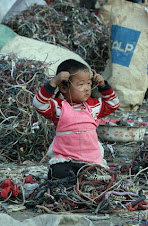
In mobile phones and other e-goods, arsenic, beryllium, copper and zinc are used. These chemicals, poorly handled, can be occupational and environmental health hazards. Also, mercury, cadmium and other toxic materials can find their way into local waste streams or offshore to unregulated environments. Delhi is a prime target for the developed world's e-waste, as is Nigeria – where indiscriminate dumping and poor safety regulations put handlers at risk.
A lack of regulatory control over e-waste management makes Australia complicit in exposing foreign workers to toxic substances.
E-waste ... Dr Sunil Herat from Griffith University, pictured with a room full of discarded computers / Lyndon Mechielsen
Have your say! Comments are open on this article - add yours
FINDING massive electronics assembly plants in Japan comes as no surprise. After all, it is one of the world's leading electronics manufacturing nations. What does jolt you, however, is the huge electronics disassembly plants.
Recycling laws in Japan, along with the highly industrialised European Union, are among the world's strictest. Here the three Rs – reduction, reuse and recycling – aren't merely environmental buzz words. Not only are they enshrined in legislation, they're part of the national mindset. This kind of political will appears sorely missing in Australia.
Product Stewardship Australia executive officer John Gertsakis says there is no clarity of vision from the Australian Government about what it wants to do about e-waste.
PSA is an industry association whose members include Toshiba, Dick Smith Electronics, Philips, Panasonic and Samsung.
"There's no sophisticated policy for dealing with e-waste on a national basis and this creates mixed messages from state and federal government about what they expect industry to do about recycling of consumer electronics," Mr Gertsakis says.
Related Coverage
* Buyers question mobiles' green credentialsNEWS.com.au, 7 Apr 2008
* Reader's Comments: Fallout 3 game ban to reignite ratings debateNEWS.com.au,
* Reader's Comments: Silent Hill video game refused classificationNEWS.com.au,
* Are videogames killing the climate?NEWS.com.au, 7 Mar 2008
* Electronic consumerism increases garbageNEWS.com.au, 28 Dec 2007
"There's a lot of rhetoric from middle-level bureaucrats about how industry should be developing stewardship schemes and taking back their products but when it comes to the robust underpinning of this at a regulatory level, there is silence. Industry associations such as ours, the recycling industry, local governments and consumers are all ready and hungry to do this but the key policymakers are going very slowly."
While some states are trying to facilitate e-waste recovery and recycling, the common complaint from industry and environmentalists is that there is no sensible, coherent, national response.
"The issues are really basic ones," says Mr Gertsakis. "The EU has dealt with this. A growing number of US states are doing it. Japan has done it. Yet again, we are the laggard in this part of the world."
However, South Australian Environment Minister Jay Weatherill insists e-waste is of national and international significance.
"SA strongly supported putting e-waste on the agenda of the national Environment Protection Heritage Council, which is chaired by Federal Environment Minister Peter Garrett," Mr Weatherill says. "Ministers are due to meet next in Adelaide for this national council later this year."
Mr Weatherill says the Environment Protection Authority is developing a new regulatory framework for waste management. This will involve an environmental protection policy being released for consultation.
But industry, consumer groups and environmental activists are frustrated by a snail's pace of government action.
Dr Sunil Herat, a senior lecturer in waste management at Griffith University, has been trying to get government to understand the urgency of the problem of waste stream toxicity.
"We've been having meetings with government about e-waste for four years now," says Dr Herat, "and it always amounts to just talk."
The spread of toxic e-waste is a rapidly expanding problem in Australia. Studies of consumer spending have shown steady increases in electronic goods purchases.
The Canon Consumer Lifestyle Index reported that Australians spent $5 billion on digital devices in 2007. The 2008 figure is expected to be about $6 billion.
This will have been spurred on by the Olympic Games, the first to be broadcast in high-definition, creating a huge demand for plasma and LCD televisions.
These usually replace cathode ray tube-type TVs, the leading cause of lead presence in municipal waste streams – and lead is the tip of the toxic e-waste iceberg.
Other toxic chemicals are brominated-flame retardants such as polybrominated biphenyls (PBB) and polybrominated diphenylethers (PBDEs), each of which is found in older computer equipment.
In mobile phones and other e-goods, arsenic, beryllium, copper and zinc are used. These chemicals, poorly handled, can be occupational and environmental health hazards. Also, mercury, cadmium and other toxic materials can find their way into local waste streams or offshore to unregulated environments. Delhi is a prime target for the developed world's e-waste, as is Nigeria – where indiscriminate dumping and poor safety regulations put handlers at risk.
A lack of regulatory control over e-waste management makes Australia complicit in exposing foreign workers to toxic substances.
A CHEER FOR NOKIA
Greenpeace names Nokia greenest electronic brand
October 1st, 2008 - 2:37 pm ICT by ANI -
Washington, Oct 1 (ANI): Nokia has been ranked as the most eco-friendly electronic brand, according to Greenpeace’’s annual Guide to Greener Electronics.
In the ninth edition of its guide, Greenpeace has declared that Nokia is a step ahead of other well-known manufacturers like Samsung and Nintendo.
Nokia managed to get a high score of seven out of ten possible points, because of its improved take-back practices in India, toxic chemical issues, utilizing models free of PVC and aiming to have all new models free of brominated flame retardants and antimony trioxide by the end of 2009, reports Environmental News Network.
Second in the list of greener electronics was Samsung with 5.7 points, because of the increased energy-efficiency of its products.
It also scores well on its use of recycled plastic, at 16.1 percent, though only 0.2 percent is post-consumer plastic, with a goal to increase to 25 percent by 2008.
Standing third in the list is Fujitsu Siemens for its new deadline for removal of BFRs and PVC but the brand is still poor on recycling.
Microsoft ranked 17, at the second last position, and scored 2.2 points for its poor ranking in voluntary take-back and recycling programs, among other items.
However, Nintendo was slat in the list with only 0.8 points, mainly due to scoring zero points on e-waste criteria and also ranking poorly on recycling, voluntary take-back programs the use of recycled plastics in its products.
The Greenpeace annual Guide to Greener Electronics is
1. Nokia - Clear leader after improving take-back in India. (7) 2. Samsung - Good scores on chemicals and e-waste criteria. (5.7 ) 3. Fujitsu Siemens- New dealine for removal of BFRs and PVC but still poor on recycling. (5.5) 4. Sony Ericsson - Good on toxic chemicals and energy but very poor on recycling. (5.3) 5. Sony - Good on toxic chemicals, room for improvement on energy. (5.3) 6. LG - Improved score on recycling and energy. (4.9) 7. Toshiba - Improved climate policy, but poor on recycling. (4.7) 8. Dell - Dropping down with poor scores on climate policy. (4.7) 9. HP - Slightly improved score but no products free of most toxic chemicals. (4.7) 10. Acer - Good on chemicals policy but poor on energy policy. (4.5) 11. Panasonic - Needs to improve recycling and amount of renewable energy. (4.5) 12. Philips - worst company on recycling with additional penalty for negative lobbying in Europe. (4.3) 13. Apple - progress on eliminating toxics from new products but needs to improve on recycling and energy. (4.1) 14. Lenovo - New US tack back scheme, but still no products free of worst toxic chemicals. (4.1) 15. Motorola - Only phone company not to set a timeline for eliminating worst toxic chemicals. (3.7) 16. Sharp - Most points on toxic chemicals, poor on recycling and energy. (3.1) 17. Microsoft - Very poor on recycling and energy. (2.2) 18. Nintendo - Zero on most criteria except chemicals management and energy. (0.8) (ANI)
October 1st, 2008 - 2:37 pm ICT by ANI -
Washington, Oct 1 (ANI): Nokia has been ranked as the most eco-friendly electronic brand, according to Greenpeace’’s annual Guide to Greener Electronics.
In the ninth edition of its guide, Greenpeace has declared that Nokia is a step ahead of other well-known manufacturers like Samsung and Nintendo.
Nokia managed to get a high score of seven out of ten possible points, because of its improved take-back practices in India, toxic chemical issues, utilizing models free of PVC and aiming to have all new models free of brominated flame retardants and antimony trioxide by the end of 2009, reports Environmental News Network.
Second in the list of greener electronics was Samsung with 5.7 points, because of the increased energy-efficiency of its products.
It also scores well on its use of recycled plastic, at 16.1 percent, though only 0.2 percent is post-consumer plastic, with a goal to increase to 25 percent by 2008.
Standing third in the list is Fujitsu Siemens for its new deadline for removal of BFRs and PVC but the brand is still poor on recycling.
Microsoft ranked 17, at the second last position, and scored 2.2 points for its poor ranking in voluntary take-back and recycling programs, among other items.
However, Nintendo was slat in the list with only 0.8 points, mainly due to scoring zero points on e-waste criteria and also ranking poorly on recycling, voluntary take-back programs the use of recycled plastics in its products.
The Greenpeace annual Guide to Greener Electronics is
1. Nokia - Clear leader after improving take-back in India. (7) 2. Samsung - Good scores on chemicals and e-waste criteria. (5.7 ) 3. Fujitsu Siemens- New dealine for removal of BFRs and PVC but still poor on recycling. (5.5) 4. Sony Ericsson - Good on toxic chemicals and energy but very poor on recycling. (5.3) 5. Sony - Good on toxic chemicals, room for improvement on energy. (5.3) 6. LG - Improved score on recycling and energy. (4.9) 7. Toshiba - Improved climate policy, but poor on recycling. (4.7) 8. Dell - Dropping down with poor scores on climate policy. (4.7) 9. HP - Slightly improved score but no products free of most toxic chemicals. (4.7) 10. Acer - Good on chemicals policy but poor on energy policy. (4.5) 11. Panasonic - Needs to improve recycling and amount of renewable energy. (4.5) 12. Philips - worst company on recycling with additional penalty for negative lobbying in Europe. (4.3) 13. Apple - progress on eliminating toxics from new products but needs to improve on recycling and energy. (4.1) 14. Lenovo - New US tack back scheme, but still no products free of worst toxic chemicals. (4.1) 15. Motorola - Only phone company not to set a timeline for eliminating worst toxic chemicals. (3.7) 16. Sharp - Most points on toxic chemicals, poor on recycling and energy. (3.1) 17. Microsoft - Very poor on recycling and energy. (2.2) 18. Nintendo - Zero on most criteria except chemicals management and energy. (0.8) (ANI)
NEW RESEARCH & MARKETS REPORT
on-Metal Recycling Market Report 2008
Key Note Publications Ltd, Sep 2008, Pages: 122
Description
Table of Contents
Companies Mentioned
Enquire before Buying
Send to a Friend
In 2007, the UK market for non-metal recycling was worth an estimated £2.09bn, an increase of 40% from 2006. This Market Report splits the analysis of the market into sectors determined by specific materials — such as paper, glass, plastics, textiles and packaging. The recycling of waste electronic/electrical equipment (WEEE), and end-of-life vehicles (ELVs) are also included. The analysis also discusses the market in terms of municipal waste. Statistics are given in total waste tonnage, and recycling rates for municipal waste.
The non-metal recycling market is discussed in the context of the Government's waste strategy, which is based on the principles of the waste hierarchy — a method of ranking waste-disposal options, with the top priorities being waste reduction, re-use and recycling. Legislation is a major driver behind the recycling market, especially the Landfill Directive with its increasingly restrictive stages as to what can be sent to landfill. In addition, legislation and recycling targets are in place for specific waste streams.
The UK non-metal recycling sector is dominated by a small number of large companies, most of which have other interests, particularly in the water industry. There is a strong representation of continental European companies in the UK non-metal recycling sector, major examples being businesses from France and Spain.
Non-metal recycling faces challenging issues in addition to those related to legislation. Further expansion in the recycling infrastructure is needed if the UK is to increase its recycling rate across a broader range of materials. This is particularly true for waste streams that have recently been subject to recycling legislation — e.g. WEEE and ELVs. It is also vital that there is more marketing of centres and schemes that cover these waste streams. As a result of new legislation on landfill, fly tipping is now a problem; there is also a problem with rogue recyclers who are not actually bona fide operators and simply dump collected waste in illegal sites.
The municipal sector is experiencing a degree of stress as it tries to cope with an increasing volume of recycled material. Moreover, the Landfill Allowance Trading Scheme (LATS) gives local authorities an allowance for landfill which, if exceeded, can involve the payment of very high charges for landfill space. The recycling sector is growing, which raises the question of recruiting and maintaining a workforce in this industry.
The future will see further expansion in the scope and complexity of non-metal recycling. The recycling rate for biodegradable materials, WEEE and ELVs will continue to grow. Further legislation for the recycling of batteries is in the pipeline, and there is currently discussion about recycling in the construction industry. Increased global demand for almost all materials will help to boost the value of the recycling market.
Key Note Publications Ltd, Sep 2008, Pages: 122
Description
Table of Contents
Companies Mentioned
Enquire before Buying
Send to a Friend
In 2007, the UK market for non-metal recycling was worth an estimated £2.09bn, an increase of 40% from 2006. This Market Report splits the analysis of the market into sectors determined by specific materials — such as paper, glass, plastics, textiles and packaging. The recycling of waste electronic/electrical equipment (WEEE), and end-of-life vehicles (ELVs) are also included. The analysis also discusses the market in terms of municipal waste. Statistics are given in total waste tonnage, and recycling rates for municipal waste.
The non-metal recycling market is discussed in the context of the Government's waste strategy, which is based on the principles of the waste hierarchy — a method of ranking waste-disposal options, with the top priorities being waste reduction, re-use and recycling. Legislation is a major driver behind the recycling market, especially the Landfill Directive with its increasingly restrictive stages as to what can be sent to landfill. In addition, legislation and recycling targets are in place for specific waste streams.
The UK non-metal recycling sector is dominated by a small number of large companies, most of which have other interests, particularly in the water industry. There is a strong representation of continental European companies in the UK non-metal recycling sector, major examples being businesses from France and Spain.
Non-metal recycling faces challenging issues in addition to those related to legislation. Further expansion in the recycling infrastructure is needed if the UK is to increase its recycling rate across a broader range of materials. This is particularly true for waste streams that have recently been subject to recycling legislation — e.g. WEEE and ELVs. It is also vital that there is more marketing of centres and schemes that cover these waste streams. As a result of new legislation on landfill, fly tipping is now a problem; there is also a problem with rogue recyclers who are not actually bona fide operators and simply dump collected waste in illegal sites.
The municipal sector is experiencing a degree of stress as it tries to cope with an increasing volume of recycled material. Moreover, the Landfill Allowance Trading Scheme (LATS) gives local authorities an allowance for landfill which, if exceeded, can involve the payment of very high charges for landfill space. The recycling sector is growing, which raises the question of recruiting and maintaining a workforce in this industry.
The future will see further expansion in the scope and complexity of non-metal recycling. The recycling rate for biodegradable materials, WEEE and ELVs will continue to grow. Further legislation for the recycling of batteries is in the pipeline, and there is currently discussion about recycling in the construction industry. Increased global demand for almost all materials will help to boost the value of the recycling market.
NEW INDIAN DEBATES
MAIT pursues multi-city 'e-Waste' awareness campaign
Yogesh Gupta, Channelworld India09.30.2008
Categories
MAIT is creating industry awareness to address the crucial issue of e-Waste in India. A three-city national workshop on awareness and consultation on 'Guidelines for Environmentally Sound Management of e-Waste' was held at Chennai, Bangalore and Mumbai jointly organized by MAIT, GTZ, Greenpeace & Toxics Link. Several subject experts from Government, Industry, Recyclers and NGOs participated in the event supported by Ministry of Environment & Forests (MoEF) and Department of Information Technology, Ministry of Communications & IT. "Information and telecom are fastest growing sectors in India with PC sales crossing 7.3 million units at 16 percent growth and cellular base up by 96 percent over last year. However, India is fast becoming e-Waste destination due to illegal imports, highly porous ports, mislabeling as; mixed metal scrap, cheap labor and weak environmental standards, weak enforcement mechanism and minimal awareness,"said Vinnie Mehta, Executive Director, MAIT. Manufacturing industry needs to be proactive in assuming responsibility in the absence of legislation. "The scenario is changing with the take- back programs conducted by some IT companies. There are 12 formal recyclers and informal recyclers associations across India and clean e-Waste channel in Bangalore addressing this issue," he added. We kick-started the series with a seminar at Delhi this July and might conduct one more in Kolkatta by the end of the year, he added.
Founded in 1982, MAIT (Manufacturers' Association for Information Technology), an apex body representing computer hardware, training and software industries has over 100 members including MNCs and local IT companies. A first-of-its-kind MAIT-GTZ e-Waste assessment study, to inventory e-Waste in the country, revealed that a total of 3.3 metric tons of e-Waste is generated annually in India, while an additional 50,000 MT is illegally imported into the country. However, only 19,000 MT of this is recycled due to high refurbishing and reuse of electronics products in the country and due to poor recycling infrastructure," said Mehta. A significant finding pointed 94 percent of studied organizations did not have any policy on disposal of obsolete IT products/e-Waste. Further, while a lot of business organizations were aware about e-Waste, the depth of knowledge was lacking, he said.
MoEF and Central Pollution Control Broad announced 'Guidelines for environmentally sound management of e-Waste'. Dr Lakshmi Raghupathy, Former Director, MoEF and advisor at MAIT said, "The main features of proposed e-Waste rules 2008 include: the proposed regulations provide policy and procedures for producers, collection agencies, dismantlers, recyclers, transporters etc.handling e-waste ; the specific clauses such as RoHS and EPR as required for handling e-waste."
The objective is to put in place an effective mechanism to regulate the generation, collection, storage, transport, import, export and environmentally sound recycling, treatment and disposal of e-waste, she added. "Since these guidelines are voluntary in nature, the electronics industry strongly feels that a regulation needs to be put in place to manage this problem," said Mehta.
It is estimated that e-Waste generated in India will touch 4.7 lakh tons by 2011, as per the study. Inclusive eco-friendly recycling is the need of the hour, Mehta added. Enabling regulation, effective collection system, implementation of import restrictions and environmentally sound technology for recycling will enable better management of e-Waste, he said. The trend has to shift from waste management to product life cycle backed by integration and regrouping of existing informal sector, stated Mehta.
from Channelworld India.
Yogesh Gupta, Channelworld India09.30.2008
Categories
MAIT is creating industry awareness to address the crucial issue of e-Waste in India. A three-city national workshop on awareness and consultation on 'Guidelines for Environmentally Sound Management of e-Waste' was held at Chennai, Bangalore and Mumbai jointly organized by MAIT, GTZ, Greenpeace & Toxics Link. Several subject experts from Government, Industry, Recyclers and NGOs participated in the event supported by Ministry of Environment & Forests (MoEF) and Department of Information Technology, Ministry of Communications & IT. "Information and telecom are fastest growing sectors in India with PC sales crossing 7.3 million units at 16 percent growth and cellular base up by 96 percent over last year. However, India is fast becoming e-Waste destination due to illegal imports, highly porous ports, mislabeling as; mixed metal scrap, cheap labor and weak environmental standards, weak enforcement mechanism and minimal awareness,"said Vinnie Mehta, Executive Director, MAIT. Manufacturing industry needs to be proactive in assuming responsibility in the absence of legislation. "The scenario is changing with the take- back programs conducted by some IT companies. There are 12 formal recyclers and informal recyclers associations across India and clean e-Waste channel in Bangalore addressing this issue," he added. We kick-started the series with a seminar at Delhi this July and might conduct one more in Kolkatta by the end of the year, he added.
Founded in 1982, MAIT (Manufacturers' Association for Information Technology), an apex body representing computer hardware, training and software industries has over 100 members including MNCs and local IT companies. A first-of-its-kind MAIT-GTZ e-Waste assessment study, to inventory e-Waste in the country, revealed that a total of 3.3 metric tons of e-Waste is generated annually in India, while an additional 50,000 MT is illegally imported into the country. However, only 19,000 MT of this is recycled due to high refurbishing and reuse of electronics products in the country and due to poor recycling infrastructure," said Mehta. A significant finding pointed 94 percent of studied organizations did not have any policy on disposal of obsolete IT products/e-Waste. Further, while a lot of business organizations were aware about e-Waste, the depth of knowledge was lacking, he said.
MoEF and Central Pollution Control Broad announced 'Guidelines for environmentally sound management of e-Waste'. Dr Lakshmi Raghupathy, Former Director, MoEF and advisor at MAIT said, "The main features of proposed e-Waste rules 2008 include: the proposed regulations provide policy and procedures for producers, collection agencies, dismantlers, recyclers, transporters etc.handling e-waste ; the specific clauses such as RoHS and EPR as required for handling e-waste."
The objective is to put in place an effective mechanism to regulate the generation, collection, storage, transport, import, export and environmentally sound recycling, treatment and disposal of e-waste, she added. "Since these guidelines are voluntary in nature, the electronics industry strongly feels that a regulation needs to be put in place to manage this problem," said Mehta.
It is estimated that e-Waste generated in India will touch 4.7 lakh tons by 2011, as per the study. Inclusive eco-friendly recycling is the need of the hour, Mehta added. Enabling regulation, effective collection system, implementation of import restrictions and environmentally sound technology for recycling will enable better management of e-Waste, he said. The trend has to shift from waste management to product life cycle backed by integration and regrouping of existing informal sector, stated Mehta.
from Channelworld India.
NEW YORK TIMES LIFTS ITS GAME
It Comes in Beige or Black, but You Make It Green
Steve Yeater/Associated Press
Computer parts at a Hewlett-Packard recycling facility in Roseville, Calif. In 2005, about 1.7 million tons of electronics were disposed of in landfills.
By AZADEH ENSHA
Published: October 1, 2008
REUSABLE tote bag? Check. Prius? Check. Rooftop solar panels? Check.
In a bid to secure your green bragging rights, you have the usual suspects covered, but what about your PC? After all, the machine that can provide you with information on how to lead an ecologically sound life can also be contributing to the environmental problem you are trying to solve.
Consider the following: A standard-issue PC and monitor left on all the time (a not-uncommon situation) consume 1,109 kilowatt-hours a year, according to estimates from the Environmental Protection Agency. By comparison, refrigerators that meet federal energy-use regulations use, on average, about 514 kilowatt-hours a year. Surely there are things a user can do to reduce a computer’s carbon footprint. Read on to learn ways to run your PC more efficiently, make ecologically intelligent purchasing decisions and dispose of an old computer properly.
Power Corrupts
The first piece of advice is the simplest: Don’t leave your computer on all the time. Shutting it down after an 8-hour workday provides 16 hours of savings each day. In addition, your computer should be set to go to sleep after periods of inactivity. Different parts of your system can be set to sleep at different times: Setting your energy-saving preferences to put your hard drive to sleep after 15 minutes of inactivity is a good benchmark; your entire computer (which takes more time to wake up) should be set to go to sleep after 30 minutes.
And ditch your screensaver. Screensavers can use your hard drive to power up, and photo screensavers may require the extra use of a graphics card, which means you’ll have the hard drive, graphics card and monitor all in use. Screensavers are “a throwback from the days of really old-school C.R.T. monitors,” says Barbara Grimes, a spokeswoman for the Climate Savers Computing Initiative, referring to cathode ray tubes. “It’s never been an energy-saving feature.”
There’s also the issue of “phantom” or “vampire” power. Just because your desktop PC or laptop is shut down doesn’t mean it is not using energy. Many pieces of electronics use power even when they are turned off. For example, most TVs turn on instantly because they are always a little bit on. To combat the vampires, take your computer and peripherals and plug them into a device like the Smart Strip power strip, made by Bits Limited, that senses which devices have been turned off and then cuts power to them.
Finally, download a free power-management tool. These applications will show you how much energy you can save by adjusting various settings and will make those adjustments for you in a few clicks. Google’s Energy Saver (http://desktop.google.com/plugins/i/energysaver.html) will, in addition, show you the collective energy savings of everyone using the product; it also integrates into Google’s own Desktop application. Verdiem’s Edison software (http://www.verdiem.com/edison/), released in August, shows users estimated annual savings in terms of money, energy and carbon dioxide emissions. The Edison power management tool lets users choose how aggressive they want to be, with a bar they can slide toward tabs that say “save more” and “save less.”
Out With the Old?
If you do decide to purchase a new computer, make sure that you choose a computer and monitor that are Energy Star compliant. Energy Star computers must meet energy-use guidelines established by the E.P.A. in three areas: standby, active and sleep modes. The Electronic Product Environmental Assessment Tool (www.epeat.net) is another grading system that evaluates products according to 51 criteria. In general, laptops are greener than desktops because they have been designed with power sensitivity in mind. But desktops are easier to upgrade, and therefore may last longer. Newer computers tend to be more energy- efficient than older models. For example, Energy Star-qualified computers must come with the display set to go into sleep mode within 15 minutes of user inactivity.
As for whether Macs are greener than PCs, it depends on whom you ask and which PC you use. Greenpeace’s “Guide to Greener Electronics,” for example, ranks the top 18 manufacturers of personal computers and other products “according to their policies on toxic chemicals, recycling and climate change.” Updated every three months, its September 2008 edition ranked Nokia as the green frontrunner , ahead of rivals Sony, Dell and, yes, Apple.
Some manufacturers are removing hazardous or toxic chemicals from their computers. Apple, for example, has said it will eliminate polyvinyl chloride and brominated flame retardants in its products, and arsenic in all glass of flat-panel displays, by the end of 2008.
Unfortunately, that effort has not spread as quickly across the industry as some would like. “I wish I could say that a lot of companies have eliminated their toxic chemicals or had made some significant improvements, but that’s just not where the industry is,” says Barbara Kyle, national coordinator of the Electronics TakeBack Coalition.
Reduce, Reuse, Recycle
When it comes to recycling your computer, picking the right recycling company is critical. If done right, recyclers should reuse the parts they can and manage waste responsibly, which means making sure parts don’t go to countries with poor ecological track records, like China, and that items that do get exported (like circuit boards and leaded glass) go to green-friendly sites in developed nations. In 2005, used or unwanted electronics amounted to approximately 1.9 million to 2.2 million tons of waste in the United States. Of that number, about 1.7 million tons were dumped in landfills, and only 345,000 to 379,000 tons were recycled, according to the E.P.A.
But it is hard to be sure if the recycler is not dumping your PC behind your back. “There’s no such certification program,” adds Ms. Kyle of the TakeBack coalition, which helps promote responsible recycling and green design in the electronics industry. “At least our partner, Basel Action Network, puts the recyclers through initial screenings. Will people know 100 percent? No, but it’s the best thing right now.” Electronic TakeBack’s list of recyclers can be found at tinyurl.com/5yrb9k.
Computer manufacturers like Apple, Hewlett Packard and Sony offer recycling programs, but Dell goes even further: The company will recycle free, including pickup, any Dell brand product — no matter when it was bought. Dell will also pick up other product brands free if the consumer purchases a new Dell.
Concerning manufacturer recycling programs, Ms. Kyle said that with a number of manufacturers, “you have to either pay them or you have to buy a new computer to get them to take your old PC back for free. There’s a huge disconnect between what people want to do and what they can do and that’s where the manufacturers need to step up.”
More Articles in Technology » A version of this article appeared in print on October 2, 2008, on page C6 of the New York edition.
Steve Yeater/Associated Press
Computer parts at a Hewlett-Packard recycling facility in Roseville, Calif. In 2005, about 1.7 million tons of electronics were disposed of in landfills.
By AZADEH ENSHA
Published: October 1, 2008
REUSABLE tote bag? Check. Prius? Check. Rooftop solar panels? Check.
In a bid to secure your green bragging rights, you have the usual suspects covered, but what about your PC? After all, the machine that can provide you with information on how to lead an ecologically sound life can also be contributing to the environmental problem you are trying to solve.
Consider the following: A standard-issue PC and monitor left on all the time (a not-uncommon situation) consume 1,109 kilowatt-hours a year, according to estimates from the Environmental Protection Agency. By comparison, refrigerators that meet federal energy-use regulations use, on average, about 514 kilowatt-hours a year. Surely there are things a user can do to reduce a computer’s carbon footprint. Read on to learn ways to run your PC more efficiently, make ecologically intelligent purchasing decisions and dispose of an old computer properly.
Power Corrupts
The first piece of advice is the simplest: Don’t leave your computer on all the time. Shutting it down after an 8-hour workday provides 16 hours of savings each day. In addition, your computer should be set to go to sleep after periods of inactivity. Different parts of your system can be set to sleep at different times: Setting your energy-saving preferences to put your hard drive to sleep after 15 minutes of inactivity is a good benchmark; your entire computer (which takes more time to wake up) should be set to go to sleep after 30 minutes.
And ditch your screensaver. Screensavers can use your hard drive to power up, and photo screensavers may require the extra use of a graphics card, which means you’ll have the hard drive, graphics card and monitor all in use. Screensavers are “a throwback from the days of really old-school C.R.T. monitors,” says Barbara Grimes, a spokeswoman for the Climate Savers Computing Initiative, referring to cathode ray tubes. “It’s never been an energy-saving feature.”
There’s also the issue of “phantom” or “vampire” power. Just because your desktop PC or laptop is shut down doesn’t mean it is not using energy. Many pieces of electronics use power even when they are turned off. For example, most TVs turn on instantly because they are always a little bit on. To combat the vampires, take your computer and peripherals and plug them into a device like the Smart Strip power strip, made by Bits Limited, that senses which devices have been turned off and then cuts power to them.
Finally, download a free power-management tool. These applications will show you how much energy you can save by adjusting various settings and will make those adjustments for you in a few clicks. Google’s Energy Saver (http://desktop.google.com/plugins/i/energysaver.html) will, in addition, show you the collective energy savings of everyone using the product; it also integrates into Google’s own Desktop application. Verdiem’s Edison software (http://www.verdiem.com/edison/), released in August, shows users estimated annual savings in terms of money, energy and carbon dioxide emissions. The Edison power management tool lets users choose how aggressive they want to be, with a bar they can slide toward tabs that say “save more” and “save less.”
Out With the Old?
If you do decide to purchase a new computer, make sure that you choose a computer and monitor that are Energy Star compliant. Energy Star computers must meet energy-use guidelines established by the E.P.A. in three areas: standby, active and sleep modes. The Electronic Product Environmental Assessment Tool (www.epeat.net) is another grading system that evaluates products according to 51 criteria. In general, laptops are greener than desktops because they have been designed with power sensitivity in mind. But desktops are easier to upgrade, and therefore may last longer. Newer computers tend to be more energy- efficient than older models. For example, Energy Star-qualified computers must come with the display set to go into sleep mode within 15 minutes of user inactivity.
As for whether Macs are greener than PCs, it depends on whom you ask and which PC you use. Greenpeace’s “Guide to Greener Electronics,” for example, ranks the top 18 manufacturers of personal computers and other products “according to their policies on toxic chemicals, recycling and climate change.” Updated every three months, its September 2008 edition ranked Nokia as the green frontrunner , ahead of rivals Sony, Dell and, yes, Apple.
Some manufacturers are removing hazardous or toxic chemicals from their computers. Apple, for example, has said it will eliminate polyvinyl chloride and brominated flame retardants in its products, and arsenic in all glass of flat-panel displays, by the end of 2008.
Unfortunately, that effort has not spread as quickly across the industry as some would like. “I wish I could say that a lot of companies have eliminated their toxic chemicals or had made some significant improvements, but that’s just not where the industry is,” says Barbara Kyle, national coordinator of the Electronics TakeBack Coalition.
Reduce, Reuse, Recycle
When it comes to recycling your computer, picking the right recycling company is critical. If done right, recyclers should reuse the parts they can and manage waste responsibly, which means making sure parts don’t go to countries with poor ecological track records, like China, and that items that do get exported (like circuit boards and leaded glass) go to green-friendly sites in developed nations. In 2005, used or unwanted electronics amounted to approximately 1.9 million to 2.2 million tons of waste in the United States. Of that number, about 1.7 million tons were dumped in landfills, and only 345,000 to 379,000 tons were recycled, according to the E.P.A.
But it is hard to be sure if the recycler is not dumping your PC behind your back. “There’s no such certification program,” adds Ms. Kyle of the TakeBack coalition, which helps promote responsible recycling and green design in the electronics industry. “At least our partner, Basel Action Network, puts the recyclers through initial screenings. Will people know 100 percent? No, but it’s the best thing right now.” Electronic TakeBack’s list of recyclers can be found at tinyurl.com/5yrb9k.
Computer manufacturers like Apple, Hewlett Packard and Sony offer recycling programs, but Dell goes even further: The company will recycle free, including pickup, any Dell brand product — no matter when it was bought. Dell will also pick up other product brands free if the consumer purchases a new Dell.
Concerning manufacturer recycling programs, Ms. Kyle said that with a number of manufacturers, “you have to either pay them or you have to buy a new computer to get them to take your old PC back for free. There’s a huge disconnect between what people want to do and what they can do and that’s where the manufacturers need to step up.”
More Articles in Technology » A version of this article appeared in print on October 2, 2008, on page C6 of the New York edition.
Subscribe to:
Posts (Atom)






 Posts
Posts


