Tuesday, September 29, 2009


REUTERS STORY--CLOUD COMPUTING--rick maxwell put me onto this
The Green Cloud: Hype or Reality?
Mon Sep 28, 2009 3:00am EDT
The cloud, as we all know, is the hot IT topic of the moment; in Gartner's latest Hype Cycle, published last month, Cloud Computing holds the dubious honor of being tied with e-book readers at the top of the "peak of inflated expectations."
From the press release announcing the latest Hype Cycle:
The “Hype Cycle for Emerging Technologies” is the longest-running annual Hype Cycle, providing a cross-industry perspective on the technologies and trends that IT managers should consider in developing emerging-technology portfolios. This Hype Cycle features technologies that are the focus of attention in the IT industry because of particularly high levels of hype, or those that may not be broadly acknowledged but which Gartner believes have the potential for significant impact.
“Technologies at the Peak of Inflated Expectations during 2009 include cloud computing, e-books (such as from Amazon and Sony) and Internet TV (for example, Hulu), while social software and microblogging sites (such as Twitter) have tipped over the peak and will soon experience disillusionment among enterprise users,” said Jackie Fenn, vice president and Gartner Fellow.
Chart courtesy of Gartner.
But in the last week, I've happened upon a number of blog posts and news items talking about the most important (from my perspective, at least) element of the cloud: Is it green?
I raised this question, somewhat indirectly, in July from the standpoint of Microsoft's online-Office announcement:
Both Microsoft and Google have extremely efficient large-scale data centers; both companies are aiming for an industry-leading PUE of 1.12 in their computing centers. Expanding the use of these services means more incentive to concentrate IT operations in these top-of-the-line facilities, and will continue the shift that individuals are already undertaking toward netbooks -- cheap, web-centric laptops that forgo much of the established abilities of desktops and full-sized laptops for more portability and lower price.
We'll come back to my take on this topic, but first, the rundown. In a new article on NetworkWorld, Tom Jowitt looks at the findings of Rackspace's latest Green Survey, and finds plenty of skepticism:
over 21% of IT managers believe that cloud computing is a much greener alternative to traditional computing infrastructures, but it seems that the vast majority still remain to be convinced.
Thirty-five percent said they were not convinced on the green benefits of cloud computing, and 25 percent felt that there was too much hype around the green benefits of cloud computing. Meanwhile 19% felt that the true green benefits of cloud computing have not yet been realized.
Seven percent admitted that cloud computing was critical to their company becoming greener; 14% are currently evaluating cloud computing and its environmental benefits; 13% have considered the benefits of cloud computing as part of their overall environmental strategy; and 20% would be interested in learning more about the green benefits of cloud computing.
But a sizable portion (46%) said that cloud computing was not a part of their overall environmental strategy.
Graphic courtesy of Rackspace.
While CIOs and IT managers as a whole are still uncertain about the green benefits of the cloud, big business -- and industry experts -- see the green lining. Exhibit A: a blog post from David Talbot at MIT's Technology Review, which kicks off thusly:
Cloud computing may raise privacy and security concerns, but this growing practice -- offloading computation and storage to remote data centers run by companies such as Google, Microsoft, and Yahoo -- could have one clear advantage: far better energy efficiency, thanks to custom data centers now rising across the country.
"There are issues with property rights and confidentiality that people are working out for mass migration of data to the cloud," says Jonathan Koomey, an energy-efficiency expert and a visiting professor at Yale University. "But in terms of raw economics, there is a strong argument," he adds. "The economic benefits of cloud computing are compelling."
Exhibits B-Y: our own regular coverage of green data centers, from ultra-efficient facilities to training courses for green data center management.
Finally, Exhibit Z is an article from last week looks at some numbers comparing Software as a Service (aka "SaaS" -- another term for cloud computing) to traditional in-house computing facilities. That article, from Chris Thorman, looks at a medical-office system for electronic medical records management and finds that a four-physician practice using one HP ProLiant server running 24/7/365 and accessed by four Dell 546 desktops will save 93 percent of its energy bill by switching to a SaaS system outsourced to 2 Dell PowerEdge 2950s and four netbooks to access the system.
As a caveat, Exhibit Z certainly doesn't make the case in and of itself; switching to netbooks from desktops may improve utilization for the one outsourced software application, but there are plenty of other uses of the system that makes this a less desirable solution; but it is a telling case in point.
My argument in favor of cloud computing, at least in some situations, is the same as it was this summer: Consolidating computing into facilities that are designed for extreme efficiency just makes good sense, whether you're looking at the cloud from a green perspective -- which a company with a well developed environmental platform like Rackspace certainly is -- or from a cost-savings standpoint, which every company, Rackspace most definitely included, is also doing.
The results of the Rackspace Green Survey reveal more a lack of familiarity rather than a true skepticism about cloud computing; cost-conscious and trend-wary CIOs are certain to be skeptical about the new big thing coming down the pike. But as offerings for virtualized services expands, this resistance is almost certain to dwindle.
But, to the orignal question: Is it green? Again I would argue that cloud computing is certain to be greener than a multitude of in-house data centers.
The simple business imperative of maximizing profit and minimizing costs is sure to drive cloud providers toward the most efficient computing practices possible, and the side benefits of energy efficient computing in a world of carbon limits and climate legislation makes green IT a necessity from a compliance standpoint as much as an operations standpoint.
Watch this space; all signs suggest strongly that in the coming months and years, we'll see that every cloud has a green lining.
Mon Sep 28, 2009 3:00am EDT
The cloud, as we all know, is the hot IT topic of the moment; in Gartner's latest Hype Cycle, published last month, Cloud Computing holds the dubious honor of being tied with e-book readers at the top of the "peak of inflated expectations."
From the press release announcing the latest Hype Cycle:
The “Hype Cycle for Emerging Technologies” is the longest-running annual Hype Cycle, providing a cross-industry perspective on the technologies and trends that IT managers should consider in developing emerging-technology portfolios. This Hype Cycle features technologies that are the focus of attention in the IT industry because of particularly high levels of hype, or those that may not be broadly acknowledged but which Gartner believes have the potential for significant impact.
“Technologies at the Peak of Inflated Expectations during 2009 include cloud computing, e-books (such as from Amazon and Sony) and Internet TV (for example, Hulu), while social software and microblogging sites (such as Twitter) have tipped over the peak and will soon experience disillusionment among enterprise users,” said Jackie Fenn, vice president and Gartner Fellow.
Chart courtesy of Gartner.
But in the last week, I've happened upon a number of blog posts and news items talking about the most important (from my perspective, at least) element of the cloud: Is it green?
I raised this question, somewhat indirectly, in July from the standpoint of Microsoft's online-Office announcement:
Both Microsoft and Google have extremely efficient large-scale data centers; both companies are aiming for an industry-leading PUE of 1.12 in their computing centers. Expanding the use of these services means more incentive to concentrate IT operations in these top-of-the-line facilities, and will continue the shift that individuals are already undertaking toward netbooks -- cheap, web-centric laptops that forgo much of the established abilities of desktops and full-sized laptops for more portability and lower price.
We'll come back to my take on this topic, but first, the rundown. In a new article on NetworkWorld, Tom Jowitt looks at the findings of Rackspace's latest Green Survey, and finds plenty of skepticism:
over 21% of IT managers believe that cloud computing is a much greener alternative to traditional computing infrastructures, but it seems that the vast majority still remain to be convinced.
Thirty-five percent said they were not convinced on the green benefits of cloud computing, and 25 percent felt that there was too much hype around the green benefits of cloud computing. Meanwhile 19% felt that the true green benefits of cloud computing have not yet been realized.
Seven percent admitted that cloud computing was critical to their company becoming greener; 14% are currently evaluating cloud computing and its environmental benefits; 13% have considered the benefits of cloud computing as part of their overall environmental strategy; and 20% would be interested in learning more about the green benefits of cloud computing.
But a sizable portion (46%) said that cloud computing was not a part of their overall environmental strategy.
Graphic courtesy of Rackspace.
While CIOs and IT managers as a whole are still uncertain about the green benefits of the cloud, big business -- and industry experts -- see the green lining. Exhibit A: a blog post from David Talbot at MIT's Technology Review, which kicks off thusly:
Cloud computing may raise privacy and security concerns, but this growing practice -- offloading computation and storage to remote data centers run by companies such as Google, Microsoft, and Yahoo -- could have one clear advantage: far better energy efficiency, thanks to custom data centers now rising across the country.
"There are issues with property rights and confidentiality that people are working out for mass migration of data to the cloud," says Jonathan Koomey, an energy-efficiency expert and a visiting professor at Yale University. "But in terms of raw economics, there is a strong argument," he adds. "The economic benefits of cloud computing are compelling."
Exhibits B-Y: our own regular coverage of green data centers, from ultra-efficient facilities to training courses for green data center management.
Finally, Exhibit Z is an article from last week looks at some numbers comparing Software as a Service (aka "SaaS" -- another term for cloud computing) to traditional in-house computing facilities. That article, from Chris Thorman, looks at a medical-office system for electronic medical records management and finds that a four-physician practice using one HP ProLiant server running 24/7/365 and accessed by four Dell 546 desktops will save 93 percent of its energy bill by switching to a SaaS system outsourced to 2 Dell PowerEdge 2950s and four netbooks to access the system.
As a caveat, Exhibit Z certainly doesn't make the case in and of itself; switching to netbooks from desktops may improve utilization for the one outsourced software application, but there are plenty of other uses of the system that makes this a less desirable solution; but it is a telling case in point.
My argument in favor of cloud computing, at least in some situations, is the same as it was this summer: Consolidating computing into facilities that are designed for extreme efficiency just makes good sense, whether you're looking at the cloud from a green perspective -- which a company with a well developed environmental platform like Rackspace certainly is -- or from a cost-savings standpoint, which every company, Rackspace most definitely included, is also doing.
The results of the Rackspace Green Survey reveal more a lack of familiarity rather than a true skepticism about cloud computing; cost-conscious and trend-wary CIOs are certain to be skeptical about the new big thing coming down the pike. But as offerings for virtualized services expands, this resistance is almost certain to dwindle.
But, to the orignal question: Is it green? Again I would argue that cloud computing is certain to be greener than a multitude of in-house data centers.
The simple business imperative of maximizing profit and minimizing costs is sure to drive cloud providers toward the most efficient computing practices possible, and the side benefits of energy efficient computing in a world of carbon limits and climate legislation makes green IT a necessity from a compliance standpoint as much as an operations standpoint.
Watch this space; all signs suggest strongly that in the coming months and years, we'll see that every cloud has a green lining.
CNN GETS REAL
By Matt Ford
For CNN
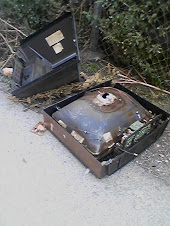
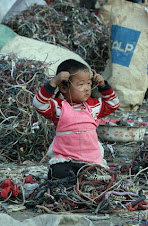
(CNN) -- Clouds of black smoke from burning plastic hang over the sites of Nigeria's vast dumps, as tiny figures pick their way through slicks of oily water, past cracked PC monitors and television screens.
Toxins from dumped electronics in developing countries has been seen as a growing problem.
But it isn't just a cut from broken glass these mainly young scavengers are risking. Much of the discarded electronic kit contains tiny -- but valuable -- quantities of aluminum, copper, cadmium and other minerals, all of which can be sold on, if they can be recovered.
However they also contain highly toxic materials, which have been linked to reproductive problems and cancers.
"People living and working on and around the dump sites, many of whom are children, are exposed to a cocktail of dangerous chemicals that can cause severe damage to health, including cancer, damage to the nervous system and to brain development in children," Kim Schoppink, Toxics Campaigner at Greenpeace, told CNN.
"The open burning creates even more hazardous chemicals among which are cancerous dioxins."
No studies have been done on the extent of the chemical pollution of such sites in Nigeria, but in 2008 a Greenpeace report on similar dumps in nearby Ghana confirmed that high levels of lead, phthalates and dioxins were present in soils and the water of a nearby lagoon.
A Chinese academic report published in "Environmental Health Perspectives" in 2007 confirmed that children living in the same area had higher levels of toxic metals in their blood than other children living nearby.
Don't Miss
* Accounting for climate change
* How green is the Internet?
* Trash on top of the world
There is increasing evidence that this new health and environment problem is arriving in shipping containers from Western countries. Nigeria is one of the principal global destinations for "e-waste" -- the catch-all term for discarded consumer electronics.
Some of this may have been legitimately handed in to be recycled in an EU or U.S. city, but lax enforcement, vague legislation and a lack of political will has meant that it instead passes through a network of traders keen to profit from developing countries' hunger for hi-tech and a burgeoning second hand market.
According to the United Nations Environment Program around 20 to 50 million tons of e-waste are generated worldwide each year.
In 2008 a Greenpeace study, "Not in My Backyard", found that in Europe only 25 percent of the e-waste was recycled safely. In the U.S. it is only 20 percent and in developing countries it is less than one percent.
Extrapolating out from these figures the report concluded that a massive 80 percent of e-waste generated worldwide is not properly recycled. Some is burnt in Western incinerators or buried in landfill sites.
But much is exported to developing countries including India, China, Pakistan, Nigeria and Ghana. When it arrives, a further percentage may be repaired and sold on to populations desperate for affordable technology. But anything beyond the skills of local traders will end up dumped.
It's a profitable business, and is already attracting the attention of organized crime. A report issued by the United Nations in July said that the criminal gangs behind much of the drug trade in West Africa were becoming involved with e-waste trading.
The volume of material on the move is staggering. In 2005, more than 500 containers full of e-waste entered Nigerian ports every month, according to the Basel Action Network, a U.S. NGO campaigning on issues surrounding toxic waste.
Each one contains 10 to 15 tons of e-waste, totaling 60,000 to 90,000 tons per year. These figures are likely to have increased in recent years.
There seems little doubt that much of this waste is finding its way to Africa from Western countries. The Basel Action Network and Dutch NGO Danwatch have traced equipment from Europe to Nigerian dumps and earlier this year Greenpeace placed a radio tracking device in a broken TV handed in for safe recycling in the UK, but followed it to a Nigerian market.
"Greenpeace is disappointed especially by U.S. and EU authorities," said Schoppink.
"It is toxic waste from the U.S. and EU countries that is causing serious environmental and health problems in Nigeria, a country without the means to deal with this problem.
"The U.S. and EU must play the biggest role in stopping the spread of e-waste; they are most responsible for the problem and have the resources to tackle it. The export of e-waste from the EU is illegal under the Basel Convention and the Waste Shipment Directive, but the laws are not being sufficiently implemented. In the U.S., there is no such law banning this practice.
"In Nigeria the government is talking about stopping imports, but there has been no progress on this to date."
Signs of progress
There are calls from environmental groups likes Greenpeace for electronics producers to do more to phase out their use of hazardous substances, and there are some signs of progress.
Several electronics companies already make products using fewer hazardous substances, and others, including Nokia, Philips and Samsung are setting up voluntary collection and recycling systems in countries where they are not legally obliged to. Apple claims its products are now almost entirely free of the worst toxic chemicals.
"If producers continue to use hazardous chemicals in their electronics and to fail to take responsibility for the safe disposal of their products, e-waste will continue to be dumped in developing countries," said Schoppink.
"The pollution and related health problems in countries where e-waste is dumped will increase massively as the amount of electronics used worldwide is growing exponentially and the number of countries used as dump sites will grow."
But while the developing world needs the U.S. and EU to take responsibility for their waste, it also needs their discarded computers to train and build a 21st century workforce.
"Nobody is arguing that Africa should be denied access to computers," said Tony Roberts, Founder and Chief Executive Officer of Computer Aid International, a charity licensed by the UK Environment Agency, which provides recycled computers to developing countries to improve education and healthcare.
"Technical colleges and universities are always short of resources. It is, of course, essential to developing economies escaping poverty to have access to affordable modern technology."
Computer Aid works to close the digital divide between the north and southern hemispheres and offers corporations, including Coca Cola, as well as individuals, a positive way of disposing of electronics. They also believe learning about responsibility for that technology is a crucial part of the exchange.
"Computer Aid argues that, in addition to the PCs, it is essential to also build the skills, knowledge and operating capacity in every country to manage responsible re-use programs and environmentally sound end-of-life recycling."
advertisement
In the end, this is about everyone involved -- particularly the developed nations -- taking responsibility for their waste.
"It is clear that companies have a moral obligation to treat Africa in exactly the same way that they do, say, Germany," said Roberts. Until then, toxic black smoke will continue to cast a shadow over lives across the developing world.
For CNN
(CNN) -- Clouds of black smoke from burning plastic hang over the sites of Nigeria's vast dumps, as tiny figures pick their way through slicks of oily water, past cracked PC monitors and television screens.
Toxins from dumped electronics in developing countries has been seen as a growing problem.
But it isn't just a cut from broken glass these mainly young scavengers are risking. Much of the discarded electronic kit contains tiny -- but valuable -- quantities of aluminum, copper, cadmium and other minerals, all of which can be sold on, if they can be recovered.
However they also contain highly toxic materials, which have been linked to reproductive problems and cancers.
"People living and working on and around the dump sites, many of whom are children, are exposed to a cocktail of dangerous chemicals that can cause severe damage to health, including cancer, damage to the nervous system and to brain development in children," Kim Schoppink, Toxics Campaigner at Greenpeace, told CNN.
"The open burning creates even more hazardous chemicals among which are cancerous dioxins."
No studies have been done on the extent of the chemical pollution of such sites in Nigeria, but in 2008 a Greenpeace report on similar dumps in nearby Ghana confirmed that high levels of lead, phthalates and dioxins were present in soils and the water of a nearby lagoon.
A Chinese academic report published in "Environmental Health Perspectives" in 2007 confirmed that children living in the same area had higher levels of toxic metals in their blood than other children living nearby.
Don't Miss
* Accounting for climate change
* How green is the Internet?
* Trash on top of the world
There is increasing evidence that this new health and environment problem is arriving in shipping containers from Western countries. Nigeria is one of the principal global destinations for "e-waste" -- the catch-all term for discarded consumer electronics.
Some of this may have been legitimately handed in to be recycled in an EU or U.S. city, but lax enforcement, vague legislation and a lack of political will has meant that it instead passes through a network of traders keen to profit from developing countries' hunger for hi-tech and a burgeoning second hand market.
According to the United Nations Environment Program around 20 to 50 million tons of e-waste are generated worldwide each year.
In 2008 a Greenpeace study, "Not in My Backyard", found that in Europe only 25 percent of the e-waste was recycled safely. In the U.S. it is only 20 percent and in developing countries it is less than one percent.
Extrapolating out from these figures the report concluded that a massive 80 percent of e-waste generated worldwide is not properly recycled. Some is burnt in Western incinerators or buried in landfill sites.
But much is exported to developing countries including India, China, Pakistan, Nigeria and Ghana. When it arrives, a further percentage may be repaired and sold on to populations desperate for affordable technology. But anything beyond the skills of local traders will end up dumped.
It's a profitable business, and is already attracting the attention of organized crime. A report issued by the United Nations in July said that the criminal gangs behind much of the drug trade in West Africa were becoming involved with e-waste trading.
The volume of material on the move is staggering. In 2005, more than 500 containers full of e-waste entered Nigerian ports every month, according to the Basel Action Network, a U.S. NGO campaigning on issues surrounding toxic waste.
Each one contains 10 to 15 tons of e-waste, totaling 60,000 to 90,000 tons per year. These figures are likely to have increased in recent years.
There seems little doubt that much of this waste is finding its way to Africa from Western countries. The Basel Action Network and Dutch NGO Danwatch have traced equipment from Europe to Nigerian dumps and earlier this year Greenpeace placed a radio tracking device in a broken TV handed in for safe recycling in the UK, but followed it to a Nigerian market.
"Greenpeace is disappointed especially by U.S. and EU authorities," said Schoppink.
"It is toxic waste from the U.S. and EU countries that is causing serious environmental and health problems in Nigeria, a country without the means to deal with this problem.
"The U.S. and EU must play the biggest role in stopping the spread of e-waste; they are most responsible for the problem and have the resources to tackle it. The export of e-waste from the EU is illegal under the Basel Convention and the Waste Shipment Directive, but the laws are not being sufficiently implemented. In the U.S., there is no such law banning this practice.
"In Nigeria the government is talking about stopping imports, but there has been no progress on this to date."
Signs of progress
There are calls from environmental groups likes Greenpeace for electronics producers to do more to phase out their use of hazardous substances, and there are some signs of progress.
Several electronics companies already make products using fewer hazardous substances, and others, including Nokia, Philips and Samsung are setting up voluntary collection and recycling systems in countries where they are not legally obliged to. Apple claims its products are now almost entirely free of the worst toxic chemicals.
"If producers continue to use hazardous chemicals in their electronics and to fail to take responsibility for the safe disposal of their products, e-waste will continue to be dumped in developing countries," said Schoppink.
"The pollution and related health problems in countries where e-waste is dumped will increase massively as the amount of electronics used worldwide is growing exponentially and the number of countries used as dump sites will grow."
But while the developing world needs the U.S. and EU to take responsibility for their waste, it also needs their discarded computers to train and build a 21st century workforce.
"Nobody is arguing that Africa should be denied access to computers," said Tony Roberts, Founder and Chief Executive Officer of Computer Aid International, a charity licensed by the UK Environment Agency, which provides recycled computers to developing countries to improve education and healthcare.
"Technical colleges and universities are always short of resources. It is, of course, essential to developing economies escaping poverty to have access to affordable modern technology."
Computer Aid works to close the digital divide between the north and southern hemispheres and offers corporations, including Coca Cola, as well as individuals, a positive way of disposing of electronics. They also believe learning about responsibility for that technology is a crucial part of the exchange.
"Computer Aid argues that, in addition to the PCs, it is essential to also build the skills, knowledge and operating capacity in every country to manage responsible re-use programs and environmentally sound end-of-life recycling."
advertisement
In the end, this is about everyone involved -- particularly the developed nations -- taking responsibility for their waste.
"It is clear that companies have a moral obligation to treat Africa in exactly the same way that they do, say, Germany," said Roberts. Until then, toxic black smoke will continue to cast a shadow over lives across the developing world.
THOMAS NET OFFERS THIS
September 28, 2009
What E-Waste Regulations Mean to Your Business
By Ilya Leybovich
As production and use of electronic products increases, so do the regulations governing their disposal, making it vital for manufacturers and consumers to understand how to best discard electronic waste.
Electronic products have long played a prominent role in the consumer market, but the past two decades have seen substantial increases in the rate of manufacturing and consumption of electronic goods. With the frequent pace at which electronics are rendered obsolete by new models or advances in technology, a significant portion of these products eventually becomes electronic waste, or e-waste, that can harm the environment and incur fines or other penalties when disposed of incorrectly.
According to the Consumer Electronics Association (CEA), the United States consumer electronics industry grew from $137.3 billion to $178.6 billion between 2005 and 2008, with an average increase of roughly 9.2 percent per year. Since the recession hit, the industry is expected to contract by 7.7 percent through 2009, but this still leaves a market of $164.9 billion that is forecast to expand in 2010.
As the cost for common electronic goods has dropped, consumption has risen. A 2008 report, from CEA and PricewaterhouseCoopers (PwC), found that the number of electronic products owned in an average U.S. household rose from 10 in 1990 to 25 in 2007. According to the CEA/PwC report, 98 percent of households own a television, 82 percent a DVD player, 74 percent a computer and 73 percent a cell phone.
When older electronics are replaced or become obsolete, many of them are discarded. Although it is difficult to track the precise rate of electronic waste accumulation, the Environmental Protection Agency (EPA) estimates that in 2007 alone the U.S. generated 2.25 million tons of televisions, cell phones and computer products no longer in use. Of these, roughly 18 percent were collected for recycling and 82 percent for disposal, mainly in landfills.
The EPA attributes the 18 percent of recycled e-waste in 2007 (up from 15 percent the previous year) to the introduction of mandatory recycling and collection programs in several states. (The full list of state-by-state statutes and regulations can be found HERE.)
Currently, there are 19 states and one municipality with e-waste disposal laws in place. Many of these regulations require manufacturers to pay for some or all of the collection, transport, recycling or disposal processes. Some states have established administrative programs to regulate e-waste activities and enforce policy violations.
In many cases, electronics manufacturers and distributors with output above a set number of electronic devices are required to pay a registration fee along with renewal fees every year to provide funds for local recycling or disposal efforts. These payments range from an initial fee of $10,000 for manufacturers producing more than 1,000 video displays a year in West Virginia, to an advance recycling fee of $6 to $10 charged at the point of sale for each video display unit in California.
According to the EPA's regulations and standards, facilities that generate more than 220 pounds of electronic waste per month must have their disposal methods regulated under federal hazardous materials guidelines, while businesses that dispose of less than 220 pounds per month are exempt from the hazardous materials restrictions.
Electronic circuit boards are also subject to certain exemptions from federal e-waste disposal rules. Whole unused circuits boards are unregulated, while whole used circuit boards are treated as scrap metal and do not fall under hazardous waste restrictions. Depending on their composition and whether they are containerized, shredded circuit boards may be exempt from solid waste categorization.
Concern over electronic waste has become a global issue due to the rapidly rising accumulation of e-waste and expanding regulatory efforts to manage it.
"The pollution and related health problems in countries where e-waste is dumped will increase massively as the amount of electronics used worldwide is growing exponentially and the number of countries used as dump sites will grow," CNN.com claims.
According to a report from Pike Research, the volume of electronic waste worldwide is expected to peak at 73 million metric tons by 2015, after which it will begin to decline as e-waste disposal initiatives increase in effectiveness.
In the meantime, working within federal or state guidelines to properly dispose of electronic waste, thus avoiding penalties and hazardous risks, is an important process for electronics producers and consumers alike.
What E-Waste Regulations Mean to Your Business
By Ilya Leybovich
As production and use of electronic products increases, so do the regulations governing their disposal, making it vital for manufacturers and consumers to understand how to best discard electronic waste.
Electronic products have long played a prominent role in the consumer market, but the past two decades have seen substantial increases in the rate of manufacturing and consumption of electronic goods. With the frequent pace at which electronics are rendered obsolete by new models or advances in technology, a significant portion of these products eventually becomes electronic waste, or e-waste, that can harm the environment and incur fines or other penalties when disposed of incorrectly.
According to the Consumer Electronics Association (CEA), the United States consumer electronics industry grew from $137.3 billion to $178.6 billion between 2005 and 2008, with an average increase of roughly 9.2 percent per year. Since the recession hit, the industry is expected to contract by 7.7 percent through 2009, but this still leaves a market of $164.9 billion that is forecast to expand in 2010.
As the cost for common electronic goods has dropped, consumption has risen. A 2008 report, from CEA and PricewaterhouseCoopers (PwC), found that the number of electronic products owned in an average U.S. household rose from 10 in 1990 to 25 in 2007. According to the CEA/PwC report, 98 percent of households own a television, 82 percent a DVD player, 74 percent a computer and 73 percent a cell phone.
When older electronics are replaced or become obsolete, many of them are discarded. Although it is difficult to track the precise rate of electronic waste accumulation, the Environmental Protection Agency (EPA) estimates that in 2007 alone the U.S. generated 2.25 million tons of televisions, cell phones and computer products no longer in use. Of these, roughly 18 percent were collected for recycling and 82 percent for disposal, mainly in landfills.
The EPA attributes the 18 percent of recycled e-waste in 2007 (up from 15 percent the previous year) to the introduction of mandatory recycling and collection programs in several states. (The full list of state-by-state statutes and regulations can be found HERE.)
Currently, there are 19 states and one municipality with e-waste disposal laws in place. Many of these regulations require manufacturers to pay for some or all of the collection, transport, recycling or disposal processes. Some states have established administrative programs to regulate e-waste activities and enforce policy violations.
In many cases, electronics manufacturers and distributors with output above a set number of electronic devices are required to pay a registration fee along with renewal fees every year to provide funds for local recycling or disposal efforts. These payments range from an initial fee of $10,000 for manufacturers producing more than 1,000 video displays a year in West Virginia, to an advance recycling fee of $6 to $10 charged at the point of sale for each video display unit in California.
According to the EPA's regulations and standards, facilities that generate more than 220 pounds of electronic waste per month must have their disposal methods regulated under federal hazardous materials guidelines, while businesses that dispose of less than 220 pounds per month are exempt from the hazardous materials restrictions.
Electronic circuit boards are also subject to certain exemptions from federal e-waste disposal rules. Whole unused circuits boards are unregulated, while whole used circuit boards are treated as scrap metal and do not fall under hazardous waste restrictions. Depending on their composition and whether they are containerized, shredded circuit boards may be exempt from solid waste categorization.
Concern over electronic waste has become a global issue due to the rapidly rising accumulation of e-waste and expanding regulatory efforts to manage it.
"The pollution and related health problems in countries where e-waste is dumped will increase massively as the amount of electronics used worldwide is growing exponentially and the number of countries used as dump sites will grow," CNN.com claims.
According to a report from Pike Research, the volume of electronic waste worldwide is expected to peak at 73 million metric tons by 2015, after which it will begin to decline as e-waste disposal initiatives increase in effectiveness.
In the meantime, working within federal or state guidelines to properly dispose of electronic waste, thus avoiding penalties and hazardous risks, is an important process for electronics producers and consumers alike.
Monday, September 28, 2009
USEFUL DOCUMENT FROM E-WASTE U.K.
Where do we bin the box?
Posted: 28 Sep 2009 01:00 AM PDT
2012 is almost here, and the big switchover from analogue television signals to digital services is well and truly upon us. But with the majority of us choosing to upgrade our TV sets, what will happen to the masses of old and outdated equipment? Are we set for a landfill explosion? And where do the Waste Electrical and Electronic Equipment (WEEE) Regulations come into the equation?
Of course, it isn’t imperative that we throw out our old sets, there is the option of buying a Freeview digibox, which will convert existing televisions to receive digital broadcasts. But with new technologies offering sleeker designs, smaller footprints and larger screens the temptation to upgrade is more irresistible than ever. When you combine these facts with the additional benefit that new televisions often have Freeview built in, it would appear that there will be a lot of old sets ready for the scrapheap.
When you also consider that the UK creates approximately 1.8 million tonnes of Waste Electrical and Electronic Equipment (WEEE) each year, you can see why it is more important than ever to think very carefully about what we are going to do with the TVs we no longer want or need.
In Wales, the Environment Agency, which started its digital switchover on August 12th 2009, is quite clear that landfill is an unsustainable solution for discarding our waste. The agency has confirmed that the disposal of Cathode Ray Tube (CRT) televisions comes under the requirements of the Waste Electrical and Electronic Equipment (WEEE) Regulations.
So what do we do?
Well, thankfully there are a few options:
Ask the retailer where you purchased your equipment if they will take your equipment back, or arrange for the retailer who delivers you new equipment to take away your old appliances. Remember that retailers, known as distributors in the UK WEEE regulations, of household electrical or electronic equipment (EEE) are legally obliged to ensure that WEEE from private households can be returned for recycling.
Take your old equipment to a local civic amenity site, or arrange for your Local Authority to collect larger appliances (bear in mind that some Local Authorities provide a free collection service and others charge).
Unfortunately, Local Authorities have no direct legal obligations under the WEEE Regulations to recycle your electrical waste, but they are incentivised by the Government to help, so it is worth checking out what your options are.
Another couple of things worth bearing in mind are that second-hand electrical and electronic equipment that is in good working order is not classified as waste and can be donated or sold to other organisations such as charities. However, broken electrical and electronic equipment that cannot be reused is classified as waste.
If you know the facts and what resources and options are available to you, there is every chance that the current 1.8 million tonnes of WEEE we produce each year won’t balloon in the lead up to 2012.
But as always, knowledge is power…
More information on your local area's facilities can be found by contacting your local council's Waste and Recycling departments directly.
The full public list of all the approved authorised treatment facilities (AATFs) in the UK for WEEE can be found on the Environment Agency's website: http://www.environment-agency.gov.uk/business/topics/waste/32086.aspx
The Environment Agency has also created a useful document called ‘What do the WEEE Regulations mean for householders?’ which can be found at: http://publications.environment-agency.gov.uk/pdf/GEHO0507BMOM-e-e.pdf
For more information on the implications of the digital switchover, visit http://www.digitaluk.co.uk/localgov/council_services/environment_and_planning
Posted: 28 Sep 2009 01:00 AM PDT
2012 is almost here, and the big switchover from analogue television signals to digital services is well and truly upon us. But with the majority of us choosing to upgrade our TV sets, what will happen to the masses of old and outdated equipment? Are we set for a landfill explosion? And where do the Waste Electrical and Electronic Equipment (WEEE) Regulations come into the equation?
Of course, it isn’t imperative that we throw out our old sets, there is the option of buying a Freeview digibox, which will convert existing televisions to receive digital broadcasts. But with new technologies offering sleeker designs, smaller footprints and larger screens the temptation to upgrade is more irresistible than ever. When you combine these facts with the additional benefit that new televisions often have Freeview built in, it would appear that there will be a lot of old sets ready for the scrapheap.
When you also consider that the UK creates approximately 1.8 million tonnes of Waste Electrical and Electronic Equipment (WEEE) each year, you can see why it is more important than ever to think very carefully about what we are going to do with the TVs we no longer want or need.
In Wales, the Environment Agency, which started its digital switchover on August 12th 2009, is quite clear that landfill is an unsustainable solution for discarding our waste. The agency has confirmed that the disposal of Cathode Ray Tube (CRT) televisions comes under the requirements of the Waste Electrical and Electronic Equipment (WEEE) Regulations.
So what do we do?
Well, thankfully there are a few options:
Ask the retailer where you purchased your equipment if they will take your equipment back, or arrange for the retailer who delivers you new equipment to take away your old appliances. Remember that retailers, known as distributors in the UK WEEE regulations, of household electrical or electronic equipment (EEE) are legally obliged to ensure that WEEE from private households can be returned for recycling.
Take your old equipment to a local civic amenity site, or arrange for your Local Authority to collect larger appliances (bear in mind that some Local Authorities provide a free collection service and others charge).
Unfortunately, Local Authorities have no direct legal obligations under the WEEE Regulations to recycle your electrical waste, but they are incentivised by the Government to help, so it is worth checking out what your options are.
Another couple of things worth bearing in mind are that second-hand electrical and electronic equipment that is in good working order is not classified as waste and can be donated or sold to other organisations such as charities. However, broken electrical and electronic equipment that cannot be reused is classified as waste.
If you know the facts and what resources and options are available to you, there is every chance that the current 1.8 million tonnes of WEEE we produce each year won’t balloon in the lead up to 2012.
But as always, knowledge is power…
More information on your local area's facilities can be found by contacting your local council's Waste and Recycling departments directly.
The full public list of all the approved authorised treatment facilities (AATFs) in the UK for WEEE can be found on the Environment Agency's website: http://www.environment-agency.gov.uk/business/topics/waste/32086.aspx
The Environment Agency has also created a useful document called ‘What do the WEEE Regulations mean for householders?’ which can be found at: http://publications.environment-agency.gov.uk/pdf/GEHO0507BMOM-e-e.pdf
For more information on the implications of the digital switchover, visit http://www.digitaluk.co.uk/localgov/council_services/environment_and_planning
Sunday, September 27, 2009
PRINTING REMAINS A PROBLEM
sacbee.com
This story is taken from Sacbee / Our Region / Top Stories
California's 'green' ink-cartridge recycling fails to cut pollution, or costs
tknudson@sacbee.com
Published Sunday, Sep. 27, 2009
On paper, the recycling program was touted as a bold step toward California's green, climate-friendly future.
A mountain of plastic and metal would be diverted from landfills. Greenhouse gas emissions would tumble. And one of Gov. Arnold Schwarzenegger's climate change goals – trimming power use in state buildings by 20 percent – would nudge closer to reality as agencies snapped up new, more efficient office printers.
That is what state and Hewlett-Packard officials said last year when they joined forces to ship used HP printer ink cartridges from state offices to Virginia to be ground up and recycled into auto parts, serving trays, clothes hangers and other products.
But a Bee investigation, based on more than 100 pages of e-mails and other records, has found that 17 months after it was created, the program has delivered few if any of its promised climate benefits.
Almost from the start it ran into opposition from the state's purchasing specialists at the Department of General Services, who were not consulted about it and who – once they started asking questions – turned up other concerns, including allegations of unfair competition and ink waste.
They also favored reusing cartridges by refilling them at local businesses, a process known as remanufacturing.
"It is to HP's advantage to get as many remanufacturable cartridges off the market as possible," Robert Tetz, manager of the department's environmentally preferable purchasing program, said in an e-mail to his boss last year. "I don't believe that this partnership arrangement passes the smell test."
The recycling plan is one of many purportedly eco-friendly initiatives launched in California, a state that portrays itself as a green-minded model for the world. But Scot Case, who investigates green marketing claims, said the state HP plan is the wrong choice for the environment.
"It is completely ridiculous to ship a product from California to Virginia to be reground when you could refill those cartridges in California and reuse them," said Case, vice president of TerraChoice Environmental Marketing, which places the green "EcoLogo" label on thousands of consumer products – but not on new printer cartridges.
"You would use fewer resources," Case said. "And you would create significantly less global warming impacts."
For their part, most DGS employees are not free to speak to The Bee. "We have a policy that we have high-level spokespeople … respond to questions," said Jeffrey Young, the agency's deputy director of public affairs.
And Tetz, the green purchasing manager, has been ordered to clam up. "Bob, per my voicemail, I need you to stand down on any communication with Mr. Knudson. Call me …" Jim Butler, DGS' chief procurement officer, said in an e-mail.
But their views come through clearly in electronic correspondence.
"The bottom line is that it is environmentally preferable and fiscally prudent to buy remanufactured toner cartridges for state laser printers from California small businesses," wrote Ben Martin, an engineering branch manager at DGS, in an e-mail to a colleague.
Targeting a river of waste
Printer cartridges are a mainstay of the modern office – and a vexing waste problem. One 2007 industry report estimated 46 percent of the larger kind, known as laser jet cartridges, and 84 percent of the smaller inkjet cartridges are dumped in landfills after one use. A follow-up study, commissioned by HP, found 34 percent of the company's laser jet cartridges and 78 percent of its inkjets end up in landfills after one use.
The state-HP recycling effort was aimed at shrinking that river of waste by diverting up to 100 tons of spent state cartridges from landfills every year. But state and HP officials said it would have an additional benefit, striking a blow against climate change by curbing greenhouse gas emissions by 500 tons annually.
Here's how it was supposed to work: For every HP cartridge purchased and recycled, state agencies would earn points toward buying new, more energy-efficient HP printers. Top officials said that would trim power use and slice pollution.
"I'm very excited to announce this project and encourage every state agency and department to recognize the big impact small actions can have to reduce our environmental footprint," said Rosario Marin, then secretary of the State and Consumer Services Agency, in an April 2008 news release.
"Working together to find creative ways to reduce pollution and save money is the best model for a public-private partnership. We strive to be green, while saving lots of green."
Marin, who resigned earlier this year after it was learned that she had accepted money for speeches from drug companies, could not be reached for comment. But records show her advisers believed the plan would be an easy sell.
"These exchanges are low-hanging fruit," said one agency document. "This program will be quickly adopted by other government agencies … because of its inherent efficiency and cost saving potential."
Reuse called better option
That turned out to be wildly optimistic. At the Department of General Services, where the words "Building Green – Buying Green – Working Green" are displayed prominently on a first floor wall, the plan met with disbelief.
"The only way the huge reductions in greenhouse gases are achievable is if higher-priced, more efficient HP equipment is purchased statewide," wrote Tetz in an e-mail. His program seeks to ensure that state purchases are environmentally sound.
He added that DGS, which draws up contracts for the purchase of everything from copy paper to fluorescent lights, had not researched the plan's claims and could not "ensure an ongoing contractual relationship with HP to achieve these 'goals.'
"I have a significant amount of data that suggests remanufactured cartridges are … a much better proposition," he said in other e-mails. "Just avoiding shipments of pallets by FedEx to Virginia is a big greenhouse gas saving … "
Scott Canonico, environmental program manager for HP, disagreed, saying in an interview that used cartridges are worse for the environment because they are poorer quality and waste more paper.
"With that waste … any benefits of remanufacturing can easily be offset," he said. "That's why HP has stuck with a single use and recycling model – to deliver on our promise of quality and reliability."
He said HP has examined the environmental and climate costs of its recycling program, such as energy consumption, and found them acceptable. Asked to provide data to back his claim, Canonico declined. "Those are internal decision-making type of assessments," he said.
Nationwide, reused cartridges are growing in popularity. "It saves us a ton of money," said Eric Nelson, environmental purchasing manager for King County, Wash., which for years has bought remanufactured cartridges. "We're not using new petro-chemicals to make new cartridges. We know we are doing a good thing for resource conservation."
There have been no quality or waste problems, Nelson said, calling their experience "great."
Inside a Cartridge World franchise in El Dorado Hills, owners Gary and Micaela McConnell recently ticked off a list of customers buying remanufactured cartridges from their store. It included Marshall Hospital, Red Hawk Casino and McDonald's – but not the state.
"They're not reusing," Gary McConnell said. "They are just recycling."
HP wouldn't correct defect
It wasn't the recycle vs. reuse debate that caught the attention of Dave Henning, a buyer in the Food Acquisitions Group at DGS. It was toner waste.
And it began with a routine office job – changing out an empty cartridge on an HP color laser printer. "Dave noticed that the toner cartridges needed to be changed more often than he expected and often felt like they were nearly full," a DGS report says.
An investigation found that cartridges were being shipped back to Virginia for recycling when they were over half full.
"When the printer uses color, all three color cartridges record one use, regardless of which colors were actually used," the report says. "When any of the three color cartridges becomes empty, the printer will not print unless all three cartridges are changed."
Serious money was at stake. Color cartridges for the 5500dn model cost $560 for all three. Since last year, the state has bought 399 of the HP printers, for about $2,700 each.
In an employee suggestion report, Henning tallied up the numbers and estimated the state was losing $1.5 million a year "in unnecessary cartridge replacement. Hewlett Packard should correct this defect."
HP, though, declined to do so. "We are limited in our ability to modify these products due to resource and business constraints," an account manager wrote DGS in an e-mail obtained through the California Public Records Act.
Tetz was dubious. "I share staff opinion that they could if they wanted to," he wrote in an e-mail, "or perhaps if it were profitable to do so."
DGS responded by dropping the model from the state printer contract. For his part, Henning applied for a state merit award – a cash prize given to employees who spotlight waste. He will soon pick up his winning $3,476 check.
As Henning was examining cartridges, Martin – who, as engineering branch manager, worked in the procurement division – was calling attention to another concern: unfair competition.
"Perceptions of favoritism or an uneven playing field are counter to the division's image," Martin said in an e-mail.
His concern gained traction. The problem, documents show, was a provision in which agencies were encouraged to switch to new, more efficient HP printers by accumulating points for buying and recycling HP cartridges.
That could potentially steer business to HP without competitive bidding. "The points had the potential of influencing purchasing decisions," Jim Butler, deputy director and chief procurement officer at DGS, told The Bee. "We did not want anyone to feel like they had a conflict of interest."
Ultimately, DGS dropped the provision.
The points were dropped in October 2008, meaning no new energy-efficient, climate-friendly HP printers would be plugged into state office buildings in exchange for print cartridges after that date – and no greenhouse gas reductions would accumulate, either.
Where things stand
Today, the program limps along on recycling only. And not much of that is even getting done. At the state Consumer and Services Agency – which announced the program – only about 10 cartridges a year are recycled.
More than 600 were shipped by DGS back to Virginia for recycling, but none have left the agency's loading dock since March. Butler, who generally favors reusing cartridges, said DGS is working on a more environmentally responsible purchasing contract requiring that all new state printers be compatible with remanufactured cartridges.
Statewide, new cartridge purchases continue to dwarf remanufactured ones. From May 2007 through April 2008, agencies using the state office supplies contract spent $6.2 million on new toner cartridges, DGS figures show, and just $807,000 – or 11 percent – on reused ones.
Butler said he believes the numbers may be higher, because not all purchases are included in the contract.
Those numbers do not please Tetz, the purchasing manager. But they also are no longer his problem because he was transferred out of his job nine days ago in a move Butler said is unrelated to his criticism of the HP partnership.
"I'm pleased with the work Mr. Tetz has done," Butler said. "I think he has a great deal to be proud of."
Despite repeated requests by The Bee, Butler declined to let Tetz speak for himself. "I think we can give you the answers you're looking for by talking to me," Butler said.
For his part, Tetz is angry and frustrated by the events of the past 17 months.
"We continue to waste millions of dollars per year … to the detriment of the environment," he wrote in a letter to the Bureau of State Audits in August. "I have attempted for well over a year to address and resolve a serious problem and … have been ignored or thwarted at every turn."
This story is taken from Sacbee / Our Region / Top Stories
California's 'green' ink-cartridge recycling fails to cut pollution, or costs
tknudson@sacbee.com
Published Sunday, Sep. 27, 2009
On paper, the recycling program was touted as a bold step toward California's green, climate-friendly future.
A mountain of plastic and metal would be diverted from landfills. Greenhouse gas emissions would tumble. And one of Gov. Arnold Schwarzenegger's climate change goals – trimming power use in state buildings by 20 percent – would nudge closer to reality as agencies snapped up new, more efficient office printers.
That is what state and Hewlett-Packard officials said last year when they joined forces to ship used HP printer ink cartridges from state offices to Virginia to be ground up and recycled into auto parts, serving trays, clothes hangers and other products.
But a Bee investigation, based on more than 100 pages of e-mails and other records, has found that 17 months after it was created, the program has delivered few if any of its promised climate benefits.
Almost from the start it ran into opposition from the state's purchasing specialists at the Department of General Services, who were not consulted about it and who – once they started asking questions – turned up other concerns, including allegations of unfair competition and ink waste.
They also favored reusing cartridges by refilling them at local businesses, a process known as remanufacturing.
"It is to HP's advantage to get as many remanufacturable cartridges off the market as possible," Robert Tetz, manager of the department's environmentally preferable purchasing program, said in an e-mail to his boss last year. "I don't believe that this partnership arrangement passes the smell test."
The recycling plan is one of many purportedly eco-friendly initiatives launched in California, a state that portrays itself as a green-minded model for the world. But Scot Case, who investigates green marketing claims, said the state HP plan is the wrong choice for the environment.
"It is completely ridiculous to ship a product from California to Virginia to be reground when you could refill those cartridges in California and reuse them," said Case, vice president of TerraChoice Environmental Marketing, which places the green "EcoLogo" label on thousands of consumer products – but not on new printer cartridges.
"You would use fewer resources," Case said. "And you would create significantly less global warming impacts."
For their part, most DGS employees are not free to speak to The Bee. "We have a policy that we have high-level spokespeople … respond to questions," said Jeffrey Young, the agency's deputy director of public affairs.
And Tetz, the green purchasing manager, has been ordered to clam up. "Bob, per my voicemail, I need you to stand down on any communication with Mr. Knudson. Call me …" Jim Butler, DGS' chief procurement officer, said in an e-mail.
But their views come through clearly in electronic correspondence.
"The bottom line is that it is environmentally preferable and fiscally prudent to buy remanufactured toner cartridges for state laser printers from California small businesses," wrote Ben Martin, an engineering branch manager at DGS, in an e-mail to a colleague.
Targeting a river of waste
Printer cartridges are a mainstay of the modern office – and a vexing waste problem. One 2007 industry report estimated 46 percent of the larger kind, known as laser jet cartridges, and 84 percent of the smaller inkjet cartridges are dumped in landfills after one use. A follow-up study, commissioned by HP, found 34 percent of the company's laser jet cartridges and 78 percent of its inkjets end up in landfills after one use.
The state-HP recycling effort was aimed at shrinking that river of waste by diverting up to 100 tons of spent state cartridges from landfills every year. But state and HP officials said it would have an additional benefit, striking a blow against climate change by curbing greenhouse gas emissions by 500 tons annually.
Here's how it was supposed to work: For every HP cartridge purchased and recycled, state agencies would earn points toward buying new, more energy-efficient HP printers. Top officials said that would trim power use and slice pollution.
"I'm very excited to announce this project and encourage every state agency and department to recognize the big impact small actions can have to reduce our environmental footprint," said Rosario Marin, then secretary of the State and Consumer Services Agency, in an April 2008 news release.
"Working together to find creative ways to reduce pollution and save money is the best model for a public-private partnership. We strive to be green, while saving lots of green."
Marin, who resigned earlier this year after it was learned that she had accepted money for speeches from drug companies, could not be reached for comment. But records show her advisers believed the plan would be an easy sell.
"These exchanges are low-hanging fruit," said one agency document. "This program will be quickly adopted by other government agencies … because of its inherent efficiency and cost saving potential."
Reuse called better option
That turned out to be wildly optimistic. At the Department of General Services, where the words "Building Green – Buying Green – Working Green" are displayed prominently on a first floor wall, the plan met with disbelief.
"The only way the huge reductions in greenhouse gases are achievable is if higher-priced, more efficient HP equipment is purchased statewide," wrote Tetz in an e-mail. His program seeks to ensure that state purchases are environmentally sound.
He added that DGS, which draws up contracts for the purchase of everything from copy paper to fluorescent lights, had not researched the plan's claims and could not "ensure an ongoing contractual relationship with HP to achieve these 'goals.'
"I have a significant amount of data that suggests remanufactured cartridges are … a much better proposition," he said in other e-mails. "Just avoiding shipments of pallets by FedEx to Virginia is a big greenhouse gas saving … "
Scott Canonico, environmental program manager for HP, disagreed, saying in an interview that used cartridges are worse for the environment because they are poorer quality and waste more paper.
"With that waste … any benefits of remanufacturing can easily be offset," he said. "That's why HP has stuck with a single use and recycling model – to deliver on our promise of quality and reliability."
He said HP has examined the environmental and climate costs of its recycling program, such as energy consumption, and found them acceptable. Asked to provide data to back his claim, Canonico declined. "Those are internal decision-making type of assessments," he said.
Nationwide, reused cartridges are growing in popularity. "It saves us a ton of money," said Eric Nelson, environmental purchasing manager for King County, Wash., which for years has bought remanufactured cartridges. "We're not using new petro-chemicals to make new cartridges. We know we are doing a good thing for resource conservation."
There have been no quality or waste problems, Nelson said, calling their experience "great."
Inside a Cartridge World franchise in El Dorado Hills, owners Gary and Micaela McConnell recently ticked off a list of customers buying remanufactured cartridges from their store. It included Marshall Hospital, Red Hawk Casino and McDonald's – but not the state.
"They're not reusing," Gary McConnell said. "They are just recycling."
HP wouldn't correct defect
It wasn't the recycle vs. reuse debate that caught the attention of Dave Henning, a buyer in the Food Acquisitions Group at DGS. It was toner waste.
And it began with a routine office job – changing out an empty cartridge on an HP color laser printer. "Dave noticed that the toner cartridges needed to be changed more often than he expected and often felt like they were nearly full," a DGS report says.
An investigation found that cartridges were being shipped back to Virginia for recycling when they were over half full.
"When the printer uses color, all three color cartridges record one use, regardless of which colors were actually used," the report says. "When any of the three color cartridges becomes empty, the printer will not print unless all three cartridges are changed."
Serious money was at stake. Color cartridges for the 5500dn model cost $560 for all three. Since last year, the state has bought 399 of the HP printers, for about $2,700 each.
In an employee suggestion report, Henning tallied up the numbers and estimated the state was losing $1.5 million a year "in unnecessary cartridge replacement. Hewlett Packard should correct this defect."
HP, though, declined to do so. "We are limited in our ability to modify these products due to resource and business constraints," an account manager wrote DGS in an e-mail obtained through the California Public Records Act.
Tetz was dubious. "I share staff opinion that they could if they wanted to," he wrote in an e-mail, "or perhaps if it were profitable to do so."
DGS responded by dropping the model from the state printer contract. For his part, Henning applied for a state merit award – a cash prize given to employees who spotlight waste. He will soon pick up his winning $3,476 check.
As Henning was examining cartridges, Martin – who, as engineering branch manager, worked in the procurement division – was calling attention to another concern: unfair competition.
"Perceptions of favoritism or an uneven playing field are counter to the division's image," Martin said in an e-mail.
His concern gained traction. The problem, documents show, was a provision in which agencies were encouraged to switch to new, more efficient HP printers by accumulating points for buying and recycling HP cartridges.
That could potentially steer business to HP without competitive bidding. "The points had the potential of influencing purchasing decisions," Jim Butler, deputy director and chief procurement officer at DGS, told The Bee. "We did not want anyone to feel like they had a conflict of interest."
Ultimately, DGS dropped the provision.
The points were dropped in October 2008, meaning no new energy-efficient, climate-friendly HP printers would be plugged into state office buildings in exchange for print cartridges after that date – and no greenhouse gas reductions would accumulate, either.
Where things stand
Today, the program limps along on recycling only. And not much of that is even getting done. At the state Consumer and Services Agency – which announced the program – only about 10 cartridges a year are recycled.
More than 600 were shipped by DGS back to Virginia for recycling, but none have left the agency's loading dock since March. Butler, who generally favors reusing cartridges, said DGS is working on a more environmentally responsible purchasing contract requiring that all new state printers be compatible with remanufactured cartridges.
Statewide, new cartridge purchases continue to dwarf remanufactured ones. From May 2007 through April 2008, agencies using the state office supplies contract spent $6.2 million on new toner cartridges, DGS figures show, and just $807,000 – or 11 percent – on reused ones.
Butler said he believes the numbers may be higher, because not all purchases are included in the contract.
Those numbers do not please Tetz, the purchasing manager. But they also are no longer his problem because he was transferred out of his job nine days ago in a move Butler said is unrelated to his criticism of the HP partnership.
"I'm pleased with the work Mr. Tetz has done," Butler said. "I think he has a great deal to be proud of."
Despite repeated requests by The Bee, Butler declined to let Tetz speak for himself. "I think we can give you the answers you're looking for by talking to me," Butler said.
For his part, Tetz is angry and frustrated by the events of the past 17 months.
"We continue to waste millions of dollars per year … to the detriment of the environment," he wrote in a letter to the Bureau of State Audits in August. "I have attempted for well over a year to address and resolve a serious problem and … have been ignored or thwarted at every turn."
Subscribe to:
Posts (Atom)






 Posts
Posts


